${latestitem Title}
${latestitem Title} |
- Reliance Jio Much Ahead of Airtel, Vi to Offer 4G+ In India
- BharatNet Will Pave Way for Mobile Internet in Rural India
- Is Wireless Charging Hype Justified
- Samsung Galaxy S22 Needs to Get These Things Right to Succeed
- Airtel Xstream Fiber and ACT Both Offer 300 Mbps Plan, Which Should You Choose?
| Reliance Jio Much Ahead of Airtel, Vi to Offer 4G+ In India Posted: 25 Jul 2021 10:00 AM PDT  Q1. How Have Indian Telecom Operators Managed Their 4G Networks During COVID-19 (Wave 1 and Wave 2)?Our data show an obvious difference in 4G network performance between the two waves of Covid in India. During the first wave, operators had to respond to a massive shift in traffic – from urban commercial centres to outskirts and residential areas in cities, and from urban to rural areas – as well as a growth in traffic due to the lockdown situation. On top of that, telecom operators had to contend with disrupted supply chains and an inability in many instances to physically deploy network components. During the second wave of Covid, operators were better prepared – being able to manage more of their network estates remotely but also increasing their spectrum holdings across a variety of bands. Median download speeds in India increased from 10.64 Mbps in Q1 2020 (January 1st, 2020 – March 30th, 2020) to 15.67 Mbps in Q2 2021 (April 1st 2021 – June 30th, 2021), while 4G Service (the % of an operator’s known locations where a device has access to 4G LTE service) hit 97% in the same quarter, up from 93.5% at the end of 2020.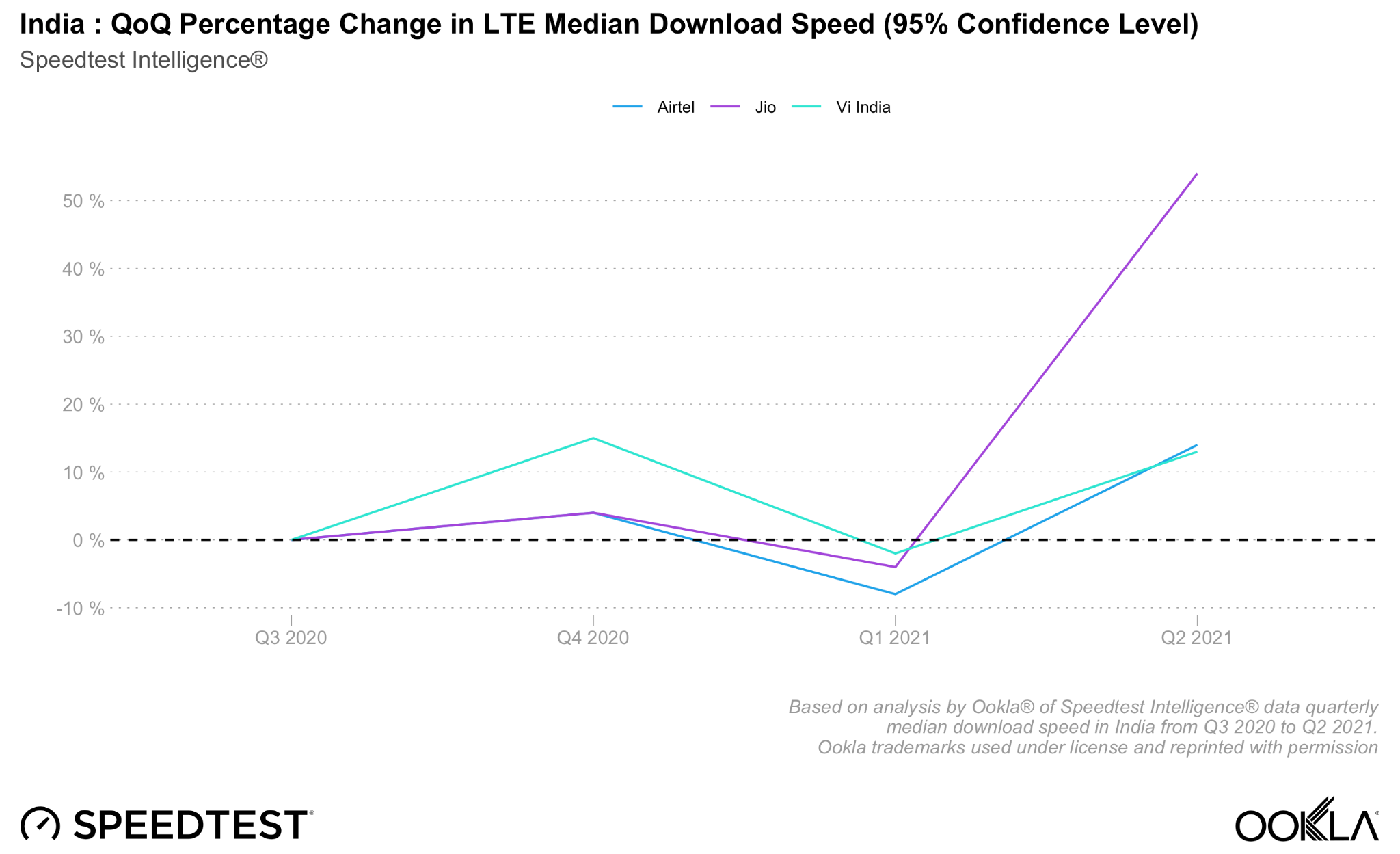 Q2. Which Operator Is Providing the 4G+ Network to the Users in Most Regions of the Country?Jio is the leader of the pack in Q2 2021 when we look at its coverage data, both for 4G Service, 4G Availability and Coverage Score. This means that a greater share of its known locations provides 4G-LTE access, that more of its users spend time on 4G-LTE networks, and that it has the widest high-quality 4G-LTE network in the country. This underlines the impact Jio has had in helping bridge the digital divide to bring affordable internet to more remote parts of the country.Q3. Besides Speedtest, Which Is a Very Popular Application Being Used by a Lot of Consumers in India, What Are Other Business Strategies by Ookla for India?Every month, millions of users across India test their networks with Speedtest by Ookla, which is no surprise given data consumption in the market – Ericsson's latest Mobility Report ranks the market as one of the regions with the highest mobile data use per smartphone globally, at 14.6GB per month. This is well above the global average of 9GB. Additionally, Speedtest Awards™, presented by Ookla, are an elite designation reserved for fixed and mobile providers in a market. Based on consumer-initiated tests and background scans from Speedtest applications, Speedtest Awards represent real-world network performance and the internet speeds and coverage provided to customers. We are also focused on delivering new features to help consumers better understand their connected experiences and how that compares locally and globally.Q4. How Behind India Is Compared to Nations Such as the U.S. and the U.K When It Comes to 5G?Although India is lagging behind markets with robust 5G deployments like the UK and US, Indian providers are making great strides. It's clear there's a large amount of work going on behind the scenes to help drive 5G commercialisation once the spectrum becomes available. All three major network operators are busy conducting 5G trials and have achieved very impressive 5G speeds. On top of that, Airtel has already started to roll out 5G-ready network equipment, and Jio is testing its own 5G Open RAN solutions in several cities. It's also worth noting that there are some key benefits to the delay in India's 5G launch. Over time, the cost of 5G hardware will fall as the technology and vendor ecosystem matures. Indian operators' move to embrace Open RAN will drive network costs even lower. Another key factor is the 5G device ecosystem. 5G smartphone prices have already fallen since the technology launched. This trend will continue, spurred in India by partnerships such as Jio Platform's with Google. Interestingly, we're already seeing a growing number of results from Speedtest running on 5G capable devices in the market – indicating that there will be a pre-installed base that operators can target from day one of launch.Q5. How Fast Will 5G Really Be in Congested Networks? (If There's Any Data From Another Nation Available)One of the key benefits of 5G is that it can operate over a wider range of spectrum frequencies than LTE. India's government plans to allocate a wide band of 275 MHz of spectrum in the 3.3-3.6 GHz range (C-Band), which will offer a much greater capacity than the existing spectrum used for LTE services. If we look at other Asia Pacific markets that have recently launched 5G (Thailand and the Philippines both launched 5G in Q1 2020), the differential between 4G-LTE and 5G speeds was on average between 9-10x in Q2 2021. It's impossible to say exactly how fast 5G will be for the average Indian user, given uncertainty over exact spectrum allocations and rollout plans (including the radio access network, but also improvements to backhaul and transport networks). However, it's safe to say that 5G will bring a considerable bump to speeds in the country. Examples from Speedtest Intelligence data: All data is from Q2 2021 (April 1st, 2021 – June 30th, 2021) Philippines – Q1 2020 – 5G launch Q2 2021 Data:
Q6. What Should Be the 5G Vision for India?For Indian consumers, 5G should represent a step-change in experience over current LTE networks, providing the bandwidth and latency to enjoy uninterrupted access to services such as high-definition video streaming, mobile gaming and video calling on the go. The advent of 5G should propel the market up the Ookla Speedtest Global Index, where it currently sits in 122nd place (as of June 2021, measured by median download speeds). For Indian mobile operators and the regulator, the 5G era should be one of growing stability. With three large-scale operators, we're unlikely to return to the price wars that occurred during the early 4G tech cycle, which is important in ensuring adequate re-investment in networks. Beyond that, I see a clear desire to be at the forefront of next-generation network technologies. This is shown by the moves to embrace Open RAN and network virtualisation by all three mobile operators, the Government's Make in India initiative and the Indian Telecom Standard Body's recent submission of its 6G vision to the ITU. |
| BharatNet Will Pave Way for Mobile Internet in Rural India Posted: 25 Jul 2021 05:23 AM PDT  The current government at the centre has been keeping Digital India as the banner-child of its policies. The scheme launched a few years back wasn't just focused on urban digitalisation but also dreamt of extending connectivity to the rural portions of the country. However, unlike the urban areas where the telecom companies themselves are eager to deploy towers, offer various services like broadband and mobile telephony, such is not the case for areas that remain underserved or unserved. But, with a lot of e-governance services migrating to the digital domain, the use of these services requires to be extended to the rural part of India. This is exactly what BharatNet seeks to do. The current government at the centre has been keeping Digital India as the banner-child of its policies. The scheme launched a few years back wasn't just focused on urban digitalisation but also dreamt of extending connectivity to the rural portions of the country. However, unlike the urban areas where the telecom companies themselves are eager to deploy towers, offer various services like broadband and mobile telephony, such is not the case for areas that remain underserved or unserved. But, with a lot of e-governance services migrating to the digital domain, the use of these services requires to be extended to the rural part of India. This is exactly what BharatNet seeks to do. CSCs To Be Bedrock of Last-Mile ConnectivityFirstly, the connectivity of rural India, and more specifically over 6 lakh villages would make it easier for the government to extend its services to the citizens. Through BharatNet, these villages will be connected via a fiber network which would be available to the Community Service Centres in the villages. Under a Public-Private-Partnership model, the owners of CSCs would be able to give away services to the consumers in the villages who largely remain untouched by the internet phenomenon still. Schemes like SUMAN to provide solar water pumps, One Nation One Ration Card, and the PDS distribution shops would be better linked to the network thus allowing smoother and more efficient e-governance.BharatNet to Evolve Into Mobile Telephony SlowlyIn the next evolution of the CSCs and the BharatNet use case, the consumers will also be able to use internet-based services like issuing AADHAR for themselves, getting easy loan facilities, agriculture insurance products and more. This will further increase the digital know-how in the public which remains elusive from the internet service. Also, at the same time, the launch of devices like JioPhone Next as in the case of the previous JioPhone would encourage the residents of these villages to pick up phones with internet-based features and in the future make a leap to smartphones as well. Not only this, but the facility of PoS and PDOs (as envisaged in the PM-WANI) scheme would only be possible on the foundation built on the back of BharatNet. Although the road to total village digital penetration has been wrought with errors and pitfalls, a lot of which have been exposed in the quality of the network that has been deployed in these villages. The importance of the internet in these areas remains untapped. Even for the telecom companies which seek to expand their services beyond a saturated market, the LWE, hilly areas, and the rural grounds remain as the last hunting arena for more subscribers. These areas serve as potential customers and their integration into the network would not only mean increased income for the telecom companies which are financially ailing, but it would also mean the springing up of new services, digital products, and offerings that would be catering to the rural population exclusively. Thus, it goes unsaid that the success of BharatNet is imperative not only for the scheme and the sake of the government but also because it would bode well for the digital infrastructure and growth that India and her telecom companies envisage. |
| Is Wireless Charging Hype Justified Posted: 25 Jul 2021 01:29 AM PDT 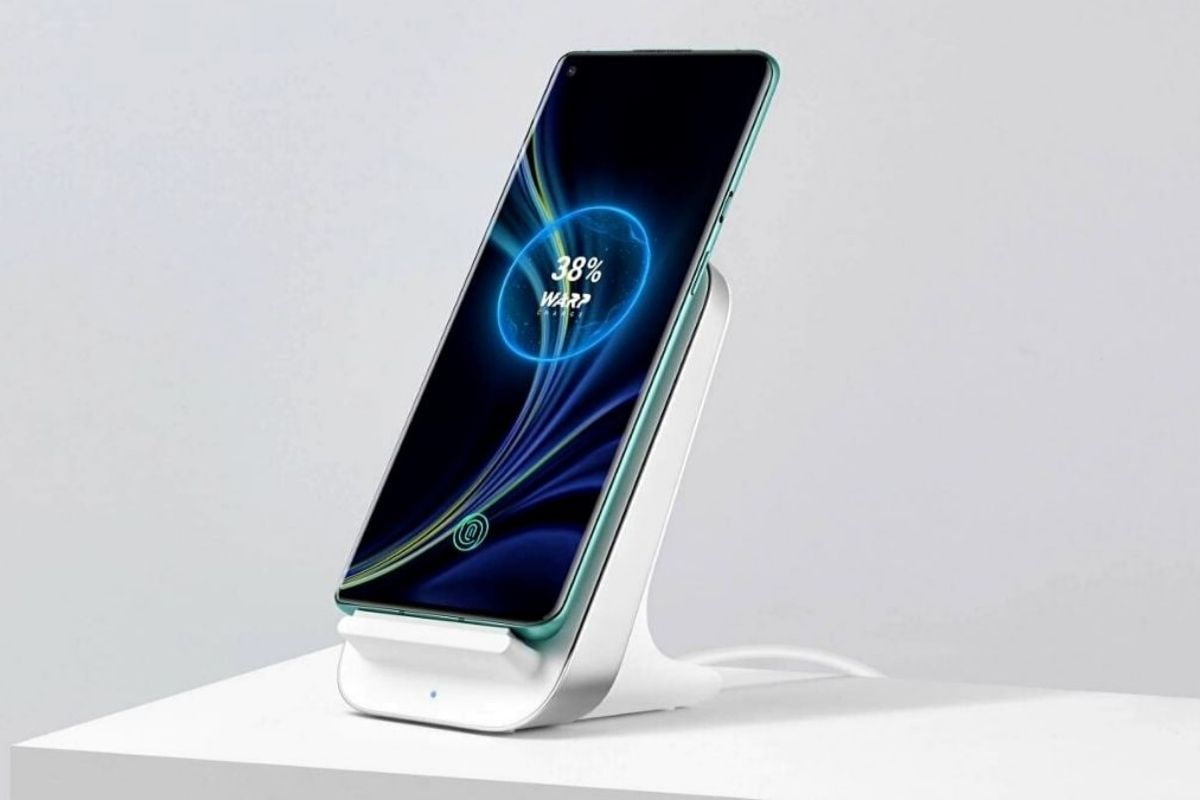 Wireless charging has existed for quite some time, but in recent times generic users have become more and more interested in the same. Companies getting aboard the Qi Wireless charging standard has aided to the same too since most if not all flagship devices offer Qi Wireless charging. But, for those who might still be unaware regarding the same, they might be wondering as to what wireless charging is and how it works. If you too are one of these people, fret not as we will be discussing the same. Before we begin, it might interest you to know that Samsung has offered wireless charging ever since the Samsung Galaxy S6, with Apple adopting the same with the iPhone X and iPhone 8 series. Since then most brands have chosen to get onboard this program. Furthermore, some devices also come with support for reverse wireless charging, which can charge another handset by placing the other device or accessory on top of the rear panel of the main device. But that is for another day, so, let us discuss what exactly is Wireless Charging. Wireless charging has existed for quite some time, but in recent times generic users have become more and more interested in the same. Companies getting aboard the Qi Wireless charging standard has aided to the same too since most if not all flagship devices offer Qi Wireless charging. But, for those who might still be unaware regarding the same, they might be wondering as to what wireless charging is and how it works. If you too are one of these people, fret not as we will be discussing the same. Before we begin, it might interest you to know that Samsung has offered wireless charging ever since the Samsung Galaxy S6, with Apple adopting the same with the iPhone X and iPhone 8 series. Since then most brands have chosen to get onboard this program. Furthermore, some devices also come with support for reverse wireless charging, which can charge another handset by placing the other device or accessory on top of the rear panel of the main device. But that is for another day, so, let us discuss what exactly is Wireless Charging. What Exactly is Wireless Charging?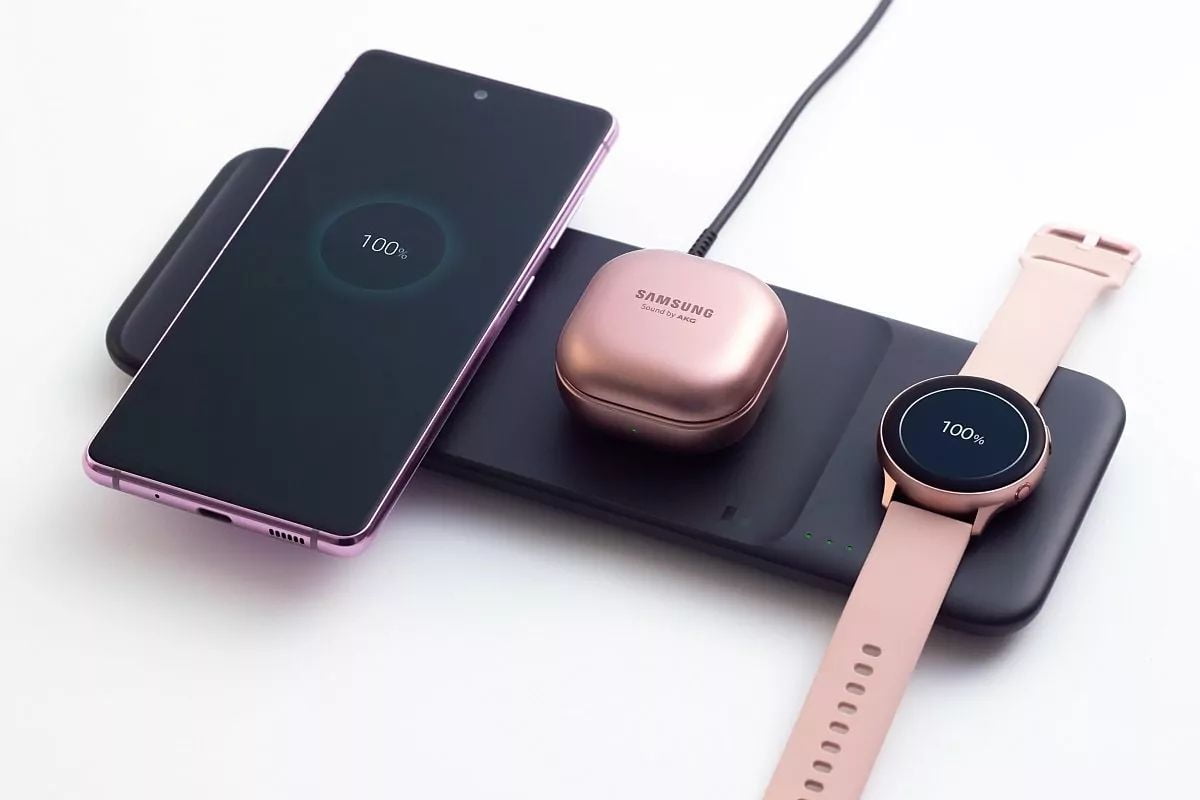 Theoretically, wireless charging refers to the transfer of power from a power outlet to another device, without having to make use of a cable. It makes use of a power transmitting pad as well as a receiver, which at times is in the form of a case that is attached to the rear of the mobile phone or is built into the phone. Do note that when we said that it was cable-free, there is a caveat, since the pad itself requires a cable, without which the pad will not function, so the claim of complete wire-freedom is a bit of a pickle. Theoretically, wireless charging refers to the transfer of power from a power outlet to another device, without having to make use of a cable. It makes use of a power transmitting pad as well as a receiver, which at times is in the form of a case that is attached to the rear of the mobile phone or is built into the phone. Do note that when we said that it was cable-free, there is a caveat, since the pad itself requires a cable, without which the pad will not function, so the claim of complete wire-freedom is a bit of a pickle. How Does Wireless Charging Actually Work?Wireless charging is dependent on inductive charging, wherein power is created via a passage of electrical current between two coils to make an electromagnetic field. When the receiving plate that is on the mobile device comes close to the transmitter, or within the specified range, the magnetic field allows for the initiation of an electrical current within the device. This exact current is converted into DC or Direct Current then charges the built-in battery present on your handset.Does Wireless Charging Have Certain Standards? The key wireless charging standard is dubbed Qi, which has been developed by the WPC or Wireless Power Consortium so as to allow inductive charging over distances that range up to 40mm. In the current scenario, Qi wireless charging has been adopted by multiple smartphone manufacturers, some of them being Apple, Samsung, Sony, HTC, LG, Huawei, Nokia (HMD), Motorola and Blackberry, OnePlus. Another wireless charging standard that existed earlier was Powermat, which was used by retailers like Starbucks to allow customers to charge their phones. But it lost out to Qi. The key wireless charging standard is dubbed Qi, which has been developed by the WPC or Wireless Power Consortium so as to allow inductive charging over distances that range up to 40mm. In the current scenario, Qi wireless charging has been adopted by multiple smartphone manufacturers, some of them being Apple, Samsung, Sony, HTC, LG, Huawei, Nokia (HMD), Motorola and Blackberry, OnePlus. Another wireless charging standard that existed earlier was Powermat, which was used by retailers like Starbucks to allow customers to charge their phones. But it lost out to Qi. Are There Any Disadvantages to Wireless Charging?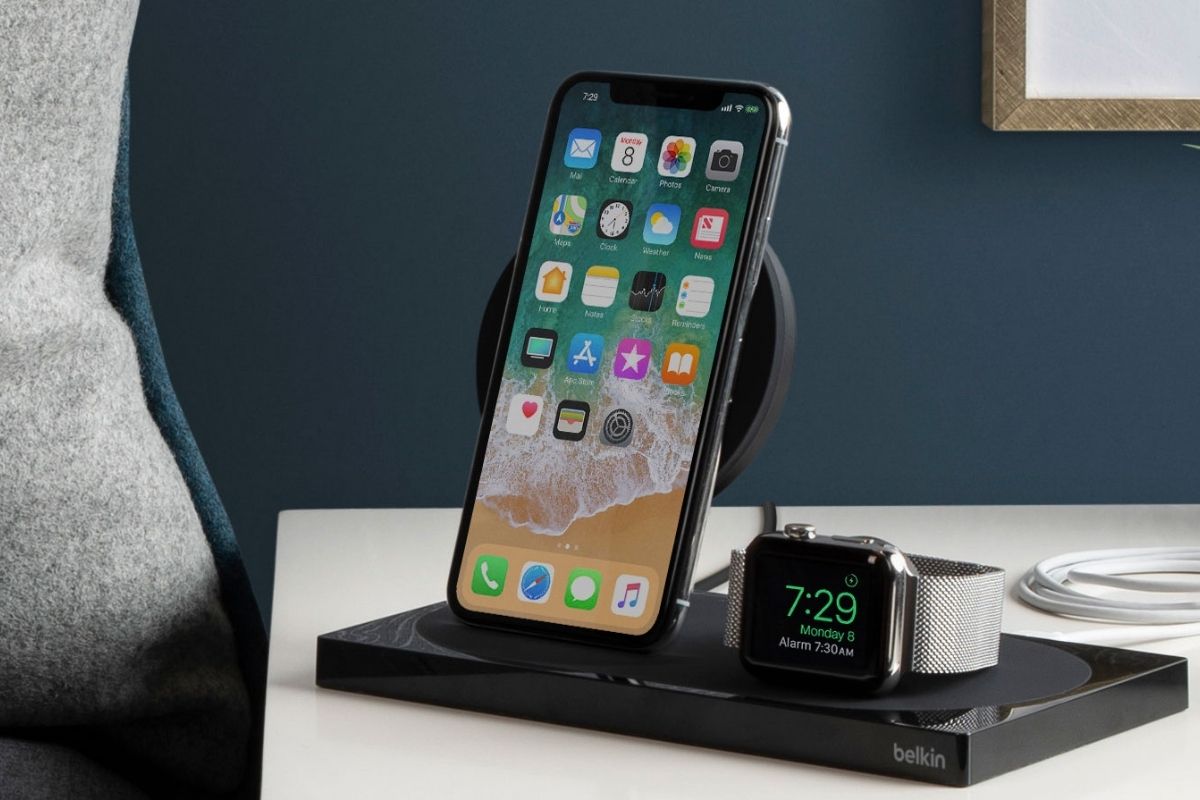 As is the case with most technological advancements, there are certain disadvantages, some of them being:- 1. Slower charging, especially for devices with Quick Charge technology, some brands do offer speedy wireless charging, but most devices still support 5-10W wireless charging, whereas wired charging might be supported on the same phone at around 30-65W. 2. A user cannot pick up their smartphone if it is indeed wireless charging, since removing it from a pad-based charger will effectively stop the charging process. 3. Not all handsets offer support for the same, especially budget devices, which remove it as a basis of cost-cutting. As is the case with most technological advancements, there are certain disadvantages, some of them being:- 1. Slower charging, especially for devices with Quick Charge technology, some brands do offer speedy wireless charging, but most devices still support 5-10W wireless charging, whereas wired charging might be supported on the same phone at around 30-65W. 2. A user cannot pick up their smartphone if it is indeed wireless charging, since removing it from a pad-based charger will effectively stop the charging process. 3. Not all handsets offer support for the same, especially budget devices, which remove it as a basis of cost-cutting. |
| Samsung Galaxy S22 Needs to Get These Things Right to Succeed Posted: 24 Jul 2021 10:30 PM PDT  Statistically, the Samsung Galaxy S20 series were subject to poor sales, but, Samsung did not let this disappointment get the better of them, as the company made the right amount of changes to launch the Galaxy S21 series of devices, which went on to be hit devices. Despite the good sales figures, it is worth noting that 2021 is halfway done and, with this time having passed, it is time to list out some things that Samsung needs to get right with the Samsung Galaxy S22 to ensure that the device works well in the market. For most users, just an upgrade to the next best chipset could suffice, given how good the S21 series of devices are, offering features that cater to a variety of users. But as enthusiasts, nothing is ever enough and, if Samsung brings even half of the things that we will be listed below, the device might just take the Android crown for the second time running. Statistically, the Samsung Galaxy S20 series were subject to poor sales, but, Samsung did not let this disappointment get the better of them, as the company made the right amount of changes to launch the Galaxy S21 series of devices, which went on to be hit devices. Despite the good sales figures, it is worth noting that 2021 is halfway done and, with this time having passed, it is time to list out some things that Samsung needs to get right with the Samsung Galaxy S22 to ensure that the device works well in the market. For most users, just an upgrade to the next best chipset could suffice, given how good the S21 series of devices are, offering features that cater to a variety of users. But as enthusiasts, nothing is ever enough and, if Samsung brings even half of the things that we will be listed below, the device might just take the Android crown for the second time running. 1. Difference Between S22 and S22 Plus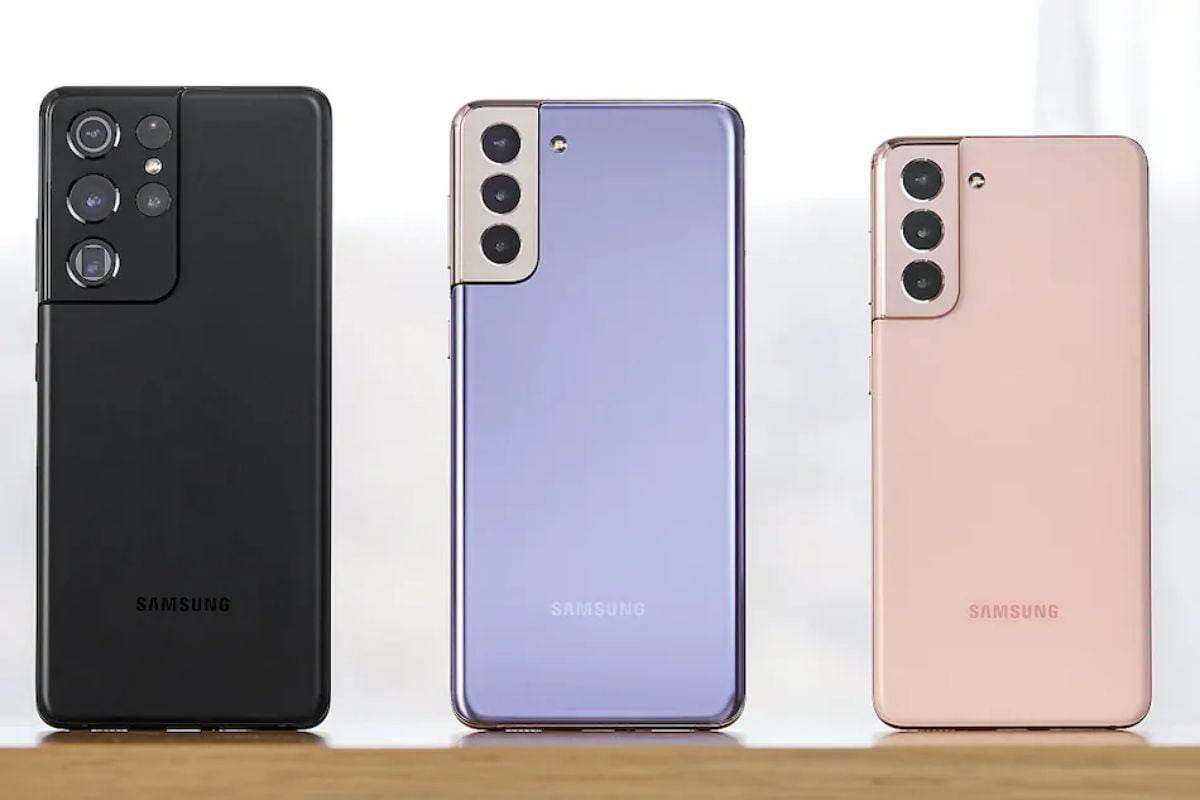 Earlier versions of the S-series of devices have been very different when it comes to the base S device and the Plus counterpart, as we would see better RAM options, higher resolution panels and more cameras on the latter, at times justifying the $200 price hike over the vanilla variant of the S-series. This was not the case with the S21 series of devices, as the Galaxy S21 and S21 Plus were differentiated only with a difference in the material used, a larger chassis and a bigger battery. Rest all of the features were identical. When one considers that the S21 Plus as of now retails for a whopping $200 more, it makes sense to settle with the S21. Even if the company fails to do anything, a price cut is warranted, since the S21 Plus felt like the most oddly placed device in the lineup. Earlier versions of the S-series of devices have been very different when it comes to the base S device and the Plus counterpart, as we would see better RAM options, higher resolution panels and more cameras on the latter, at times justifying the $200 price hike over the vanilla variant of the S-series. This was not the case with the S21 series of devices, as the Galaxy S21 and S21 Plus were differentiated only with a difference in the material used, a larger chassis and a bigger battery. Rest all of the features were identical. When one considers that the S21 Plus as of now retails for a whopping $200 more, it makes sense to settle with the S21. Even if the company fails to do anything, a price cut is warranted, since the S21 Plus felt like the most oddly placed device in the lineup. 2. Better Charging Speeds Samsung has been far behind when it comes to charging speeds when compared to the likes of Xiaomi, Oppo and OnePlus. The company offered 25W charging out of the box with the S21 series of devices, which is way less than OnePlus' 65W charging in recent times. Oppo too has been quick to offer 50W or 65W charging on top-spec models, so it makes sense for Samsung to make improvements in this feature set. This does not mean that the company should offer 100W charging speeds that some brands are offering, but a 45W charging speed should be more than enough, with about 30-40 minutes of charge guaranteeing a day's charge. We can only hope that Samsung works on this aspect to catch up with Android competitors that have trumped it in the last couple of years. Samsung has been far behind when it comes to charging speeds when compared to the likes of Xiaomi, Oppo and OnePlus. The company offered 25W charging out of the box with the S21 series of devices, which is way less than OnePlus' 65W charging in recent times. Oppo too has been quick to offer 50W or 65W charging on top-spec models, so it makes sense for Samsung to make improvements in this feature set. This does not mean that the company should offer 100W charging speeds that some brands are offering, but a 45W charging speed should be more than enough, with about 30-40 minutes of charge guaranteeing a day's charge. We can only hope that Samsung works on this aspect to catch up with Android competitors that have trumped it in the last couple of years. 3. Improved Storage Options/microSD Slot The entirety of the Samsung Galaxy S21 series of devices come with support for 8K video recording. This requires a ton of data space, at about 10MB a second. 4K recording will also need a good amount of space, but, to cater to this, Samsung offers only 128GB of internal storage as a base variant. Samsung might have removed the microSD due to the lack of popularity and tougher design, but, with these higher grade optics and videos, the need for better storage has gone from a want to a must-have. We really hope that Samsung has a change of heart and adds the microSD cart slot back and, if not, it should at least offer 256GB of storage as a minimum. The entirety of the Samsung Galaxy S21 series of devices come with support for 8K video recording. This requires a ton of data space, at about 10MB a second. 4K recording will also need a good amount of space, but, to cater to this, Samsung offers only 128GB of internal storage as a base variant. Samsung might have removed the microSD due to the lack of popularity and tougher design, but, with these higher grade optics and videos, the need for better storage has gone from a want to a must-have. We really hope that Samsung has a change of heart and adds the microSD cart slot back and, if not, it should at least offer 256GB of storage as a minimum. 4. Better Update RestartsThe biggest complaint with most Samsung devices is not the software support itself, since the company has made an amazing improvement in the same, but, with the flagships and budget devices, post completion of updates, it takes a bit of time to restart, analyse and optimise the multiple applications present on the device. This can take from 10-20 minutes from time to time. Pixels, in contrast, update seamlessly and take a quarter of that time, and, the overall restart takes a minor amount of time. We really hope that Samsung addresses the long update procedure that is annoying. All of this should make the S22 series of devices the top-tier devices when it comes to Android handsets. |
| Airtel Xstream Fiber and ACT Both Offer 300 Mbps Plan, Which Should You Choose? Posted: 24 Jul 2021 06:48 PM PDT 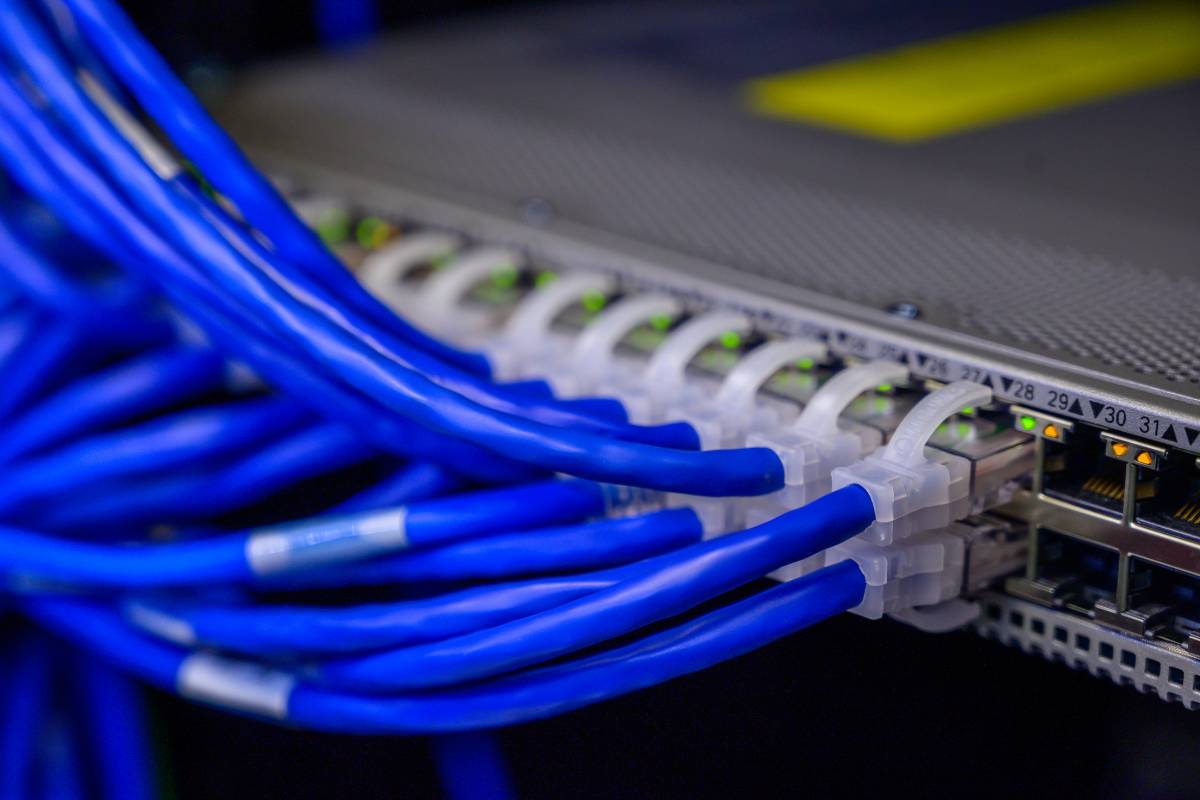 Bharti Airtel 300 Mbps Broadband PlanBharti Airtel offers a 300 Mbps plan for Rs 1,499. This is not a new plan but and is known to most people already. Regardless, for the ones who aren't aware, this plan ships with 3,333GB or 3.3TB fair-usage-policy (FUP) data and offers a free landline connection as well. Users get multiple over-the-top (OTT) benefits, including a free subscription to Amazon Prime Video, Disney+ Hotstar VIP, Airtel Xstream Fiber, Wynk Music, and more. On top of this, users can also add the Airtel Xstream Box with 1 month of HD channel pack by paying Rs 1,500 as a one-time security deposit and a little extra for the channel pack. Now let's take a look at ACT Fibernet's broadband plan.ACT Fibernet 300 Mbps Broadband PlanACT Fibernet offers a 300 Mbps broadband plan to users in Bengaluru. Note that the company's offerings vary from region to region, and thus the 300 Mbps plan from ACT might not be available in your city with the same benefits and at the same cost. The 'ACT Storm' plan from ACT Fibernet comes with 300 Mbps speed. It costs Rs 1,185, which is great since it is very cheap. Further, users get 3,300GB of data with the plan for the month. Note that there are no great or even noteworthy OTT benefits offered with the plan. Even the ZEE5 Premium that the users get is available for one month only.Which Plan Should You Pick?See, there are three things to consider here. One, the availability of the plan in other cities if you are shifting homes – this is somewhere Airtel is ahead of ACT. The second thing is the OTT benefits which are clearly better with Airtel's plan. Only in terms of monthly pricing, ACT Fibernet's 300 Mbps plan is better than Airtel's. |
| You are subscribed to email updates from TelecomTalk. To stop receiving these emails, you may unsubscribe now. | Email delivery powered by Google |
| Google, 1600 Amphitheatre Parkway, Mountain View, CA 94043, United States | |


Comments
Post a Comment