${latestitem Title}
${latestitem Title} |
- BharatNet Requires Robust Project Management: KS Rao
- Airtel, Vi Partnerships on the Back of Impressive A2P Performance: Sandesh Sarang
- ML, AI Are Data Hungry Functions: Shabir Momin
- Vodafone Idea 4G Subscribers Rise Amidst Falling ARPU
- BSNL or Vi, Who Offers a Better 84 Days Plan
| BharatNet Requires Robust Project Management: KS Rao Posted: 15 Aug 2021 07:40 AM PDT  STL, a connectivity solutions company has been working with the government of India on multiple projects which includes things such as Navy/Army network modernisation, BharatNet, and smart cities in Rajasthan and more. KS Rao, CEO, Network Services and Software, STL shared a lot of things related to the company's plans in India and the BharatNet project. Here's everything you should know. STL, a connectivity solutions company has been working with the government of India on multiple projects which includes things such as Navy/Army network modernisation, BharatNet, and smart cities in Rajasthan and more. KS Rao, CEO, Network Services and Software, STL shared a lot of things related to the company's plans in India and the BharatNet project. Here's everything you should know. Q1. What Is Your Take on the Announcement by the Finance Minister?FM announcement of Rs 19,000 crore as an additional outlay for the BharatNet project is definitely a positive step and will help extend broadband connectivity to rural areas in a fast manner. The year 2020 has proved the importance of bridging the rural divide. The govt spending on digital infrastructure will be the key to economic growth and reducing income inequality. Developed economies are spending around 1.5% of their GDP on building digital infra, while we spend around 0.5%. India should spend to the tune of ~1.2% of its GDP on digital infra. The 19K crore investment will help to extend BharatNet Broadband connectivity to all remaining Gram Panchayats. The project will ensure the design, construction of the new network and upgradation of the existing network, with this govt. It will also ensure operation and maintenance (O&M) of the existing network and the new network, and all other related activities in PPP mode with viability gap funding (VGF). To date, the government has been able to connect about 1.56 lakh of the 2.5 lakh gram panchayats with fibre broadband. Additionally, the government's announcement to reduced bulk BharatNet bandwidth rates for commercial telecom operators by 76% will help telecom operators to offer affordable BharatNet-enabled wireless cellular 4G broadband deals to rural customers. We believe, the introduction of viability gap funding will bring more transparency and will ensure a speedy rollout. Once all gram panchayats and villages are connected to the dedicated fibre optical network, commercial telecom operators will be able to provide last-mile connectivity to all villages, which will be helpful to remove the digital divide and tap the potential of the rural economy. We welcome the government's announcement on new funding mechanisms and operating models (like PPP), however, implementation of uniform RoW rules, addressing challenges associated with Ease of Doing Business and enabling affordable use cases for the rural are critical for the success of BharatNet.Q2. BharatNet Has Missed a Few Deadlines. Along With Funding, What Are the Other Initiatives That the Government Can Do to Speed Up the Deployment?A key takeaway from the experience of Bharatnet has been that it requires a more robust project management approach to design, build and operate. Though BharatNet is one of the largest projects in the country, it was implemented by multiple government entities, which resulted in delayed implementation and serious quality issues. A better approach would be to have an independent, professional entity with expertise, owned by the government, that uses funds from the dedicated pool of Broadband Infrastructure Fund, builds state-of-the-art digital networks and works on the business model of leasing out fibre and infrastructure to the internet service providers. This wholesale model has already been pioneered in the UK by BT Openreach and has been successfully implemented in several European countries like Spain, Portugal, France and Switzerland. Additionally, in order to ensure the security of telecom networks and the quality of digital infrastructure in general, it is important to devise and enforce the highest standards and specifications. Currently, India has not enforced the best international standards in telecom equipment, and this has resulted in the deployment of low quality and low-cost fibre from neighbouring countries either directly or through other nations. In view of this, it is important that Indian standards that are essential for securing our digital infrastructure be formulated and made mandatory.Q3. How STL is Contributing to BharatNet Project?STL has been working with the government on many projects – Army/Navy network modernisation, smart cities in Jaipur, Gandhinagar and Kakinada and also in BharatNet.
Q4. What Difference Is STL Creating in Rural Empowerment Through Digital?We believe in unlocking value for rural communities through digital networks. We don’t stop at rural connectivity, we think of rural use cases that impact the lives of rural citizens. That’s the winning combination. STL believes that digital programs must be able to increase opportunities and income avenues, improve the standard of living, and eventually bring villages at par with cities. STL has been closely working with the government to get high-speed broadband and meaningful rural use cases, thus bridging the digital divide. Keeping this in mind, STL has launched Garv, a digital platform for rural India, which will enhance the usability and impact of these broadband highways. Garv is taking meaningful services like telemedicine, e-tutoring, assisted e-commerce and e-governance to rural citizens and is creating a change for the better.Q5. Plans of STL to Boost Rural Broadband & 5G Rollout in UK, Europe & US Market?STL is focusing on expanding its optical fibre manufacturing capabilities from 33 to 43 million fkm. We are also opening new facilities in the US and the UK wherein we plan to open manufacturing plants in phases over the next 3 years. These facilities will be leveraged to support extensive fibre build-outs across the US, Europe and the UK to boost rural broadband and 5G rollouts. STL has recently announced the acquisition of the UK-based Clearcomm Group, to enhance the presence of its Network Integration solutions across the UK and Europe. We will also continue to invest in R&D on optical and wireless solutions including 5G.Q6. Now, BharatNet's Expansion Project Is Open to Private Players. What Is Your Thought on the Same?The Union Cabinet had approved a revised implementation strategy for the BharatNet project by opting for PPP mode in 16 states to cover around 3,60,000 villages at a total cost of Rs 29,430 crore. Bharat Broadband Network Limited (BBNL) has invited global tender for the development, including creation, upgradation, operation and maintenance, and utilisation, of BharatNet through the PPP model. PPP has the potential to mitigate implementation challenges:
Q7. Recently, DCC Cleared the Provision of Using Satellite Connectivity in Telecom Networks. Do You Have Any Plans to Get Into Satellite Networking? What Is Your Take on Satellite Connectivity? Will It Replace Fibre Broadband?DCC allows VSAT operators to provide satellite-based cellular backhaul connectivity to telcos. It aims to ensure uninterrupted mobile broadband coverage in remote and far-flung regions. With this ruling, satellite connectivity can also be used to establish WiFi hotspots, moves aimed at boosting the delivery of internet and voice services in remote and inaccessible zones. At present, we do not have any plans to venture into satellite broadband. We are completely focused on designing and deploying converged networks (wired + wireless) for the 5G era. We are also developing a portfolio of Open RAN solutions. Satellite connectivity in telecom networks will help telecom companies in providing service in far-flung areas where it is difficult to lay optical fibre. It will not replace fibre broadband. Optic fibre communication and satellite communication are the leading technologies that are revolutionising the world of telecommunications. Both technologies have their advantages and limitations, but when we combine them together they can do wonders. |
| Airtel, Vi Partnerships on the Back of Impressive A2P Performance: Sandesh Sarang Posted: 15 Aug 2021 03:03 AM PDT  The need for the application to person (A2P) texting has surged in the last two years. More and more people connected to the 4G networks in India want their internet and smart applications experience to be automated as much as possible. Mr Sandesh Sarang, Enterprise Director, Infobip – India, Sri Lanka, Bangladesh & Nepal, shared with TelecomTalk about the partnership that the company has formed with Bharti Airtel and Vodafone Idea for offering A2P services. Here's all that you should know. The need for the application to person (A2P) texting has surged in the last two years. More and more people connected to the 4G networks in India want their internet and smart applications experience to be automated as much as possible. Mr Sandesh Sarang, Enterprise Director, Infobip – India, Sri Lanka, Bangladesh & Nepal, shared with TelecomTalk about the partnership that the company has formed with Bharti Airtel and Vodafone Idea for offering A2P services. Here's all that you should know. Q1. What are your current business services?All brands face challenges when it comes to reaching out to their customers and holding contextualised conversations. On top of that, the digital revolution – accelerated by the COVID-19 pandemic – has diversified the playing field faster than anyone could have imagined. Modern-day customers have access to a massive and growing selection of channels, which means that traditional strategies are no longer adequate. This is where Infobip comes into play. We are a global cloud communications platform that enables businesses to build connected customer experiences across all stages of the customer journey. Our services are employed by over 10,000 unique clients, and we processed 107 billion messages last year working with businesses in traditional sectors, such as retail and banking, as well as new-age domains, including on-demand services and e-commerce. Our strong enterprise client base includes names such as UNICEF, Milaap, Muthoot FinCorp, Wurth, Angel Broking, Emaar, Oracle, Goodera, and Costco. Our omnichannel communication approach covers three major areas: channels, customer engagement, and platforms & connectivity. The primary objective is to lay the foundation for the perfect customer experience. Besides conventional channels such as voice, SMS and email, our omnichannel solutions include popular chat apps like WhatsApp, Viber and Facebook Messenger. This allows businesses to engage with more customers through a preferred channel while automating frequent and repetitive interactions through self-service and chatbots. We also offer enhanced identification and user authentication tools that protect consumers and brands alike from fraud. Customer engagement strategies feature three of our premier SaaS-based solutions: Moments, Conversations, and Answers. Moments is an omnichannel customer engagement platform that gives businesses visibility of their customers' engagement with the brand, their activities, and interests. Leveraging automation and analytics, Moments empower businesses to create personalised, contextual, and automated journey flows for each user, allowing the right message to be transmitted at the right time through the right platform, boosting customer trust and engagement. Extending the breadth of our services to CCaaS operations, Conversations empowers businesses to offer fast and contextualised support to their customers over their preferred channels through a full-stack customer experience centre. By consolidating customer data, providing useful operational insights and utilising omnichannel engagement strategies, the tool helps businesses to offer improved customer service while reducing operational costs. Finally, Answers is a plug-and-play self-service chatbot solution that allows enterprises to deploy conversational campaigns to bolster engagement and information dissemination. Businesses can thus offer more time and resource-efficient customer feedback and support strategies, leaving human agents freed up to grapple with more intensive tasks. Our platform and connectivity operations include IoT-based services, which offer cross-device connectivity orchestration, remote management of IoT services and communications across countries. We have also recently launched our Mobile Identity solution, which enables the process of verifying a user's identity through their mobile device, using session data securely held by a person's mobile phone service provider. It verifies users' identities through different means, including Silent Mobile Verification (SMV), Know Your Customer (KYC), SIM Swap Detection, and Instant Form Filling. All of these capabilities are automatic, run in the background and checked against the information of unquestionable quality.Q2. Do You Have Any New Telco Offerings in the Process for the Indian Market?Infobip entered the Indian marketplace in 2014. Three years later, we became the carriers of one-third of all A2P SMS traffic across the subcontinent, responsible for the delivery of 4 billion messages. Since then, our operations have continued to go from strength to strength. In 2020 we acquired the top position in A2P vendor performance for the fourth year running. Building on that momentum, we have announced our recent collaboration with Bharti Airtel and Vodafone Idea to provide our Mobile Identity solution to business and tech enterprises. This allows businesses to carry out reliable identity checks on their customers securely and unobtrusively. It also helps in KYC authentication and corroborating customer details with the latest public data to ensure up-to-date and error-free information across records. An additional benefit is that it helps telemarketers to identify if a phone number has been swapped, thus preventing SIM Swap fraud. We are also developing Business-as-a-Service operations in collaboration with various operators through the deployment of our SMSCs. Enterprises must make bolder moves in the digital landscape to make the most of the fast-growing digital economy. Mobile-based login operations are a step in that direction.Q3. What New Categories Do You Plan to Target in 2021?Infobip serves clients across a wide range of segments, from fintech, automotive, fast food, and retail to communications and on-demand service operators. Our solutions can be used by any brand looking to develop and maintain fruitful customer interactions over a long period by optimising their engagement strategies. At the core, our strategies are informed by a focus on delivering empathetic, engaging, and personalised experiences to end customers. We are, therefore, always looking for opportunities to expand our remit into new areas by staying on top of the latest trends and technologies. Building on our expertise as market leaders in the business communication space, we plan to integrate with a variety of service providers across sectors to develop partnerships that benefit all stakeholders. Aligned with this goal, we are aiming to serve more digital-first organisations that have seen a growth surge in the wake of the pandemic. According to Nasscom, India's IT industry has grown by USD 4 billion since March 2020. We believe that using our solutions; digital natives will be better equipped to tap into both existing and emerging opportunities as part of the next phase of the digital revolution.Q4. What Percentage of Clients Use WhatsApp API and How Many of Them Use Instagram Messaging? Which of These Is Being Preferred More for Communication?The roster of clients using our WhatsApp business API currently across the Indian subcontinent accounts for 54% of our clientele. We have recently launched communication services across Instagram messenger, attracting favourable responses from clients and users. Instagram is one of the top social networks with one of the most active user bases and is becoming a preferred channel for discovering new products or services and shopping online. What really excites me here is, many organisations are now evaluating the Instagram messaging platforms for a specific set of audience they might have. To add, by using Conversations as our CCaaS solution, businesses can reach out to their customers over their favourite social media channel with the right visual messages at scale. As evidenced by our growth and the current scale of our operations on these messaging platforms, we are confident of a scalable partnership and positive outcome.Q5. What Are Infobip’s Business Plans for the Future?We have registered a 37% year-on-year growth since January 2020. Going forward, we'll continue to establish ourselves as market leaders in CCaaS and CPaaS markets by strengthening our internal and external operations and sustaining our focus on innovation. We are committed to enriching our CPaaS platform to empower our clients to deliver the best omnichannel experience possible to their customers. Our aim is to bolster the communication and engagement strategies of our clients by breaking the silos between customer service, marketing, decision-making, and other departments. The idea is to help our clients get a deeper understanding of not only what their customers need but also when they need it and how best to meet these requirements. Through our latest solution, Answers, for instance, we are providing a conversational user interface to brands, enabling them to deploy chatbots to provide the necessary and timely support to their customers on the platform of their choice.Q6. How Easy Is It to Get Your Solutions to Operate? Do You Offer Technical Help to Your Clients?From enabling omnichannel reach and helping deliver personalised, contextual information to driving optimal customer re-engagement, retention, and care, Infobip is committed to providing intuitive end-to-end business communication solutions. Deployed on the cloud, without the need for additional infrastructure, our solutions offer unified customer data to enable holistic visibility into a brand's target demographics all over a single platform. Our omnichannel engagement hub is powered by AI and allied technologies, providing businesses with relevant insights to categorize their customer bases into persona segments. Each of these segments can then be targeted with personalised, event-triggered messages to maximise engagement and click-through rates. The best part is that the engagement framework is capable of automatically creating optimal journey flows for each customer segment, which means that brands can achieve more with minimal manual intervention. For the end-users, sign-up processes, procedural requests, and communications during onboarding are automated. We have local teams to help with integration and onboarding. Reviews from clients with regards to customer satisfaction, ease of use and maintenance, documentation and clarity of communication have been overwhelmingly positive. We know consumers are more connected today than ever before. And in an age where brand loyalty is declining, it's about offering an experience that people want to come back to – a challenge that Infobip is equipped to empower new-age businesses to navigate. |
| ML, AI Are Data Hungry Functions: Shabir Momin Posted: 15 Aug 2021 12:36 AM PDT  In the coming one or two years, things are bound to change very rapidly as the data that is being generated around the world is predominantly digital nowadays. According to Mr Shabir Momin, MD & CTO at ZengaTV.com & One digital entertainment, this will help all the Machine Learning (ML) and Artificial Intelligence (AI) entrepreneurs in finding potential to play and fulfilling the gaps that exist in the market currently. In the coming one or two years, things are bound to change very rapidly as the data that is being generated around the world is predominantly digital nowadays. According to Mr Shabir Momin, MD & CTO at ZengaTV.com & One digital entertainment, this will help all the Machine Learning (ML) and Artificial Intelligence (AI) entrepreneurs in finding potential to play and fulfilling the gaps that exist in the market currently. Q1 – Tell Us About the Digital Transformation in the Business, Work Culture Etc Due to Pandemic. How Has It Impacted Entrepreneurs' & Startups’ Approach?I think during the first year of the pandemic, most entrepreneurs and startups focused on survival; uncertainty brings stress on cash flow, business cycles and leads to challenging the basic existence and viability of a business. Entrepreneurs are also humans and have emotions. I know they had to take hard decisions on cost-cutting, salary cuts and many other measures to just survive. Some took a very different stand of fighting back with extra efforts and didn’t cut on expenses where they could avoid, specifically like salaries of employees. This change in business circumstances, cuts on expenses or no cuts but most of them jumped right onto digitising the communication, interaction and rapidly started building processes. Some were already using these but scaled it to the next level. It was do or die in the literal sense for businesses. Many I know also shifted business or focus market or focus industry. The digital transformation became an integral part of the business and changed forever.Q2 – How Is Technology Like ML, AI Going to Make a Difference in Business and Real Life Situation?When a significant mass and activities move digital, it also ends up generating a lot of data sets of various kinds, from behaviour to actions to reaction, and probability comes into play. ML and AI are data-hungry functions, and this forced digitisation actually has become a blessing in disguise for industries to be able to work on functions, optimisation, process changes, insights and a new lens of how the same world looks so different now. In the coming year or two, so much will change because the data that we all are generating as we are predominantly digital these days, a new generation of ML, AI entrepreneurs are coming in to play and finding potentials in gap management, process optimisation and many other such things which will push the world to a new generation of tech base.Q3 – How Is Data-Driven Approach Going to Change the Way Marketing Is Done Today in Decision Making?Marketing was always data driven, just that the data was always a sample and the sizes were small. The current global digitised systems are giving more data, making the value for money count better. But what the world will see as a change is prediction based and probability-based marketing now. This was only possible with large and globally digitisation, which pandemic is going to leave behind like a good after-effect. Integrated, predicted, probable, focus and a very high percentage of conversation is the new game. A new generation of entrepreneurs are already at it; we will see the effects in a year or two in the mainstream.Q4 – Are These Technologies Living Up to the Expectations of Consumers and Brands in One Breath Which Was Never Possible Earlier?I don’t think there is a choice left; some are mistakenly waiting for this to get over and expecting the world to go back to being what it was. Unfortunately, that’s never going to happen; it has changed and changed forever. I would say this is an opportunity for entrepreneurs to dive straight into as the new changed environment needs recalibration of many many things at one go; there are scopes for many things to go and harness. Entrepreneurs have always created changes, embraced changes and capitalised it; they are the core bloodline to the world; if it wasn’t for these entrepreneurs who invented a cheap ventilator to quick drug delivery to goods delivery to super fast sanitisation and many many more innovations which is why as we call it the new normal is normal.Q5 – Do You Think the World Has Changed & Entrepreneurs Are Thinking Digitally & Moving Their Existing Business Digital or Start-Up Digital?A lot has been transformed in the past one and a half years. The current situation demands the majority to go digital if they want to survive the business. Currently, the best way to run smoothly is to strategise the operations digitally as much as one can. In the long run as well it would pay off and seek the results. I believe entrepreneurs understand the gravity of the situation and keep updated with the market trends; they know what works best for their venture as per the situation. |
| Vodafone Idea 4G Subscribers Rise Amidst Falling ARPU Posted: 14 Aug 2021 08:32 PM PDT  Vodafone Idea (Vi) has been on the run trying to improve its average revenue per user (ARPU) figure for quite a while to maximise its earnings. The telco has reported an ARPU of Rs 104 in Q1 FY22 (April – June 2021). In comparison, the telco had an ARPU of Rs 114 in the same period last year. So there's an ARPU drop of Rs 10 in one year for Vi. Interestingly, during the same period, Vi's total number of 4G subscribers increased. In Q1 FY21, the telco had a total of 104.6 million 4G subscribers, and that number rose to 112.9 million in Q1 FY22. While it is a short gain in numbers, it is something that should help with increasing the ARPU in the short term. It is a little surprising to see the telco's ARPU dip even after adding new 4G subscribers. Maybe the telco's high paying customers are leaving the network, but then, who knows for sure. Vodafone Idea (Vi) has been on the run trying to improve its average revenue per user (ARPU) figure for quite a while to maximise its earnings. The telco has reported an ARPU of Rs 104 in Q1 FY22 (April – June 2021). In comparison, the telco had an ARPU of Rs 114 in the same period last year. So there's an ARPU drop of Rs 10 in one year for Vi. Interestingly, during the same period, Vi's total number of 4G subscribers increased. In Q1 FY21, the telco had a total of 104.6 million 4G subscribers, and that number rose to 112.9 million in Q1 FY22. While it is a short gain in numbers, it is something that should help with increasing the ARPU in the short term. It is a little surprising to see the telco's ARPU dip even after adding new 4G subscribers. Maybe the telco's high paying customers are leaving the network, but then, who knows for sure. Vodafone Idea Quarter-on-Quarter Losses WidenVodafone Idea (Vi) has been losing money since the time the merger happened. The telco is still yearning for profits, but in a tragic development, the telco's QoQ loss has widened. Vi had posted a loss of Rs 6,985.1 crores in Q4 FY21. But that has increased to Rs 7,312.9 crores in Q1 FY22. The increase of loss is directly in line with the dipping ARPU number, which is not surprising at all. However, after another quarter of losses, the telco's cash reserve is just running out, and there is no lender who would possibly want to risk giving money to Vi right now. Even the promoters of the company have said that they don't want to infuse any more capital in Vi. This just shows that they don't believe that the company's worth putting any more money in. With the cash running out and the rise in losses quarter after quarter, the telco might be heading towards bankruptcy. There's only marginal help that a relief package would offer to Vi. Its ARPU is unlikely to increase even in the July-September 2021 quarter since there's no increase in tariffs. Even the subscriber churn rate has increased from 2% in Q1 FY21 to 3.5% in Q1 FY22. Vodafone Idea's shares closed at Rs 9.95 on June 30, 2021. But just a few days back, in August, the shares of the company had fallen under Rs 5 because of the controversies and the stepping down of Aditya Mangalam Birla from the position of Chairman (Non-Executive). Things can go grim really fast for the telco as just in another 7 months; it needs to pay another instalment of the adjusted gross revenue (AGR) dues. The Supreme Court didn't side with the telco's request of rectifying the errors in the final AGR amount. The most worrying thing right now is the increasing loss. The telco hasn't been able to get any new investor on board and is still looking for a relief package from the government. Only time will tell what will happen to Vodafone Idea, but as of now, the company looks to be heading towards a possible bankruptcy. |
| BSNL or Vi, Who Offers a Better 84 Days Plan Posted: 14 Aug 2021 06:42 PM PDT 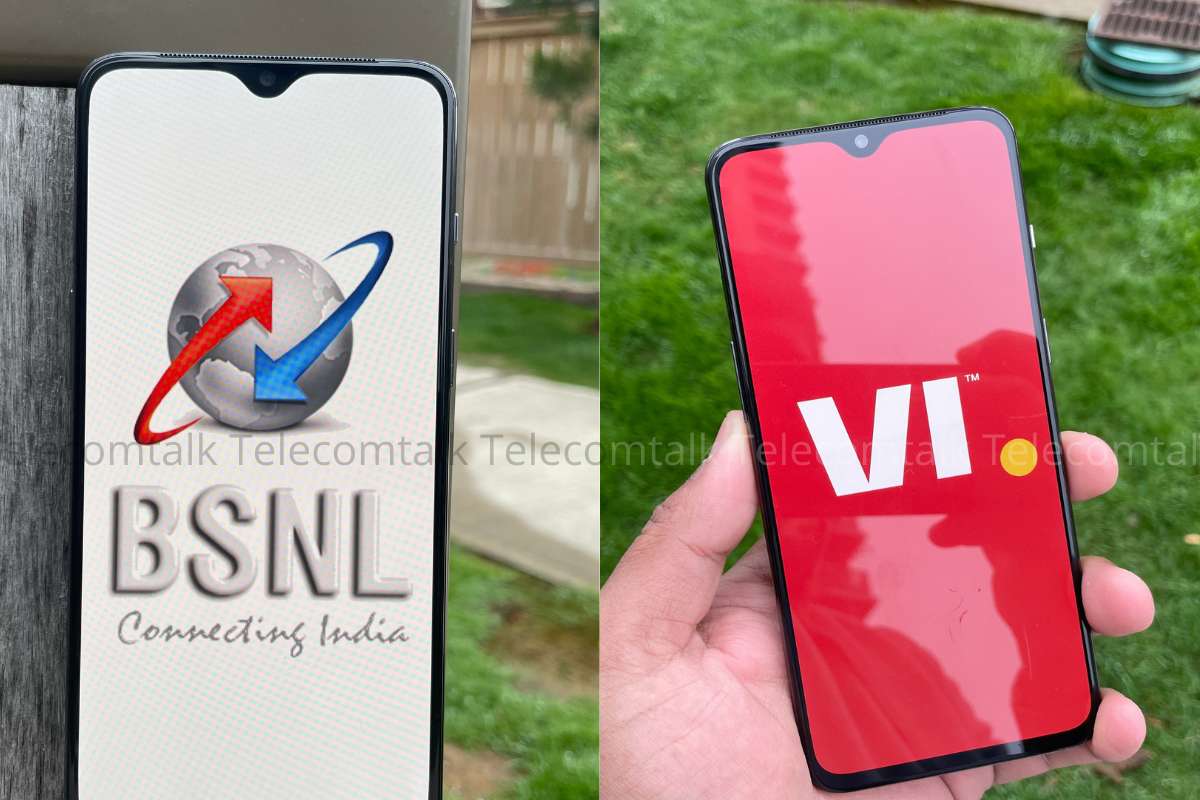 Bharat Sanchar Nigam Limited (BSNL) and Vodafone Idea (Vi) are both cash-strapped telcos arguably offering the best-prepaid plans in India. The reason is obviously to retain and attract new customers. But if you are choosing a 84 days prepaid plan from both of the companies in the same range, you are going to get confused. This is because both the companies offer users strong options to choose from in the 84 days validity category. However, I have narrowed the benefits and the disadvantages of the plan to help you better understand which plan is more apt. Bharat Sanchar Nigam Limited (BSNL) and Vodafone Idea (Vi) are both cash-strapped telcos arguably offering the best-prepaid plans in India. The reason is obviously to retain and attract new customers. But if you are choosing a 84 days prepaid plan from both of the companies in the same range, you are going to get confused. This is because both the companies offer users strong options to choose from in the 84 days validity category. However, I have narrowed the benefits and the disadvantages of the plan to help you better understand which plan is more apt. BSNL Rs 599 Prepaid PlanLet's start with BSNL's Rs 599 prepaid plan. The telco offers it to users living across the country. This plan offers users 5GB daily data for 84 days along with truly unlimited voice calling and 100 SMS/day. After consuming 5GB of data for the day, the internet speed for the user will drop to 84 Kbps. In addition to this, users get truly unlimited data at night (between 12 AM and 5 AM) which doesn't affect their FUP data for the rest of the day. There's an additional benefit of Zing included. Let's take a look at how Vi's plan does against this plan from BSNL.Vodafone Idea (Vi) Rs 599 Prepaid PlanVodafone Idea offers its Rs 599 prepaid plan with 1.5GB daily data only. This is way less than what users get with the BSNL's same denomination plan. Then there is an unlimited voice calling and 100 SMS/day benefit with an additional OTT benefit of Vi Movies & TV. However, users are entitled to get the 'Binge All Night' and 'Weekend Data Rollover' offers from the company. For the unaware, the 'Binge All Night' offer is the same as what BSNL is offering to its users at night – truly unlimited data without affecting the FUP data for the day. However, Vodafone Idea's plan offers it for 6 hours that starts at 12 AM and ends at 6 AM which is one hour more than BSNL's plan. Then there's the Weekend Data Rollover benefit which allows users to consume all of their leftover FUP data from the weekdays on the weekends. Overall, there's only one end where Vi's plan is behind BSNL's plan and that is the FUP data offered. BSNL's plan offers 5GB daily data while Vi's plan offers 1.5GB of daily data. However, Vi's plan would get the support of 4G networks across the nation; the same can't be said for BSNL's plan. Thus, you will get a ton of extra data with BSNL's Rs 599, 84 days plan; but you might not get the best internet speed which can ruin your experience. |
| You are subscribed to email updates from TelecomTalk. To stop receiving these emails, you may unsubscribe now. | Email delivery powered by Google |
| Google, 1600 Amphitheatre Parkway, Mountain View, CA 94043, United States | |


Comments
Post a Comment