${latestitem Title}
${latestitem Title} |
- 5G Ecosystem in India to Benefit With PLI Scheme: Chris Rice, STL
- BSNL Making SMS Charges for eSIMs 66.67% More Affordable
- Vodafone Idea CEO Says Govt Not Interested in Getting Equity
- American Tower CEO Hopes Indian Telecom Operators Reinvest Into Telecom Infrastructure
- Vodafone Idea Rs 555 Plan a Better Deal Than Jio’s Same Offering
| 5G Ecosystem in India to Benefit With PLI Scheme: Chris Rice, STL Posted: 26 Sep 2021 09:06 AM PDT 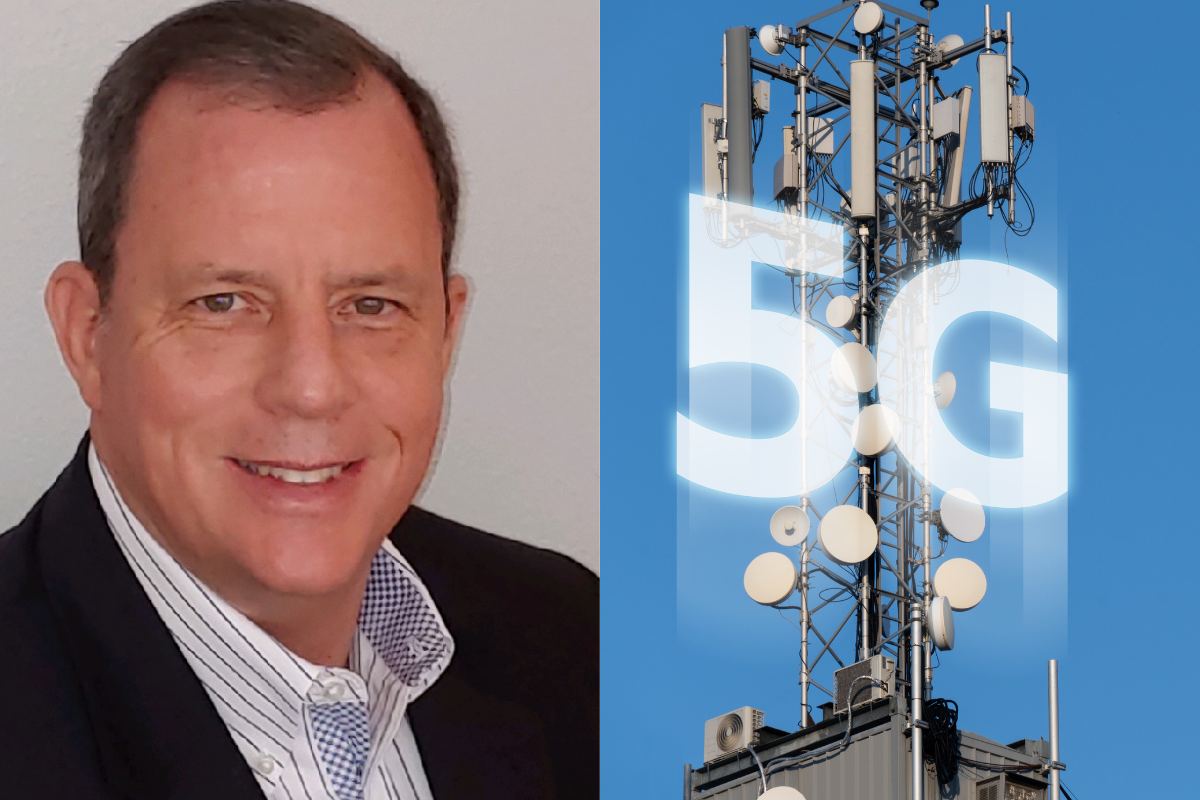 Optical fiber has evolved in its maturity and in its form factors to drive the infrastructure medium for the "wireline" side of the network. It continues to be the preferred medium for high-speed network delivery, says Chris Rice, CEO – Access Solutions, STL. Optical fiber has evolved in its maturity and in its form factors to drive the infrastructure medium for the "wireline" side of the network. It continues to be the preferred medium for high-speed network delivery, says Chris Rice, CEO – Access Solutions, STL. Q1. According to You, What is the Ground Reality of 5G Readiness?Answer – 5G is ready, willing, and able to be delivered today. The question is how for telcos. Do they deploy with the traditional vendor ecosystem with the proprietary architecture and "vendor lock-in," or do the telcos jump onto an open architecture with open interfaces and a growing, vibrant open ecosystem? In the long run, open systems with open interfaces win, look at the areas of compute and IP networking. The same disruption to the status quo that occurred in those markets years ago is happening in the RAN today.Q2. What According to You Are 3-4 Absolute Must-haves on the Network Infrastructure Side, if 5G is to Become a Reality and Deliver Expected Performance?Answer – Upgrade the network backhaul and core IP infrastructure for the expected growth in bandwidth that 5G Applications will enable. The necessity of wireline 5G upgrades sometimes does not get the attention it deserves; this includes IP equipment (e.g. cell site routers) and the necessary fiber upgrades to the cell sites. Perform the network planning for the new cell site builds required to get the coverage and capacity required for ubiquitous 5G at the speeds users expect. For 5G to pay off for Telcos, there have to be new capabilities and services to sell that deserve higher price points from consumers and business users. Ensure that operational automation is available to keep operating costs reasonable, especially as the number of cell sites grows. CAPEX is typically only 20 to 25% of the Total Cost of Ownership (TCO) for a RAN, meaning that operating costs are 3X to 4X what CAPEX is. The RAN Intelligent Controller (RIC) is an example in ORAN / OpenRAN that helps Telcos fulfil this need in an open way. It is essentially the operating system for OpenRAN. It provides a platform for third-party applications to deliver these operational benefits and automation.Q3. Increased Fibre Deployment Empowers Digital Economies and Ensures the Growth of Digital Society, but We Have a Long Journey to Cover to Fiberise Towers. How Is STL Helping Industry Stakeholders to Explain to Government Officials the Importance of Fibre for 5G or High-Speed Broadband?Answer – Network speed in the RAN air interface is essentially meaningless without the ability to ensure that the connected IP network can backhaul the required bandwidth. This fact necessitates additional fiber deployments to the existing cell sites (where it does not exist) and to new cells sites.Q4. Optical Fibre Has Been a Leading Medium of Connectivity for the World Since Many Decades; How Has the Technology Evolved to Cater to the Needs of 5G or Fibre to the Home?Answer – Optical fiber has evolved in its maturity and in its form factors to drive the infrastructure medium for the "wireline" side of the network. It continues to be the preferred medium for high-speed network delivery, despite advancements in modulation schemes, wavelength multiplexing, and high-speed wireless backhaul. In fact, many of those same modulation advancements have been applied to fiber systems, making the business case for fiber better.Q5. What Role Do You Envision India Playing in the Global 5G Ecosystem? How Is STL a Part of This Envision?Answer – India will play a big role. With the "Make in India" effort, with the PLI schemes being supported, with the disruption happening that is driving the OpenRAN efforts, and with recent geopolitical events that have affected the 5G ecosystem, the opportunity for Indian companies in 5G is enormous. STL plans to be a big part of this global 5G ecosystem. We have a role in delivering fiber infrastructure, optical interconnections, the RAN systems that drive the wireless 5G infrastructure, and in the deployment of these networks.Q6. Do You Think the Private Players Will Require More Government Assistance for Building 5G Ecosystem in India?Answer – They may. The role of the government is to provide benefits and opportunities for its citizens. To that end, wireless networks and the applications that ride on them are becoming more critical to the everyday life of its citizens. 5G will increase the role of this critical wireless infrastructure. Recognition of this fact and policies that support the development of these networks on a level playing field are viable roles for governments and their policies.Q7. Please Comment on the Technological Skills and Offerings You’ve Developed That Will Be Crucial in the Development of the Country’s Wider 5G Ecosystem in the Next Years?Answer – We have a well-known 25-year history in delivering fiber infrastructure, and optical interconnects to a global set of customers. We will continue that business and advance both products that we deliver and grow the customers that we serve. We are growing our ability to deploy networks and deliver advanced services. With a history in deploying military and citizen networks, we are applying our learnings there and growing into FTTH and RAN network deployments. We have recently made acquisitions in the UK to grow the markets in which we provide these network services. Our newest business unit, the Access Solutions BU, focuses on fiber broadband and 5G wireless products. These products are based on open networking principles and give STL the opportunity to participate in the disruption that is occurring in the open networking markets, like ORAN and OpenRAN initiatives. While Access Solutions BU is new, it has an R&D and innovation heritage of almost four years. During that time, a top talent team has been put in place, fundamental technology and innovation have been developed and matured, and now a well-defined product roadmap has been put in place as the BU launches many new products in its Accellus product line. |
| BSNL Making SMS Charges for eSIMs 66.67% More Affordable Posted: 26 Sep 2021 04:45 AM PDT  Bharat Sanchar Nigam Limited (BSNL) has made the eSIM SMS charges 66.67% more affordable for its customers. This change has been put into effect immediately in all the telecom circles in India. Further, the telco has made the changes applicable on both the Offnet SMS (another network) and Onnet (BSNL network). As per a Kerala Telecom report, BSNL had recently introduced two new additional eSIM tariff plans for M2M and IoT applications and was charging as low as Rs 15 per month for each eSIM. BSNL had decided to go with 15 paise/SMS as the charge applicable after the freebies were over. But now, the company has decided to drop the charges even more to 5 paise/SMS (for SMSes to BSNL's network) and 10 paise/SMS (for SMSes to other networks). Bharat Sanchar Nigam Limited (BSNL) has made the eSIM SMS charges 66.67% more affordable for its customers. This change has been put into effect immediately in all the telecom circles in India. Further, the telco has made the changes applicable on both the Offnet SMS (another network) and Onnet (BSNL network). As per a Kerala Telecom report, BSNL had recently introduced two new additional eSIM tariff plans for M2M and IoT applications and was charging as low as Rs 15 per month for each eSIM. BSNL had decided to go with 15 paise/SMS as the charge applicable after the freebies were over. But now, the company has decided to drop the charges even more to 5 paise/SMS (for SMSes to BSNL's network) and 10 paise/SMS (for SMSes to other networks). What are IoT/M2M ApplicationsInternet of Things (IoT) or M2M (machine to machine) communication is interactions between two machines or more without the requirement of a human being manually driving the communication. One of the biggest use cases of 5G networks would be IoT and M2M communication. The telecom operators are going to be betting big on revenues from the enterprises business in the coming months with 5G on the way. IoT applications require communication to happen in real-time requiring ultra-low latency and high throughput to ensure the data packets gets delivered. The Telecom Regulatory Authority of India (TRAI) had recently implemented a 13-digit numbering pattern for the M2M services. The telecom service providers (TSPs) have already started signing agreements with the M2M and IoT service providers. BSNL is already offering the eSIM service and customers can contact the company if they need it. Business and corporate customers can even go to the website of the company and register for the eSIM service. The cost of M2M SIM cards is nil when a user is getting an eSIM but it is Rs 10 for a physical SIM. |
| Vodafone Idea CEO Says Govt Not Interested in Getting Equity Posted: 26 Sep 2021 01:34 AM PDT  Since the relief package has been announced, talks about the government getting an equity stake in the telecom companies against some part of their dues has been going on. But according to the recent statements from Ravinder Takkar, MD & CEO, Vodafone Idea, the government is not interested in getting equity of the telecom companies. At the same time, Takkar said in an interview with PTI that the government is focusing on keeping India a three private player market. This rules out the concern for any duopoly between Reliance Jio and Vodafone Idea in the medium or long term. Since the relief package has been announced, talks about the government getting an equity stake in the telecom companies against some part of their dues has been going on. But according to the recent statements from Ravinder Takkar, MD & CEO, Vodafone Idea, the government is not interested in getting equity of the telecom companies. At the same time, Takkar said in an interview with PTI that the government is focusing on keeping India a three private player market. This rules out the concern for any duopoly between Reliance Jio and Vodafone Idea in the medium or long term. Vodafone Idea Will Have to Figure Out a Solution FastVodafone Idea will have to figure out a way very fast to find a solution for reducing its debt and also investing in its networks at the same time. If the government at the end of the day isn't interested in getting equity, it will mean that Vi will have to fend for itself. It can't bank on the government getting an equity stake against the dues. But the good thing is, the telco has the time to do that now. There's no immediate pressure on the payments of the coming dues for the next four years. Further, it can now focus aggressively on expanding the reach of the 4G networks and also work on its 5G strategy for India. Vodafone Idea has the spectrum required, it can also work with other telcos in sharing infrastructure costs for 5G which will be of huge help. By sharing the infra costs, Vodafone Idea will be able to save money and also roll out new services faster. The same applies to the other telcos as well. Reliance Jio and Bharti Airtel will also be able to save costs and roll out new services at a rapid pace. It will be interesting to look at what government comes up with regarding the same in the near future. |
| American Tower CEO Hopes Indian Telecom Operators Reinvest Into Telecom Infrastructure Posted: 25 Sep 2021 10:35 PM PDT  The telecom market in India had been a "tough" space for the operators in the past two to three years, says Tom Bartlett, chief executive officer at American Tower. Bartlett said that American Tower witnessed "outsized net growth" when the company "originally" entered the Indian telecom market. However, the chief executive officer at American Tower said that the growth was "clamped down" as the Indian telecom market underwent "consolidation" and went "through some of the regulatory patch issues." Bartlett said that the measures taken by the Union government in the past 10 days provide a "great backdrop" for the telecom industry and that "it's a case of being patient." The telecom market in India had been a "tough" space for the operators in the past two to three years, says Tom Bartlett, chief executive officer at American Tower. Bartlett said that American Tower witnessed "outsized net growth" when the company "originally" entered the Indian telecom market. However, the chief executive officer at American Tower said that the growth was "clamped down" as the Indian telecom market underwent "consolidation" and went "through some of the regulatory patch issues." Bartlett said that the measures taken by the Union government in the past 10 days provide a "great backdrop" for the telecom industry and that "it's a case of being patient." Government Measures Very Helpful: ATC CEOThe Union government in mid-September announced a set of "structural and process reforms" for the telecom industry to "promote healthy competition" and to "generate employment opportunities." The measures announced by the Union government included a four-year moratorium for the telecom operators to repay dues to the government along with the revised definition of adjusted gross revenues. "The issue for our largest customer in India has been one of available cash to be able to reinvest into their networks," Bartlett said in the annual Goldman Sachs Communacopia Conference on Wednesday. The chief executive officer at American Tower highlighted that the telecom operators have a "significant amount of debt" and that "most of it is to the government." Bartlett said that the measures taken by the Union government in the past 10 days will be "very helpful." "We’re hopeful that it will now give Vodafone some more air in their tires to be able to turn around and continue to, or increase the overall investment that they have in the marketplace," Bartlett said. American Tower is said to own and operate over 76,000 sites across India with Bharti Airtel, Vodafone Idea and Reliance all said to be engaged with the company. "I think Airtel and RJio (Reliance Jio) are going to continue to invest heavily in the market," Bartlett said. "It’s a big market. They have a new spectrum in the marketplace. My sense is that they’ll have a more new spectrum in the marketplace. They’ll have more flexibility in terms of how to use it."ATC CEO "cautiously optimistic" About Indian Telecom MarketBartlett highlighted that the government is now extending the spectrum licenses and that it offers the telecom operators "more comfort on rolling out infrastructure within each one of those bands." Crucially, Bartlett said that American Tower still witnesses "good" gross additions "just because of the dynamics of how many people are there and what’s being deployed" by the telecom operators in India. "I’m hopeful that a lot of that churn is going to be largely behind us and that now all of the customers there, including BSNL, which is the government-owned largely venture, are going to now be able to turn the spigots on and start to reinvest back into the market," Bartlett said. The chief executive officer at American Tower is "cautiously optimistic" about the telecom market in India. Further, Bartlett thinks that the American Tower will be "able to get back up into those mid-single-digit types of growth rates in the not-too-distant future.” "We’re really hopeful as a result of the government kind of stepping up and maybe there’s even going to be an opportunity for some price increases in the marketplace to give the carriers a little bit more flexibility in terms of what they do," Bartlett said. Meanwhile, ICICI Securities, a subsidiary of ICICI Bank said that Vodafone Idea "does not need much of cell site addition" but that the operator "needs to expand" its 4G base transceiver stations. The firm in a note on Wednesday said that Vodafone Idea has 21% lower 2G cell sites as compared to Bharti Airtel and also 31% lower mobile broadband cell sites. Further, ICICI Securities said that Vodafone Idea had 48% lower mobile broadband base transceiver stations (BTS) as compared to Bharti Airtel as of the first quarter of the current financial year. "VIL (Vodafone Idea) still has a long way to go as it needs tariff hike and recouping of some market share," ICICI Securities said. "We expect VIL to use capital to accelerate its capex in 4G where it lags peers in terms of data capacity though it always enjoyed a huge advantage on spectrum quantity." |
| Vodafone Idea Rs 555 Plan a Better Deal Than Jio’s Same Offering Posted: 25 Sep 2021 06:43 PM PDT  Vodafone Idea (Vi) is one of the prominent telecom operators in India. Regardless of the desperate situation the telco was in until a few days back, there's no denying that its plans remain some of the best, and its network experience is at par with what Jio and Airtel provide to their users. One area where Vi can still work on is extending coverage. There is one prepaid plan that both Reliance Jio and Vodafone Idea (Vi) provide to their users. Vi offers a Rs 555 prepaid plan, and Jio does that as well. But there are a few differences between the plans of both the operators, which allow the users to decide which one they want to go with. Since our world is shifting to virtual and augmented reality very fast, a prepaid plan that can back up your data needs is a better option. But more of this in this article ahead so that you can understand what we are trying to say. Vodafone Idea (Vi) is one of the prominent telecom operators in India. Regardless of the desperate situation the telco was in until a few days back, there's no denying that its plans remain some of the best, and its network experience is at par with what Jio and Airtel provide to their users. One area where Vi can still work on is extending coverage. There is one prepaid plan that both Reliance Jio and Vodafone Idea (Vi) provide to their users. Vi offers a Rs 555 prepaid plan, and Jio does that as well. But there are a few differences between the plans of both the operators, which allow the users to decide which one they want to go with. Since our world is shifting to virtual and augmented reality very fast, a prepaid plan that can back up your data needs is a better option. But more of this in this article ahead so that you can understand what we are trying to say. Vodafone Idea Rs 555 Plan Is Better Than Jio When It Comes to Data NeedsVodafone Idea offers a Rs 555 plan to the users, and so does Jio. Both the telecom operators offer users free voice calling with 100 SMS/day and 1.5GB daily data. Vodafone Idea's plan comes with a shorter validity of 77 days, while Jio's plan comes with a validity of 84 days. But there's more to the picture. With Jio, you don't get any additional offers. Jio only offers a free subscription to multiple Jio applications with this plan. However, Vodafone Idea offers users a 'Weekend Data Rollover' and 'Binge all Night' offer. As well. These benefits make Vodafone Idea's plan a lot better when compared with Jio's plan. Further, uses also get a free over-the-top (OTT) subscription to Vi Movies & TV. For the unaware, the Weekend Data Rollover benefit allows users to consume all of their leftover fair-usage-policy (FUP) data from the weekdays into the weekends. Further, with the Binge all Night offer, users can consume as much internet as they want at night-time between 12 AM and 6 AM. The data used at night time doesn't affect the users' FUP data for the day. Even though Reliance Jio's plan offers more validity, it isn't that big of a difference, to be honest. Jio offers its plan for 84 days, while Vi offers its plan for 77 days. That's a difference of a week. But with Vi's plan, heavy data users can stay very happy. |
| You are subscribed to email updates from TelecomTalk. To stop receiving these emails, you may unsubscribe now. | Email delivery powered by Google |
| Google, 1600 Amphitheatre Parkway, Mountain View, CA 94043, United States | |


Comments
Post a Comment