${latestitem Title}
${latestitem Title} |
- Airtel Safe Pay: Benefits, Features, and How You Can Enable
- OTT Market in India Might Grow Up to Rs 11,976 Crore by 2023: PwC
- Apple’s Premium iPhone Is Available at Rs 24,000 Lesser Price
- Xiaomi Has Discontinued Its Ultra Premium Smartphone in India
- JioPhone Next Confirmed to be Available for Rs 6499 in India
- Vodafone Idea Accepts Moratorium for AGR Payments, Jio Declines
- India Trying to Become Self-Dependent When it Comes to Telecom
- SITI Broadband Offers High Value 300 Mbps Plan
- Redmi Note 11 Might Launch in India as Poco Smartphone
- BSNL Had Discontinued Plan 99, Unaware Customers Shocked
- Apple Saw Business Growing by Two Times in India
- Vodafone Idea Very Affordable One-Year Validity Prepaid Plan
| Airtel Safe Pay: Benefits, Features, and How You Can Enable Posted: 29 Oct 2021 12:36 PM PDT 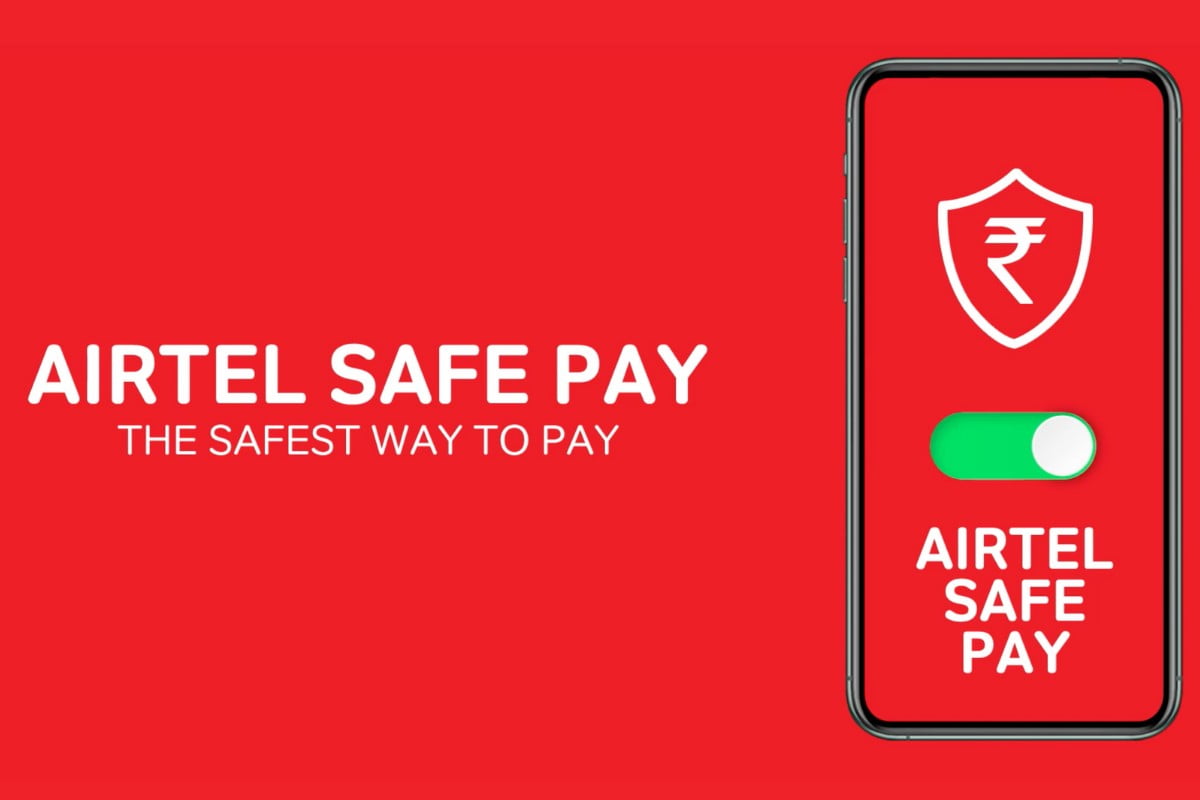 Airtel Payments Bank, a subsidiary company of Bharti Airtel, offers a plethora of digital banking services to customers across India. A few months back, the company introduced a new feature called 'Airtel Safe Pay' for its customers. In the wake of increasing cyber frauds, Airtel Payments Bank has made transactions through its platform a lot more secure with the introduction of 'Safe Pay'. Airtel Safe Pay is a security feature that can only be availed by an Airtel Payments Bank Savings Account user. The feature delivers real-time alerts to the customers whenever a UPI or net banking transaction is being made through their account. The alert is delivered before the transaction is completed to ensure that the account owner is aware of what is happening. Until and unless the account owner approves the transaction through the alert message, the transaction won't happen. It is basically a 3-factor authentication process. Airtel Payments Bank, a subsidiary company of Bharti Airtel, offers a plethora of digital banking services to customers across India. A few months back, the company introduced a new feature called 'Airtel Safe Pay' for its customers. In the wake of increasing cyber frauds, Airtel Payments Bank has made transactions through its platform a lot more secure with the introduction of 'Safe Pay'. Airtel Safe Pay is a security feature that can only be availed by an Airtel Payments Bank Savings Account user. The feature delivers real-time alerts to the customers whenever a UPI or net banking transaction is being made through their account. The alert is delivered before the transaction is completed to ensure that the account owner is aware of what is happening. Until and unless the account owner approves the transaction through the alert message, the transaction won't happen. It is basically a 3-factor authentication process. How Do I Enable 'Safe Pay' for Transactions on my Airtel Payments Bank?You can enable 'Safe Pay' without any hassle on the Airtel Payments Bank. First of all, go to the Airtel Thanks app on your smartphone. Then find the home screen of the bank section or go to Payment Settings which is in the 'More Settings' option on the bank's home screen. You will find the 'Secure Pay' option in either of the sections. On clicking on the option, you will be taken to a new screen from where you can enable the 'Safe Pay'. Whenever a debit transaction is manually initiated from the Airtel Payments Bank and the 'Safe Pay' feature is enabled, the user will receive an alert. The company says that Secure Pay alerts will be delivered to the customers even if the internet connectivity is not there. The user just needs to ensure that he/she is in a network coverage area. The message alert will show the amount that is going to be debited and the name of the person the money will go to. |
| OTT Market in India Might Grow Up to Rs 11,976 Crore by 2023: PwC Posted: 29 Oct 2021 08:52 AM PDT  The rise in demand for over-the-top (OTT) content has been pretty evident. Even if people don't subscribe to the OTT platforms directly, they do ask for the subscription login details from their friends or families to watch content on the go. The reason why OTT is getting popular is that it gives control back to the users. People can watch their favourite content regardless of the time or wherever they are, directly on their smartphones. The access to content with OTT platforms is easy and hassle-free, so why not! According to PwC's Global Entertainment Report, the OTT market in India might reach Rs 11,976 crore by 2023 compared to Rs 4,464 crore in 2018. The rise in demand for over-the-top (OTT) content has been pretty evident. Even if people don't subscribe to the OTT platforms directly, they do ask for the subscription login details from their friends or families to watch content on the go. The reason why OTT is getting popular is that it gives control back to the users. People can watch their favourite content regardless of the time or wherever they are, directly on their smartphones. The access to content with OTT platforms is easy and hassle-free, so why not! According to PwC's Global Entertainment Report, the OTT market in India might reach Rs 11,976 crore by 2023 compared to Rs 4,464 crore in 2018. Advertisers Finding New Ways to Reach People With OTT PlatformsWherever more eyeballs fall, you will find advertisers lurking in the corner. With OTT platforms growing in demand and more and more people latching on to new platforms every day, the advertisers' interests' are shifting from cable TV to OTT platforms. Don't get me wrong, there's just no way that OTT can beat satellite/cable TV services any time soon. But, with OTT platforms, there's something more that the advertisers can do, and that is to show personalised ads. This is a conversation for some other day, but it is already happening on free video platforms such as YouTube. The only downfall for OTT in India at the moment is the lack of connectivity in every part of the country. While satellite TV can be an option for rural India, OTT platforms need strong and fast Internet connectivity to make a difference. This is why it will take much more time for the OTT platforms to grow in India. According to a report from IIFL Securities, a recent survey has revealed that 66% of Indian households subscribe to at least one OTT service. This is an amazing stat and certainly encouraging for the OTT platforms in the country. |
| Apple’s Premium iPhone Is Available at Rs 24,000 Lesser Price Posted: 29 Oct 2021 08:13 AM PDT 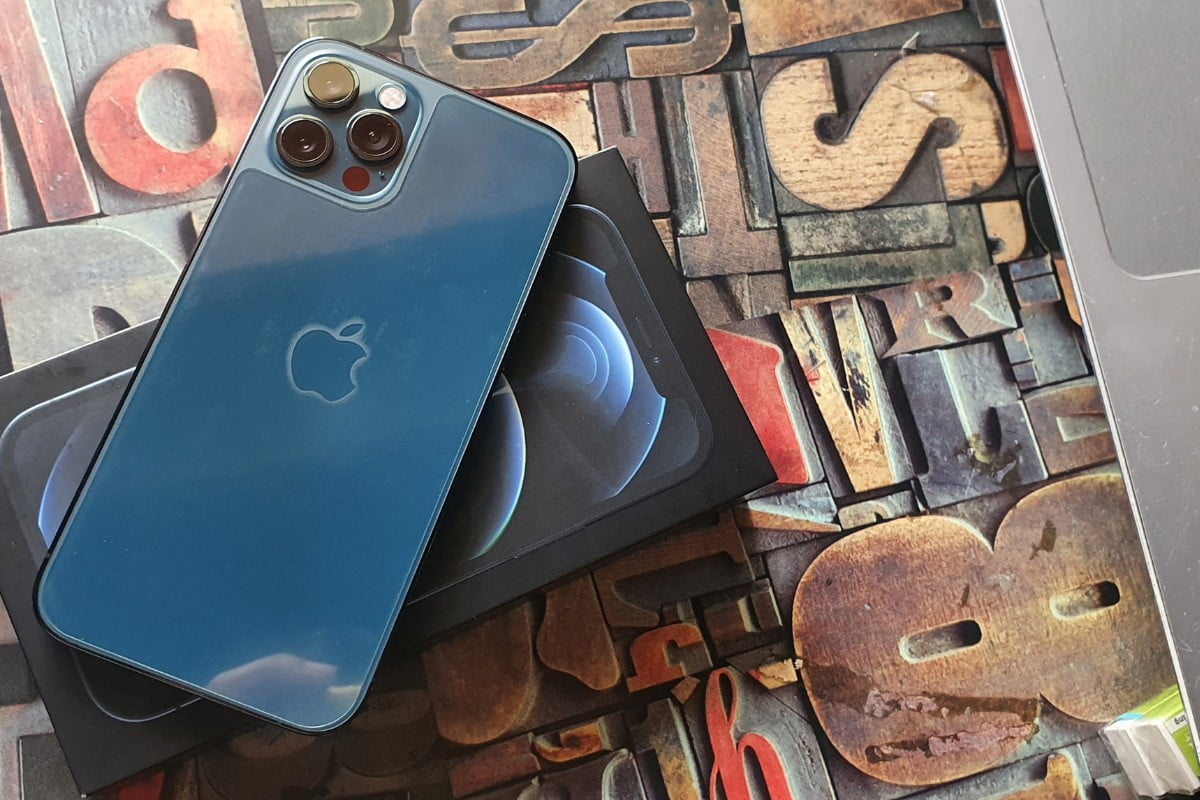 Apple is one smartphone brand that almost everyone is aware of. This is because of multiple reasons. A few of them are that the device is a status symbol and it is very powerful and efficient. While the iPhone 13 series is out in the market, the company is expecting most of its sales to come from the iPhone 12 series devices. This is because there is a supply constraint with the iPhone 13 series smartphones. But this is not even the point. The reason why the iPhone 12 series is going to do better than the iPhone 13 series in the next few months is that it is available at a discounted rate and also that the iPhone 13 series is identical to the iPhone 12 series in terms of design. There's a premium iPhone 12 series device that is available at a discount of Rs 24,000 and could prove to be a great buy for the users. Apple is one smartphone brand that almost everyone is aware of. This is because of multiple reasons. A few of them are that the device is a status symbol and it is very powerful and efficient. While the iPhone 13 series is out in the market, the company is expecting most of its sales to come from the iPhone 12 series devices. This is because there is a supply constraint with the iPhone 13 series smartphones. But this is not even the point. The reason why the iPhone 12 series is going to do better than the iPhone 13 series in the next few months is that it is available at a discounted rate and also that the iPhone 13 series is identical to the iPhone 12 series in terms of design. There's a premium iPhone 12 series device that is available at a discount of Rs 24,000 and could prove to be a great buy for the users. iPhone 12 Pro Available at Rs 24,000 DiscountThe iPhone 12 Pro was launched in India for Rs 1,19,900. But presently, in Amazon, the same device is available for Rs 95,900. This is a discount of Rs 24,000. There is no guarantee for how long-this price cut will stay in place. So if you have thought about getting the iPhone 12 Pro ever, now's a perfect time. The iPhone 13 Pro is available at Rs 1,19,900. While it is the latest generation 'Pro' iPhone, a thing worth considering here is that it is also Rs 24,000 more expensive. Further, if you are a new iPhone user, you will also have to purchase the charging brick separately. This makes the iPhone 12 Pro a steal of a deal right away. The iPhone 12 mini starts at Rs 42,099 for the 64GB variant in India in Flipkart. These are great deals for iPhone fans. It is great to see iPhones getting huge discounts in India. |
| Xiaomi Has Discontinued Its Ultra Premium Smartphone in India Posted: 29 Oct 2021 07:02 AM PDT  Xiaomi, the Chinese smartphone maker, has discontinued the Mi 11 Ultra in India. It is worth noting that the smartphone had made its way to the Indian market only in April this year. Further, its first sale started on July 7 where the device was available in an extremely limited quantity. After the device went out of stock recently, Xiaomi has decided not to restock the device for Indian fans. So if you have been planning to buy the Mi 11 Ultra for a long now in India, good luck to you. According to an India Today Tech report, Xiaomi will be discontinuing the Mi 11 Ultra in India so that it can focus on the flagship smartphone for 2022. Xiaomi, the Chinese smartphone maker, has discontinued the Mi 11 Ultra in India. It is worth noting that the smartphone had made its way to the Indian market only in April this year. Further, its first sale started on July 7 where the device was available in an extremely limited quantity. After the device went out of stock recently, Xiaomi has decided not to restock the device for Indian fans. So if you have been planning to buy the Mi 11 Ultra for a long now in India, good luck to you. According to an India Today Tech report, Xiaomi will be discontinuing the Mi 11 Ultra in India so that it can focus on the flagship smartphone for 2022. Xiaomi Might Keep Its Focus on Mid-Range in IndiaIndians are quite sceptical about investing a lot of money into Chinese flagships. While OnePlus has still beaten the odds, for a company like Xiaomi, which is doing really well in the entry-level and mid-range segment, it doesn't make a lot of sense to try and compete with Apple and Samsung in the premium segment. Xiaomi is expected to launch the Mi 11T Pro in India. The Mi 11T Pro isn't exactly the same kind of ultra-premium flagship that Mi 11 Ultra is! This is why it will be interesting to look at the company's strategy and outlook for the Indian market. There's no confirmation on whether Xiaomi will return to India with an ultra-premium flagship device. Discontinuing the Mi 11 Ultra is a clear sign that the device didn't sell the way the company might have anticipated in the Indian market. It's fair as well because, at the same price as the Mi 11 Ultra, users had other flagship options from Apple and Samsung. It would be great if Xiaomi came back with an out and about premium flagship device in India. |
| JioPhone Next Confirmed to be Available for Rs 6499 in India Posted: 29 Oct 2021 05:10 AM PDT 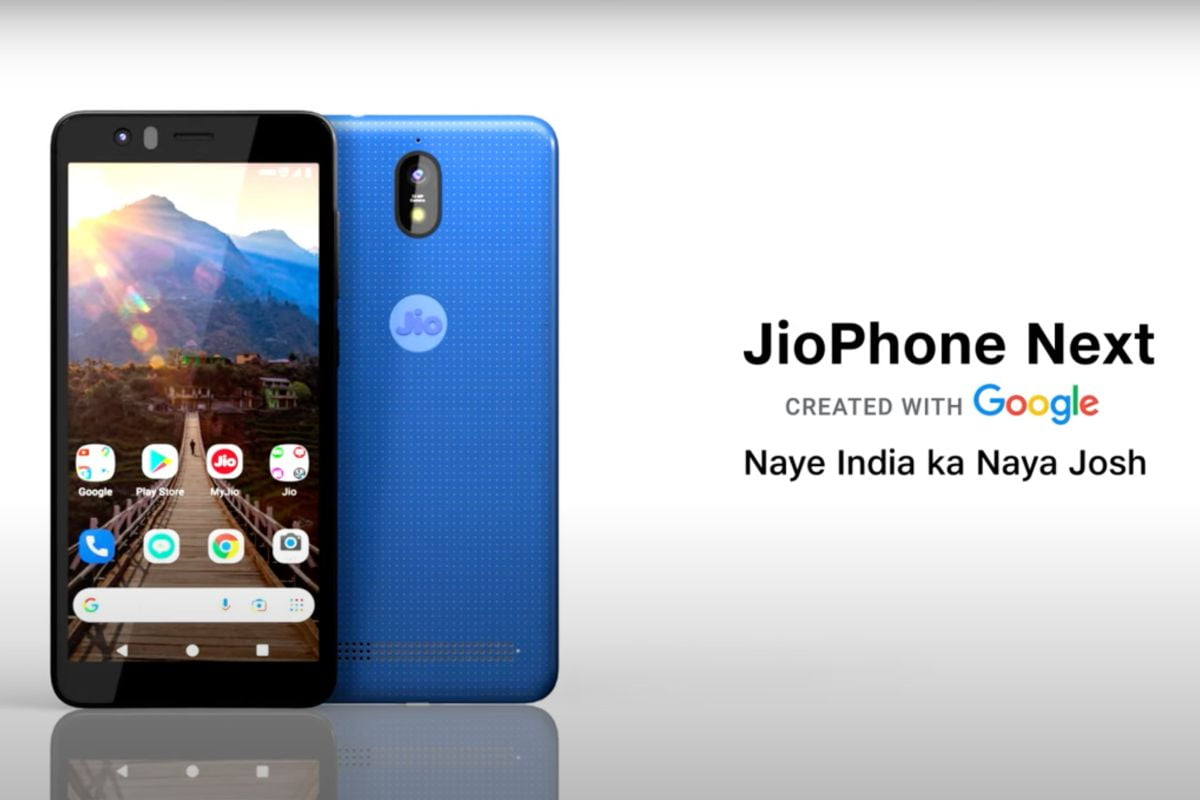 JioPhone Next, the affordable 4G smartphone developed in partnership by Reliance Jio and Google, will be available in India at a price of Rs 6499 starting this Diwali. The smartphone will be available at convenient, easy monthly instalments (EMIs) of up to 24 months. There are four plans that the company is bundling with the EMI payments for the users. Here is everything you need to know about the JioPhone Next and its price. JioPhone Next, the affordable 4G smartphone developed in partnership by Reliance Jio and Google, will be available in India at a price of Rs 6499 starting this Diwali. The smartphone will be available at convenient, easy monthly instalments (EMIs) of up to 24 months. There are four plans that the company is bundling with the EMI payments for the users. Here is everything you need to know about the JioPhone Next and its price. JioPhone Next Price in IndiaJioPhone Next has been launched for Rs 6499 in India. Users can purchase the smartphone in both EMIs or through complete cash payment upfront. It will be available through all the retail partners of the company, which includes JioMart. Users can opt for paying Rs 1,999 upfront and then pay the rest of the amount in EMIs. The EMIs will be in four different options. 1) Always-on Plan – This plan will allow customers to either pay Rs 300 per month for 24 months or Rs 350 per month for 18 months. Further, users will get 5GB of data + 100 minutes of voice calling per month with this plan. 2) Large Plan – This plan from the company will be available for customers for Rs 450 per month for 24 months or Rs 500 per month for 18 months. Users will get 1.5GB of daily data and unlimited voice calling as well. 3) XL Plan – With the XL plan, users will either have to pay Rs 500 per month for 24 months or Rs 550 per month for 18 months, and they will get 2GB of daily data with unlimited voice calling. 4) XXL Plan – Lastly, with the XXL plan, users will get 2.5GB of daily data and unlimited voice calling. Here, customers will have to pay Rs 550 per month for 24 months or Rs 600 per month for 18 months.JioPhone Next SpecificationsAs announced before, the JioPhone Next will run on Pragati OS based on Android. It will run on a Qualcomm Snapdragon 215 SoC coupled with up to 2GB of RAM and 32GB of internal storage. The internal storage can be expanded up to 512GB with an external microSD card. It comes with a 5.45-inch Multitouch HD+ (720×1440) display with Corning Gorilla Glass 3 on top. The JioPhone Next is a dual-SIM smartphone powered by a 3500mAh battery. It has a single 13MP sensor at the rear and an 8MP sensor at the front. Take a look at the image below to check the camera samples of JioPhone Next. |
| Vodafone Idea Accepts Moratorium for AGR Payments, Jio Declines Posted: 29 Oct 2021 04:25 AM PDT  Vodafone Idea (Vi) has accepted the adjusted gross revenue (AGR) dues payments moratorium from the government. The third-largest telco in the country was expected to go ahead with this move as it doesn't really have a strong cash flow to keep paying AGR dues and also keep investing in its networks. With this, both Bharti Airtel and Vodafone Idea have accepted the relief measures given by the government. Airtel and Vodafone Idea will enjoy the moratorium on the payments of both spectrum payments and the AGR dues. At the same time, according to an ET Telecom report, Reliance Jio has refused to accept the spectrum and AGR dues payment moratorium. Vodafone Idea (Vi) has accepted the adjusted gross revenue (AGR) dues payments moratorium from the government. The third-largest telco in the country was expected to go ahead with this move as it doesn't really have a strong cash flow to keep paying AGR dues and also keep investing in its networks. With this, both Bharti Airtel and Vodafone Idea have accepted the relief measures given by the government. Airtel and Vodafone Idea will enjoy the moratorium on the payments of both spectrum payments and the AGR dues. At the same time, according to an ET Telecom report, Reliance Jio has refused to accept the spectrum and AGR dues payment moratorium. Vodafone Idea, Airtel Have Still Not Made Their Mind About Giving Equity to GovernmentNeither of the telecom operators including Vodafone Idea or Bharti Airtel have made their minds about giving equity to the government. In a regulatory filing on Friday, Vodafone Idea said that it is still contemplating what it wants to do about the equity option extended by the government. For the unaware, as part of the relief measures, the government had given the telecom operators an option of converting the interest dues accrued over the period into equity for the centre. If accepted, this option will ensure that Vodafone Idea will not go out of the market in the long run even if the situation of the company worsens. Bharti Airtel has also not made a decision related to the equity option yet. Reliance Jio has declined the measures extended from the government because it is not in need of them. The telco would rather keep clearing debt off its books. Jio is in a much better position financially than the other two private telecom operators of the country. In fact, Jio recently paid the Department of Telecommunications (DoT) Rs 10,792 crore for clearing out its dues on the spectrum bought in the 2016 auctions. |
| India Trying to Become Self-Dependent When it Comes to Telecom Posted: 29 Oct 2021 03:02 AM PDT  India, one of the biggest telecom markets in the world, is trying to become self-reliable with future technologies and communication networks. The Government of India (GoI) is already pushing the Aatmanirbhar Bharat vision for years now, and its results have been reflected in the telecom sector of the country. Companies like Reliance Jio, Bharti Airtel, and Bharat Sanchar Nigam Limited (BSNL) are pushing for homegrown networks in both the 4G and 5G segments. GoI has already instructed not to include the Chinese companies, including Huawei and ZTE, for future expansion of the 4G networks or rollout of fresh 5G networks. The government believes that it is a national threat to let Chinese companies be a part of India's telecom infrastructure. India, one of the biggest telecom markets in the world, is trying to become self-reliable with future technologies and communication networks. The Government of India (GoI) is already pushing the Aatmanirbhar Bharat vision for years now, and its results have been reflected in the telecom sector of the country. Companies like Reliance Jio, Bharti Airtel, and Bharat Sanchar Nigam Limited (BSNL) are pushing for homegrown networks in both the 4G and 5G segments. GoI has already instructed not to include the Chinese companies, including Huawei and ZTE, for future expansion of the 4G networks or rollout of fresh 5G networks. The government believes that it is a national threat to let Chinese companies be a part of India's telecom infrastructure. Government Pushing India to Become Self-ReliableThe GoI has done a fantastic job in pushing the vision of the Aatmanirbhar Bharat so far. BSNL is setting the example by preparing to roll out a homegrown 4G network. It might be more expensive and might take more time, but the government wants to ensure that India doesn't need to depend on anyone in the future. Reliance Jio is also planning to roll out homegrown 5G networks in the future. Jio has already developed its 5G RAN and Standalone Architecture (SA) Core. Bharti Airtel had also announced a strategic partnership with the Tata Consultancy Services (TCS) a few months back for implementing 5G network solutions in India. Even the gear vendor ecosystem in India is developing. Companies like TCS and Tejas Networks are making huge strides in developing homegrown technologies and solutions. Airtel had said that it would pilot and deploy 5G solutions developed by TCS from January 2022, which is not so far anymore. The good thing about all of this is that even if India's allies drop in numbers in the future, it won't need other countries to manufacture and develop these essential network technologies. India is on the road to becoming self-dependent, all thanks to the initiatives from the government and the companies across several sectors of the economy. |
| SITI Broadband Offers High Value 300 Mbps Plan Posted: 29 Oct 2021 01:10 AM PDT  SITI Networks is a regional company that provides services in New Delhi, Madhya Pradesh, Uttar Pradesh, Telangana, Rajasthan, and more states. The company offers both television (TV) and broadband services to users. SITI offers some really good broadband internet plans to the customers lining in Madhya Pradesh (MP). In MP, the company offers its services in Gwalior, MHOW, and Indore. Today, we will be looking at the 300 Mbps broadband plan from the company and check whether it's worth it or not. SITI Networks is a regional company that provides services in New Delhi, Madhya Pradesh, Uttar Pradesh, Telangana, Rajasthan, and more states. The company offers both television (TV) and broadband services to users. SITI offers some really good broadband internet plans to the customers lining in Madhya Pradesh (MP). In MP, the company offers its services in Gwalior, MHOW, and Indore. Today, we will be looking at the 300 Mbps broadband plan from the company and check whether it's worth it or not. SITI Broadband Turbo Plan With 300 Mbps SpeedSITI Broadband offers a 300 Mbps plan named 'Turbo' to the customers living in Gwalior, MP. This plan is available for 1 month, 6 months, and 10 months. The company offers multiple recharge schemes to customers with long-term plans. For one month, the 300 Mbps plan will cost Rs 999 + GST. However, if the user decides to for the 6 months plan, he/she will get 1 month of service free from the company. Likewise, with the 10 months plan, users will get 2 months of service completely free of cost. So the 10 months plan will essentially become a year-long plan. The company has put a fair-usage-policy (FUP) limit on the amount of data that a user can consume in a month with this plan. However, it is not mentioned on the website of the company. Note that the 6 months and the 10 months plan will also include taxes. If there's a security deposit charged, it will only be refundable if the customer has consumed the services of the company for at least three months. The company won't refund the activation charges though. Users have the option and freedom of purchasing a modem or a Wi-Fi router of their choice from a third company. The activation charges are not uniform across the country and will depend on the region where the customer is living in. |
| Redmi Note 11 Might Launch in India as Poco Smartphone Posted: 28 Oct 2021 11:57 PM PDT  The Redmi Note 11 series comprising of Redmi Note 11, Redmi Note 11 Pro, and Redmi Note 11 Pro+ was launched recently in China. The smartphone series is soon expected to make its way to India. But the vanilla Redmi Note 11 might launch in India as a Poco smartphone, while the Redmi Note 11 Pro and Redmi Note 11 Pro+ might launch with the same branding and name. The model number of the Redmi Note 11, Redmi Note 11 Pro, and Redmi Note 11 Pro+ is 21091116AC, 21091116C, and 21091116UC, respectively. According to the tipster Ankit (@TechnoAnkit1), a new Redmi smartphone with the model number 21091116AI has been listed on the Bureau of Indian Standards (BIS) platform. The same device has been spotted on the IMEI database as well. The Redmi Note 11 series comprising of Redmi Note 11, Redmi Note 11 Pro, and Redmi Note 11 Pro+ was launched recently in China. The smartphone series is soon expected to make its way to India. But the vanilla Redmi Note 11 might launch in India as a Poco smartphone, while the Redmi Note 11 Pro and Redmi Note 11 Pro+ might launch with the same branding and name. The model number of the Redmi Note 11, Redmi Note 11 Pro, and Redmi Note 11 Pro+ is 21091116AC, 21091116C, and 21091116UC, respectively. According to the tipster Ankit (@TechnoAnkit1), a new Redmi smartphone with the model number 21091116AI has been listed on the Bureau of Indian Standards (BIS) platform. The same device has been spotted on the IMEI database as well. Redmi Note 11 India Launch Could be NearThe model number 21091116AI is the Indian variant for the Redmi Note 11. The device has also been found on the Eurasian Economic Commission (EEC) with the model number 2109111AG, which is the global edition of the smartphone. As per the EEC listing, this device might be launched as a rebranded Poco smartphone. According to rumours online, the Redmi Note 11 might launch as the Poco M4 Pro 5G is scheduled to be launched on November 9. Since Redmi phones have launched as Poco devices in India before, the Redmi Note 11 launching as a Poco device won't be a surprise for many.Redmi Note 11 Pro and Note 11 Pro+ Found Listed as WellAccording to the same tipster, the Redmi Note 11 Pro and the Redmi Note 11 Pro+ model numbers 21091116I and 21091116UI have also been spotted in the BIS platform. This means all of the Redmi Note 11 series devices launched in China could make their way to India pretty soon. The Pro smartphones in the series have amazing specifications, and it would be interesting to look at their prices in India. |
| BSNL Had Discontinued Plan 99, Unaware Customers Shocked Posted: 28 Oct 2021 10:56 PM PDT  Bharat Sanchar Nigam Limited (BSNL) had issued a notice a few months back that it would be discontinuing the Plan 99 from September 1, 2021. The Plan 99 is a postpaid offering from the company. The state-run telco had said that customers who are using the Plan 99 would be migrated to the Rs 199 postpaid plan. Because of the change, customers who received their postpaid bill in October were shocked to see the revised charges. From Rs 99 + GST, now their bill is much higher than expected. Bharat Sanchar Nigam Limited (BSNL) had issued a notice a few months back that it would be discontinuing the Plan 99 from September 1, 2021. The Plan 99 is a postpaid offering from the company. The state-run telco had said that customers who are using the Plan 99 would be migrated to the Rs 199 postpaid plan. Because of the change, customers who received their postpaid bill in October were shocked to see the revised charges. From Rs 99 + GST, now their bill is much higher than expected. BSNL Customers on the Plan 99 Had to Pay This MuchBSNL customers who were on the Plan 99 were migrated to the Rs 199 postpaid plan. Because of this, as per a Keralatelecom report, the customers had to pay Rs 299 + GST. If you are wondering where did the extra Rs 100 got added on the Rs 199, it was the one-time additional security deposit that BSNL is charging customers. The fixed monthly rental of the plan is Rs 199 only. So instead of paying Rs 99 + GST, customers paid Rs 299 + GST which is a huge surprise for the ones who didn't know about the change. The Rs 199 postpaid plan from BSNL comes with revised benefits which include unlimited voice calling, 25GB of monthly data, and SMS (a charge of Rs 0.80 for local SMS and Rs 1.20 for National SMS). The company is also offering a data rollover facility of up to 75GB of data. This means that all of the unused data from the previous month can be used in the next month or the month after that and so on. BSNL doesn't offer any add-on family connections with this postpaid plan to the users. Customers who exhaust the 25GB of monthly data can purchase data packs from the company. There are two data packs of Rs 150 and Rs 250 offering 40GB and 70GB of data to the users, respectively. |
| Apple Saw Business Growing by Two Times in India Posted: 28 Oct 2021 08:50 PM PDT  Apple recently held its earnings call for the September 2021 quarter. The Cupertino tech giant has reportedly doubled its business in India. Even the revenues are up by 29% YoY basis. Apple CEO Tim Cook, in the earnings call, said that the company had doubled its business in developing nations such as India and Indonesia. The September quarter was really good for the company in India as the demand for iPhones soared. The iPhone 12 series was available at discounts during the quarter, and Apple was also offering free AirPods with an iPhone 12. This resulted in record sales for the company. Apple recently held its earnings call for the September 2021 quarter. The Cupertino tech giant has reportedly doubled its business in India. Even the revenues are up by 29% YoY basis. Apple CEO Tim Cook, in the earnings call, said that the company had doubled its business in developing nations such as India and Indonesia. The September quarter was really good for the company in India as the demand for iPhones soared. The iPhone 12 series was available at discounts during the quarter, and Apple was also offering free AirPods with an iPhone 12. This resulted in record sales for the company. iPhone Sales Up by 47% YoYWhile the iPhone sales have gone up by 47% YoY, Apple has still missed the mark that was expected with the iPhone revenues. Apple was expected to earn around $41.51 billion from the iPhone sales alone. However, the actual iPhone sales were only $38.87 billion. The company believes that the iPad revenues in the December quarter will decline YoY because of the supply constraints. Apple has been unable to ship the number of iPhone 13 series devices and the iPads in quantity it wanted to because of the supply issues. The company's production levels aren't what they should have been. This is also one of the reasons why the iPhone revenues are down from what was expected of Apple. However, the Cupertino tech giant won't be worried at all about the missed iPhone revenues. This is because Apple can recover all of that in the December quarter during the festive season of Christmas. Further, Apple doesn't have to worry about chip shortages like the other companies because it uses its own silicon SoC and doesn't depend on companies such as Qualcomm or MediaTek for chipsets. The Mac sales for the company have also gone up 1.6% YoY to $9.18 billion, which is a good sign for Apple. |
| Vodafone Idea Very Affordable One-Year Validity Prepaid Plan Posted: 28 Oct 2021 06:36 PM PDT  Vodafone Idea (Vi) offers multiple prepaid plans with year-long validity to the users. But in the mix, there's a prepaid plan that is built specifically for the people who are looking for a very pocket-friendly plan. Generally, even with 1.5GB daily data, the year-long prepaid plans tend to cost more than Rs 2,000. But here is Vodafone Idea, with its unique prepaid plan that brings 365 days of validity to the users for a very pocket-friendly cost. Vodafone Idea (Vi) offers multiple prepaid plans with year-long validity to the users. But in the mix, there's a prepaid plan that is built specifically for the people who are looking for a very pocket-friendly plan. Generally, even with 1.5GB daily data, the year-long prepaid plans tend to cost more than Rs 2,000. But here is Vodafone Idea, with its unique prepaid plan that brings 365 days of validity to the users for a very pocket-friendly cost. Vodafone Idea Rs 1,499 Prepaid PlanIf you haven't heard about this prepaid plan a lot, that is because it does not offer the most attractive data benefits. However, it is not meant to compete with other prepaid plans in terms of data benefits. This is a plan built for people who just want to stay connected to the world with a 4G network and can make voice calls whenever they want. With the Rs 1,499 prepaid plan from Vodafone Idea, users get unlimited voice calling for 365 days and a lump-sum 24GB of data. If the user wants, he/she can use this data in a very calculated manner for as long as possible, or he/she can consume it all in one day. The thing is, this plan is built for users who are primarily looking to make voice calls. This plan is not built for people who want to use SMS and data services heavily. It comes with a validity of 365 days meaning users will be connected to the 4G networks Vodafone Idea all year long to make voice calls. The Rs 1,499 prepaid plan also offers 3600 SMSes to users. Post that, users won't be able to send SMS to other customers. Vodafone Idea also offers users a free over-the-top (OTT) benefit of Vi Movies & TV Basic. Through this OTT benefit, users can watch the news, enjoy live TV, movies, and original shows directly on the mobile app of the company. However, if the 24GB of data feels less to you, there's always 4G data vouchers that can be purchased from the company. Vodafone Idea offers a total of six 4G data vouchers. These 4G data plans start from Rs 16 for 1GB and range up to Rs 601 with 75GB of data, 56 days of service validity, and a free OTT benefit of Disney+ Hotstar.Pay Close Attention to the SMS BenefitsThere's one thing that you should pay close attention to before choosing this plan. Once the SMS benefits of this plan are exhausted, you won't be able to send SMSes to other people at all. Vodafone Idea doesn't offer SMS packs to users anymore. Since there are only 3600 SMSes for the complete year, it is very important that SMSes should be used carefully by the users. As for data, there will never be a shortage of it as long as the user is ready to keep purchasing the 4G data vouchers. This plan is perfect for people who don't use data much in the first place but then also mostly stay at home connected to a broadband Wi-Fi network. |
| You are subscribed to email updates from TelecomTalk. To stop receiving these emails, you may unsubscribe now. | Email delivery powered by Google |
| Google, 1600 Amphitheatre Parkway, Mountain View, CA 94043, United States | |


Comments
Post a Comment