${latestitem Title}
${latestitem Title} |
- BSNL Fancy Number Sees Bid for Rs 2.4 Lakh
- Spacecom Policy Going to Make Satcom Sector Dynamic: Shivaji Chatterjee
- Galaxy S22+ Spotted With Snapdragon 898
- SNET Broadband Is Offering a Very Affordable 60 Mbps Plan
- Bharti Airtel Offering 500MB Free Daily Data With This Plan
| BSNL Fancy Number Sees Bid for Rs 2.4 Lakh Posted: 14 Nov 2021 09:01 AM PST  Bharat Sanchar Nigam Limited (BSNL) might not be the most attractive telecom operator in the country, but its VIP or fancy numbers see a lot of interest among the citizens in India. VIP or fancy numbers don't really come with any additional benefits. They are just easy to remember, nothing else. In a recent development, a potato trader from Kota, Rajasthan, has bought a fancy mobile number from BSNL, for which he bid Rs 2.4 lakh. Now that is an exorbitant amount of money to pay for a phone number, especially from BSNL. As per a Hindi Daily report, the VIP number for which the person bid was – XXX7000000. Bharat Sanchar Nigam Limited (BSNL) might not be the most attractive telecom operator in the country, but its VIP or fancy numbers see a lot of interest among the citizens in India. VIP or fancy numbers don't really come with any additional benefits. They are just easy to remember, nothing else. In a recent development, a potato trader from Kota, Rajasthan, has bought a fancy mobile number from BSNL, for which he bid Rs 2.4 lakh. Now that is an exorbitant amount of money to pay for a phone number, especially from BSNL. As per a Hindi Daily report, the VIP number for which the person bid was – XXX7000000. BSNL VIP Numbers Available Through Online PortalBSNL's VIP numbers are available inside its website under the "Fancy Numbers Auction" category. The bid for the XXX7000000 number had started at Rs 20,000. It went above and across Rs 2,00,000 at a point, and it was the potato trader from Kota who came on top. The name of the potato trader is Tanuj Dudeja. As per Daily, the winner had collected the VIP number from the BSNL office in Farrukhabad. According to a DNAIndia report, this is not the first VIP or fancy number for Dudeja. The man has paid Rs 1,00,000 or Rs 1 lakh for another fancy number in the past. It is certainly interesting to see people paying lakhs of rupees for a SIM card number. That too, when that number is from the state-run telco, which doesn't really have a 4G presence in India. This is not to say that purchasing a VIP number for this exorbitant amount makes sense if it is from one of the private telcos. There are more VIP numbers available for bidding on BSNL's website if you fancy one. No cell phone number, however VIP or fancy it is, would ever justify the amount of money that people bid for it. |
| Spacecom Policy Going to Make Satcom Sector Dynamic: Shivaji Chatterjee Posted: 14 Nov 2021 04:35 AM PST  There are so many different uses of Satcom around the world based on very open regulations, which create an ecosystem, which is very friendly. And I think that is what will get unshackled. And, I think once the SpaceCom policy comes out, it’s going to be even more dynamic, says Shivaji Chatterjee, Senior Vice President and Head of Enterprise Business, Hughes Communications India Private Limited. There are so many different uses of Satcom around the world based on very open regulations, which create an ecosystem, which is very friendly. And I think that is what will get unshackled. And, I think once the SpaceCom policy comes out, it’s going to be even more dynamic, says Shivaji Chatterjee, Senior Vice President and Head of Enterprise Business, Hughes Communications India Private Limited. Q1. So, Shivaji What Are Your Views on the Progress of India’s Satellite Space Ecosystem. What Are the Challenges and Opportunities That Lie Ahead?What has happened in the last one to two years, I think mainly during the first phase of the lockdown was that the finance ministry offered you know, lots of SOPs – announced by the Finance Minister. One of the big things was also about creating a body called IN-SPACe and which would be kind of the regulator for the satellite industry. So that was a huge step. And I think what that has ignited in the next, 15 months since then is a series of, you know, further actions, which has resulted in a lot of optimism and opening up. Because one of the key things is that, in India, the ecosystem was kind of, shackled. It wasn’t, you know, open and liberal. What happened in telecom 20 years back was that DoT was broken into four parts – one, it was the, you know, licenser. The other element was TRAI, which became the regulator and tariff maker, then BSNL became the commercial services company, which is treated not very differently from any private operator and TDSAT became the dispute resolution. In the space segment, that never happened. It was DoS, ISRO Chairman, Antrix and NewSpace. All of these bodies were run by the same team and as a result, it became a very closed system, which, you know, obviously there was a certain preference for its own capacity, a conflict of interest. So what I think the changes which have happened in the last 15 months, be it the SpaceCom policy – which should be out within three to four months – is opening up of the sector to align the Indian, private companies, local startups for different companies that need to come in. And what that will bring in is a complete transformation. You will have Ka-band and you will have, HTS, you will have a lower earth orbit, medium earth orbit, narrowband satellites, which is the one used for handheld phones. Today you can get a satellite phone if there was a need. So there are so many different uses of Satcom around the world based on very open regulations, which create an ecosystem, which is very friendly. And I think that is what will get unshackled. And, I think once the Spacecom policy comes out, it’s going to be even more dynamic. And I think you’ll see all kinds of players from the supply side of the things coming in and with that kind of supply, you’re going to see a different type of demand. And that’s really what the optimism is about.Q2. Can You Please Tell Me About Hughes Growth Plans and Strategies for the Next Few Years? How Will You Compete With the Companies Such as Starlink, Inmarsat, Telesat Etc?Yeah, so I’d say that it’s not about competing. I feel that one of the advantages Hughes has is we have been in the country, providing service for over, 26 years. And we have a whole slew of, you know, partnership long-term relationships with government, defence, telecom providers, banks, enterprise customers, state government, e-learning, movie distribution, you name it. So firstly, it’s not easy for somebody to come in and change that equation, which one has worked on for so long, right? It’s just that we know the market and we are providing the service. What we see with all these companies is they are just providing a different technology option, which we’ll be very glad to use and take to our same customer base. Our role is one of a service provider, which kind of meets the demands of our customers. You know, if we were doing it using the current, I’d say traditional satellites as these new-age satellites come about, they will provide better value propositions, better techno commercial equations, and which is great for us to use with our customers. So I think it’s a very simple equation. We will definitely leverage all these, you know capacities which are coming and take it to our customers. Now definitely, if there are four big Leo ecosystems coming in from OneWeb to Starlink to Amazon and Telesat, they’re only coming between, I’d say one to five years time. And, so they all have a different value proposition – some of them are unproven as yet some haven’t got their funding, some are yet to test the system some are yet to launch a satellite. So it's a long haul, you know, it’s like saying, you know, how is 6G going to affect or 5G going to affect. I’d say that over the course of the next few months, I feel you will see different announcements from us where we are going to leverage one or two of these ecosystems. The other thing is, you know, LEO systems are not the beyond and on, they have some plus and they have some minuses. On the negative side, it is a new technology. It’s not proven. Secondly, the system is very complicated because the terminals have to look at two satellites at a time. So you need two different antennas with auto-tracking. And, you know, it’s a very sophisticated antenna like if you see a news van, you see that antenna which is on top of a news van is an order tracking antenna. It’s an expensive antenna, the DSNG van. Whereas you go and see an antenna, which is on VSAT or an ATM location, it costs maybe $50, $60. So I think those things will definitely lead to different market segments, requiring different technology. What we embarked on this year is the GEO HTS services, which we believe are the lowest cost services, you know, from the terminal and the bandwidth point of view, what it does not offer is the low-latency, but everything else. It has a very strong proposition and we feel that is going to be a great solution for the Indian market. And we feel when the LEO systems come in, they’re going to fulfil only a niche part of the market where the bandwidth quantum needs to be sizeable in order to justify the high cost of the user terminal. So it’s not going to be something that is so ubiquitous, it’s going to fit into certain specific needs.Q3. Satcom Has an Important Role in a 5G Network Rollout. And, Like if Yes, What Are Your Plans Like How You Plan to Support the Indian 5G Network Rollout on What Basis?Yeah, it’s like, you know, Satcom is a media. So firstly understand when there was 2G, 3G, or 4G. Why satellite is relevant, there are a few reasons. One, you cannot reach everywhere using a terrestrial microwave, right? There’s always going to be that, whether you call it 3%, 5%, 10% different studies give you a different reading of sites, which are very remote. Recently, there was an article on Reliance Jio rolling out 4G services in Ladakh. They’ve announced 4G services for the border. All the sites have been done by on satcom by Hughes on the geostationary, HTS satellite, every site, eight or nine sites. So, that’s the point you know, even a company like Jio is using it extensively to be able to reach a different area. So that’s going to be one role for sure. The other important role is going to be with 5G. There’s a big concept of bringing the internet closer to the edge and closer to the user, rather than everything being in the cloud. And I think those kinds of applications is again great for satellite because the satellite is a very strong content delivery mechanism. We are already doing a project with, Microsoft and SES, which is actually pushing content, using satellite communication to Wi-Fi hotspots with regional, OTT channels. So a channel like a Hoichoi, right, which is very big in Bihar and West Bengal, you know, so that is going to be in those hotspots. So they don’t have to go to the net where all the bottleneck is going to be cached locally, and then the users can stream it. You must be aware in India, this module of SD card is there where the content is put on SD card that is given, you know, on rent. So this is a legal version of doing that because those are generally the pirated copies, this being online streaming, it benefits everybody, but it’s available on the local edge, which is what everybody wants. The third important thing, which I feel the LEO systems will do well for 5G is because the LEO satellites are at thousand kilometres from the earth surface compared to traditional satellites, which are 36,000 kilometres. The latency is that much better. And with the lower latency, I think 5G, one of the key things is low-latency because they want to enable real-time application, real-time sharing of information, even today, what we see in the Google Maps, right? I mean, we just take it for granted, but it’s a fantastic use of real-time. How do you know this traffic that's going from all of us, you know, initially that used to sound like the app data must be estimated based on historic trends, right? Which is how it started! And now it’s live data, which is telling you whether there’s a five-minute jam and how long it takes. So I’d say that like, anything else, nobody asks, how is 5G going to affect fiber or 5G going to affect microwave? Right? These are just mediums and 5G is a technology like 4G, which is you know wireless cellular ecosystem and will work together using the unique characteristics of each media. So it’s that simple. I don’t think there’s any conflict. I think more bandwidth is always something good. When we used to do 2G backhauling, we used to sell 500 Kbps per site, and to Jio, we are selling 8 Mbps per site. So if you ask me as a bandwidth provider, the more the usage, the more bandwidth will be required and the more there will be the business. So, it’s great. |
| Galaxy S22+ Spotted With Snapdragon 898 Posted: 14 Nov 2021 02:37 AM PST 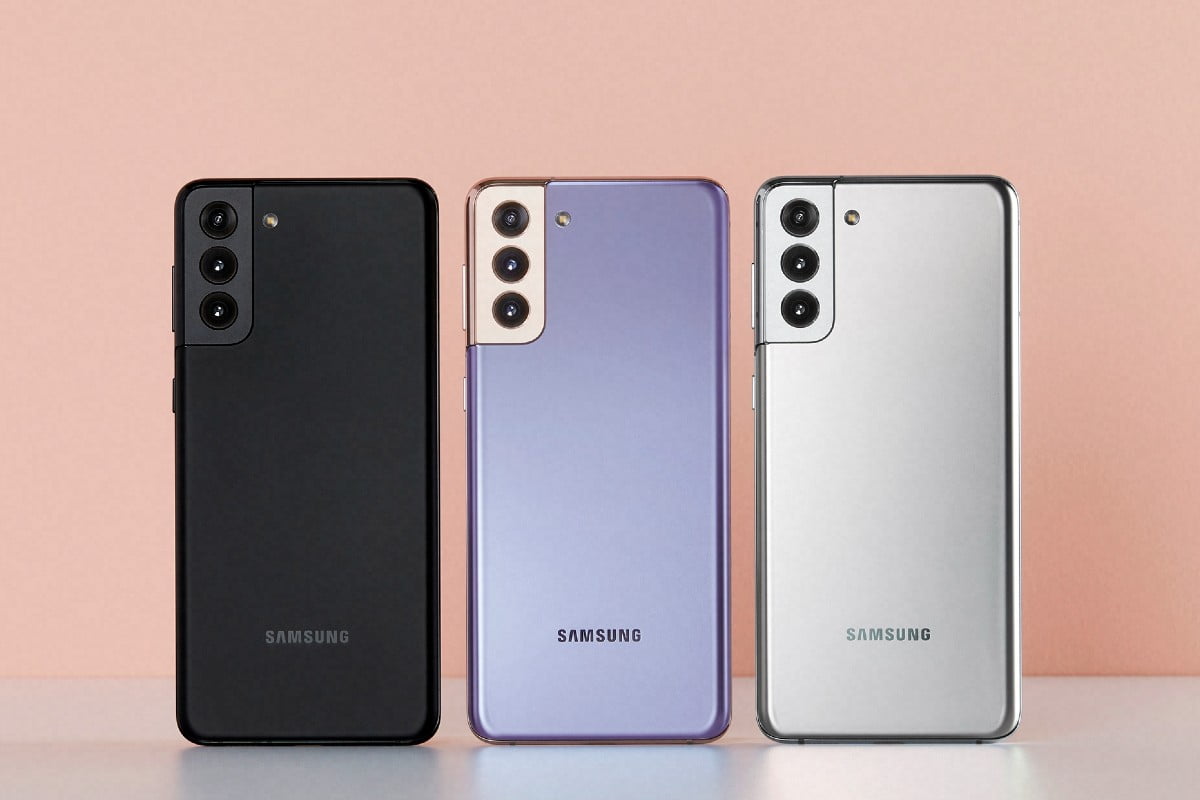 The Galaxy S22 series by Samsung is expected to be launched in February of next year. As reported earlier, the series is expected to include three new smartphones Samsung Galaxy S22, Samsung Galaxy S22+, and Samsung Galaxy S22 ultra. The latest sources claim that Samsung Galaxy S22+ has been spotted at Geekbench, and some of its crucial specifications have been leaked. The Galaxy S22+ will be the name of Samsung's smartphone that had the model number SM-S906U. The Galaxy S22 series by Samsung is expected to be launched in February of next year. As reported earlier, the series is expected to include three new smartphones Samsung Galaxy S22, Samsung Galaxy S22+, and Samsung Galaxy S22 ultra. The latest sources claim that Samsung Galaxy S22+ has been spotted at Geekbench, and some of its crucial specifications have been leaked. The Galaxy S22+ will be the name of Samsung's smartphone that had the model number SM-S906U. The Specifications of Samsung Galaxy S22+The recent revelation at Geekbench suggests that the upcoming Samsung Galaxy S22+ will operate on Qualcomm's latest flagship, Snapdragon 898. The CPU included in the device is a single CPU running at 3.0 GHz along with three CPUs working at 2.50 GHz and four CPUs ticking at 1.79 GHz. The device is stated to operate on Android 12, and according to the listing of Geekbench, it will have 8GB of RAM. The Geekbench listing suggests that the device scored an 1163 core score and a 2728 multi-core score. Moreover, Samsung Galaxy S22+ was also spotted with the soon arriving Exynos 2200 chipset. The device also sported an 8GB RAM along with operating on Android 12 as well. As reported earlier, leaks have suggested that the Samsung Galaxy S22 series will be equipped with Qualcomm's upcoming Snapdragon 898 processor for the countries of the US, Africa, and Asia. However, the device will operate on Exynos 2200 chipset in South Korea and other parts of the globe. Both the chipmakers haven't launched their upcoming flagship processors yet. Exynos 2200 is expected to arrive next year, whereas Qualcomm is expected to unveil its Snapdragon 898 by the end of November. The introduction of Qualcomm processors on such a large scale comes as good news for those who are fans of the processor. The Snapdragon processors have always been better than the Exynos chip variants when it comes to overall performance, battery life, or thermal control. The one probable downside for the Snapdragon users could be that Exynos 2200 is expected to integrate with AMD GPU, which will make it possible for the processor to feature raytracing support for the first time ever. Although it's still difficult to speculate whether Exynos 2200 could give better performance than its competitor Snapdragon, the former is bound to get a massive upgrade from its previous version with Mali GPUs. |
| SNET Broadband Is Offering a Very Affordable 60 Mbps Plan Posted: 13 Nov 2021 09:41 PM PST  SNET Networks Pvt Ltd is a regional internet service provider (ISP). The company offers services only in Mumbai across Andheri, Mira Road, Kandivali, Borivali, Dahisar, Malad, Jogeshwari, and Goregaon. SNET is currently offering a very interesting 60 Mbps broadband plan to users living in Mumbai, Maharashtra. Generally, a 60 Mbps plan would cost upwards of Rs 500. But SNET is offering it for a very affordable cost. Here's everything you should know. SNET Networks Pvt Ltd is a regional internet service provider (ISP). The company offers services only in Mumbai across Andheri, Mira Road, Kandivali, Borivali, Dahisar, Malad, Jogeshwari, and Goregaon. SNET is currently offering a very interesting 60 Mbps broadband plan to users living in Mumbai, Maharashtra. Generally, a 60 Mbps plan would cost upwards of Rs 500. But SNET is offering it for a very affordable cost. Here's everything you should know. SNET Broadband 60 Mbps Plan DetailsSNET Broadband is offering its 60 Mbps plan for Rs 424 per month. Customers will have to pay Rs 76 as GST, which will make the total cost of the plan Rs 500 per month. Now, if you compare this with the Rs 499 offering of Bharti Airtel, you only get 40 Mbps speed, whereas, with SNET Broadband, you are getting 60 Mbps speed. It is also worth noting that the total cost of Airtel's plan increases when the tax is added and reaches somewhere around Rs 600. So if you are looking for a high-speed broadband plan for a very affordable cost, SNET could be a good option for you. Here's what you need to remember, though. This is a yearly plan from the SNET. You will only get the 60 Mbps plan for this cheap if you are paying a Rs 6,000 lump-sum amount to the company for getting services for one year straight. If you are interested, you can go to the company's website and enquire more about the plan from SNET. The company hasn't mentioned anything about whether there is a fair usage policy (FUP) limit on data consumption or not. Further, there's no mention of the cost of purchasing a new connection. All of this information will have to be inquired about by the customer before finalising the purchase. You can get up to 100 Mbps speed broadband plans with SNET Broadband. |
| Bharti Airtel Offering 500MB Free Daily Data With This Plan Posted: 13 Nov 2021 05:24 PM PST  Bharti Airtel has just introduced a new offer wherein it will offer 500MB free daily data to the user. This offer is only applicable to one prepaid plan from the telco and that plan costs Rs 249. It is not a new plan. Airtel has just added the extra data offer for the users. The 500MB or 0.5GB of data can be redeemed daily by the users through the Airtel Thanks app. Let's check all that a user will get with the Rs 249 prepaid plan from the telco. Bharti Airtel has just introduced a new offer wherein it will offer 500MB free daily data to the user. This offer is only applicable to one prepaid plan from the telco and that plan costs Rs 249. It is not a new plan. Airtel has just added the extra data offer for the users. The 500MB or 0.5GB of data can be redeemed daily by the users through the Airtel Thanks app. Let's check all that a user will get with the Rs 249 prepaid plan from the telco. Bharti Airtel Rs 249 Prepaid Plan Now Comes With More DataBharti Airtel has kept all the older benefits of the plan the same and just added the 500MB additional data every day. The Rs 249 plan will offer users 1.5GB daily data, unlimited voice calling, 100 SMS/day along with Airtel Thanks benefits. The Airtel Thanks benefits will also include an additional 500MB of data every day which can be redeemed directly through the Airtel Thanks mobile app. This means, effectively, users will be getting 2GB daily data with the plan. The Rs 249 plan has a validity of 28 days which means instead of getting 42GB of total data, users will now get 56GB of data. In essence, this plan has become a new 2GB daily data offering from the company. The other Airtel Thanks benefits included with the plan are Amazon Prime Video Mobile Edition trial for one month, Shaw Academy for 1 year, Apollo 24|7 Circle, Free Hellotunes subscriptions, Wynk Music, and Rs 100 cashback on FASTag. The Rs 249 plan has certainly become a better deal than the Rs 219 plan which comes with 1GB of daily data and 28 days of validity. All of the other benefits of the Rs 219 plan match with the Rs 249 plan. So why would someone just not pay Rs 30 more and get the Rs 249 plan from Airtel? The 500MB additional data would act as a decoy strategy for the telco to push customers to choose the Rs 249 plan over the Rs 219 plan.Bharti Airtel and Relinace Jio Now Offer Same Rs 249 PlanReliance Jio offers 2GB of daily data with its Rs 249 plan with service validity of 28 days. This is what Bharti Airtel offers as well now. The additional benefits offered by Airtel are way better and larger in number. Jio offers subscriptions to basic Jio applications and also a 20% cashback under the JioMart Maha Cashback offer. Vodafone Idea (Vi) is the only telco offering 1.5GB daily data with the Rs 249 plan in the country now. But there's another argument that can be made for Vodafone Idea as the telco offers Weekend Data Rollover and Binge All Night offer with its Rs 249 plan. These two offers from Vi still are better than what both Reliance Jio and Airtel are offering to their customers. It won't be surprising if Vi doesn't bump up the data benefits on the Rs 249 plan to match its competitors. Vi is looking for increasing its overall revenues and that would only be possible with more premium networks and premium plans. |
| You are subscribed to email updates from TelecomTalk. To stop receiving these emails, you may unsubscribe now. | Email delivery powered by Google |
| Google, 1600 Amphitheatre Parkway, Mountain View, CA 94043, United States | |


Comments
Post a Comment