${latestitem Title}
${latestitem Title} |
- TRAI Proposes Zero Tariff Charges on USSD Transactions
- Moto G51 Expected to Launch Next Month Featuring All New Snapdragon 480+ SoC
- Pixel 6a Might Use Google Tensor Chip
- Bharti Airtel Gave the Telecom Sector a Breather
- Bharti Airtel Outlook Shifted to ‘Positive’ by Moody’s
- Vodafone Idea ARPU to Touch Rs 128 Post Tariff Hikes
- Cable TV Charges Restricted at Rs 100 Not Feasible for Operators
| TRAI Proposes Zero Tariff Charges on USSD Transactions Posted: 24 Nov 2021 07:25 AM PST  The Telecom Regulatory Authority of India (TRAI) has issued a proposal on Wednesday where it has suggested reducing tariffs for USSD based mobile banking and payment services to zero from 50 paise. The proposal has been issued in order to protect the interest of feature phone users and moreover, boost digital financial inclusion. The Unstructured Supplementary Service Data or USSD is a service that uses a shortcode for making transactions. A lot of people, mainly feature phone users use this facility as it doesn't require any internet. The Telecom Regulatory Authority of India (TRAI) has issued a proposal on Wednesday where it has suggested reducing tariffs for USSD based mobile banking and payment services to zero from 50 paise. The proposal has been issued in order to protect the interest of feature phone users and moreover, boost digital financial inclusion. The Unstructured Supplementary Service Data or USSD is a service that uses a shortcode for making transactions. A lot of people, mainly feature phone users use this facility as it doesn't require any internet. The Need to Rationalize USSD ChargesTRAI went ahead to explain that the current charge for an outgoing phone call is Rs 0.04 per minute whereas for an SMS is Rs 0.01 per text message. The current tariff charges for USSD surpass both the aforementioned charges and therefore there is a need for rationalization. TRAI said that even though there is an improvement in success rates, the higher charges of USSD sessions are 'acting as an impediment to the rising number of transactions. USSD is also more common among the people in rural areas, those who are under-privileged or come under low-income groups. The USSD charges apply in both scenarios whether the transaction is successful or not which increases the financial load on the users. According to the draft by TRAI, the Department of Financial Services (DFS) has also requested to relinquish the USSD charges so it can be adopted among the common masses especially those who belong to rural or difficult areas. Even the Reserve Bank of India (RBI) had formed a committee that would focus on further improving the quality of digital payments. One of the major recommendations from this high-level committee was to rationalize the USSD charges and the technology should be made feature-rich so that it gets its popularity and adoption by the people as informed by the telecom regulator of the country. Mobile phone usage increasing and seeping through in the core places of India which includes rural areas at remote places. Thus the mobile devices play a crucial role in deepening the digital payment method in the country. Previously in 2016, the USSD charges were reduced to 50 paise from Rs 1.50. |
| Moto G51 Expected to Launch Next Month Featuring All New Snapdragon 480+ SoC Posted: 24 Nov 2021 06:25 AM PST 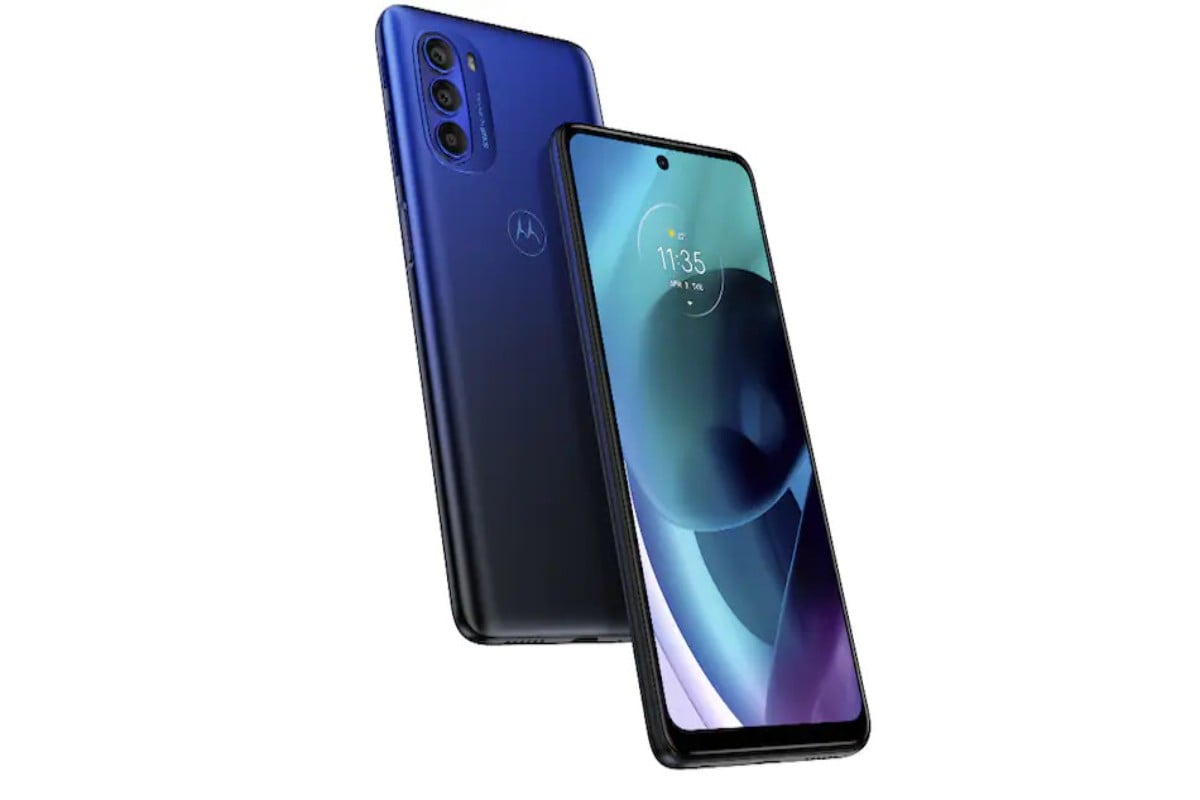 Earlier, it was reported that Motorola has announced that it will be coming up with a bunch of new smartphones which will be a part of the new Moto G-series. The new devices that would be launched by Motorola include Moto G200, Moto G71, Moto G51, Moto G41 and Moto G31 out of which Moto G51 was one of the three devices that will be launched in India as well and witnessed its European launch recently. Now recent leaks suggest that Moto G51 might be launched in India in December of this year. Earlier, it was reported that Motorola has announced that it will be coming up with a bunch of new smartphones which will be a part of the new Moto G-series. The new devices that would be launched by Motorola include Moto G200, Moto G71, Moto G51, Moto G41 and Moto G31 out of which Moto G51 was one of the three devices that will be launched in India as well and witnessed its European launch recently. Now recent leaks suggest that Moto G51 might be launched in India in December of this year. Specifications of G51 (Expected)A report from 91Mobiles has suggested that the Lenovo-owned company's new Moto G51 is scheduled to be launched in December 2021. It is also speculated that the device will be powered by a Snapdragon 480+ chipset and will become the first handset in the country with the said chipset. Moto G51 just like other G-series devices from Motorola is expected to run on Android 11 and the display of the device will feature a 6.8-inch full-HD+ (1,080×2,400 pixels) LCD display with a 120Hz refresh rate and 20:9 aspect ratio. Qualcomm's Snapdragon 480+ SoC will be complemented by 4GB of RAM. The device will also feature 64GB of internal storage expandable via an SD card. The camera module of the device features a triple rear camera setup and a selfie camera. The triple camera setup on the back will include a 50MP primary sensor, an 8MP ultra-wide-angle lens, and a 2MP macro lens. The selfie camera on the front will feature a 16MP camera sensor. Moreover, the device will be backed by a 5000mAh battery supported by 10W charging. The highlight of the device however will be its chipset, Snapdragon 480+ which was introduced in October as a sequel to its predecessor Snapdragon 480. The chipset comes with an octa-core Kryo 460 CPU which operates at 2.2GHz of speed. Other features of this chipset include Adreno 619 GPU, Hexagon 686 processor, Snapdragon X51 5G Modem-RF System, and FastConnect 6200 System.Price and Availability of Moto G51The price of the device in European markets is EUR 299.19 which amounts to somewhere around Rs 19,300. The device will be available in Latin America and the Middle East along with Indian markets. The other devices from the G series that will be launched in India soon are G31, G71 and G200. |
| Pixel 6a Might Use Google Tensor Chip Posted: 24 Nov 2021 05:28 AM PST  Earlier this year, Google teased the Pixel 6 series of smartphones. Last month, the company launched the Pixel 6 and Pixel 6 Pro, and now it is reportedly prepping an affordable variant in the series called Pixel 6a. Going by the previous report, the new smartphone from the Mountain View-based tech giant could arrive with mid-tier specifications. Recently, we came across the leaked renders of the device, revealing what we can expect from its design. Now, a report by 9to5Google has shared further details regarding its specs and camera arrangement. Earlier this year, Google teased the Pixel 6 series of smartphones. Last month, the company launched the Pixel 6 and Pixel 6 Pro, and now it is reportedly prepping an affordable variant in the series called Pixel 6a. Going by the previous report, the new smartphone from the Mountain View-based tech giant could arrive with mid-tier specifications. Recently, we came across the leaked renders of the device, revealing what we can expect from its design. Now, a report by 9to5Google has shared further details regarding its specs and camera arrangement. Google Pixel 6a: What To Expect?As per the leak, the Pixel 6a could feature a punch-hole cutout at the top center of the screen to house the selfie camera sensor. Moreover, the renders hint at the presence of a glass body, slim bezels, and an in-display fingerprint sensor. At its rear, the upcoming Pixel smartphone seems to flaunt a dual-tone design along with a camera bar that seems to stretch to its full width. When it comes to specs, it is speculated that the Pixel 6a will use the same chipset as the Pixel 6 – the Google Tensor (GS101). Given the efficiency of the Image Signal Processor of the Tensor SoC, we can expect the smartphone to be able to capture good pictures irrespective of the lighting conditions. Apart from this, the Google Pixel 6a is believed to flaunt a 6.2-inch AMOLED display with an FHD+ resolution of 2400 x 1080 pixels. The device is tipped to arrive with a USB Type-C port, dual mics, speaker grille, volume rocker, SIM card tray and power key at the sides and bottom. Running Android 12 OS out-of-the-box, the device is tipped to flaunt a 12.2MP primary Sony IMX363 sensor at its rear similar to that on the Pixel 3 to Pixel 5a. Also, there could be another 12MP Sony IMX386 secondary ultra-wide-angle lens. At the front, the punch-hole cutout will house an 8MP Sony IMX355 selfie camera sensor. For now, there is no word regarding the launch date and pricing of the Google Pixel 6a. However, it is revealed that the smartphone could be launched early in 2022. Also, there are claims that it could be lower than the Pixel 6, which makes sense as it is an affordable variant. |
| Bharti Airtel Gave the Telecom Sector a Breather Posted: 24 Nov 2021 04:10 AM PST  In a statement, CRISIL Rating had said that the recent hike in tariff by Bharti Airtel in its prepaid plans was very crucial for the healing of profitability and returns profile of the telecom sector. Recently, Airtel announced a 20% hike in the price of its prepaid plans which will be brought into effect from November 26, 2021. CRISIL has said that the changes in these tariffs will pave the way for telecom companies to invest in 5G mobile services over the medium term. In a statement, CRISIL Rating had said that the recent hike in tariff by Bharti Airtel in its prepaid plans was very crucial for the healing of profitability and returns profile of the telecom sector. Recently, Airtel announced a 20% hike in the price of its prepaid plans which will be brought into effect from November 26, 2021. CRISIL has said that the changes in these tariffs will pave the way for telecom companies to invest in 5G mobile services over the medium term. Tariff Hike Could Pave the Way for Sector's FutureAs per an Indiatvnews report, the rating agency explained that the telecom industry requires constant technology up-gradation, which makes it a capital-intensive sector. It said that the prominent players in the industry have already made a huge investment in rolling out 4G services in the country between fiscal years of 2017 and 2021, and the investment is expected to be around Rs 5 lakh crore. This would mean that the telecom companies will have to invest a minimum of somewhere around Rs 70,000 crore at the 5G spectrum auction that might happen next year if they want to go deep into the future with 5G. Indian telecom operators find themselves among the bottom places of the chart when it comes to 'Average Revenue Per User ‘ (ARPU) in the world and has a very lowered return on capital investment. This is the condition despite the fact that India has the second-highest average data traffic per user. The rating agency speculated that if the other telecom companies followed the same path and went ahead with a tariff hike, it could increase the ARPU of the sector by around 20% and it will increase it to Rs 155 – Rs 160 next fiscal period from Rs 135, which was in last fiscal. It also expected the return on capital of the industry to surge up to 7%. The last time when the sector witnessed a major tariff hike was in December 2019, which increased the industry's ARPU by 15%, and the sector saw a 35% rise in its EBITDA – Earnings Before Interests, Taxes, Depreciation, and Amortisation to Rs 72000 crore in the fiscal year of 2021. This time around, if a sector-wide tariff hike takes place, the agency expects a 40% hike in EBITDA of the telecom sector to Rs 1 lakh crore in the 2023 fiscal year as compared to the 2021 fiscal year. |
| Bharti Airtel Outlook Shifted to ‘Positive’ by Moody’s Posted: 24 Nov 2021 03:18 AM PST  Moody's Investors Service revised the ratings of Bharti Airtel and Bharti Airtel International, its Dutch subsidiary. As per the same, it has been rated from stable to positive as it improved credit metrics and operating performance. Annalisa Di Chiara, Moody's senior vice president, stated that the outlook change to positive shows that the company is improving the above-mentioned metrics. It was added that if it sustained, then it could get the investment-grade upgrade in the next 12 to 18 months. Moody's Investors Service revised the ratings of Bharti Airtel and Bharti Airtel International, its Dutch subsidiary. As per the same, it has been rated from stable to positive as it improved credit metrics and operating performance. Annalisa Di Chiara, Moody's senior vice president, stated that the outlook change to positive shows that the company is improving the above-mentioned metrics. It was added that if it sustained, then it could get the investment-grade upgrade in the next 12 to 18 months. Airtel Receives Positive OutlookThis development comes soon after the telco led by Sunil Mittal announced a 20% to 25% increase in the cost of its prepaid plans. As per analysts, this might augment the financials of the company significantly. At the same time, Airtel closed at Rs 759.50 on Tuesday, which is in the high by 2.35% on the BSE. Di Chiara further stated that the continued expansion into profitability, especially its core Indian mobile business along with a constant reduction in the balance sheet debt are needed to mitigate the possible effect on the company's credit metrics of investments in 5G technology and the growth of deferred liabilities in the moratorium period. Prior to this, even the Crisil Ratings pointed out that the tariff hike will let the operator invest in rolling out its 5G services over the medium-term. Furthermore, the firm expects that investments in the 5G spectrum will not worsen the leverage profile of the company in the case of an auction in the first half of next year. The telecom operator is estimated to spend around Rs 37,000 crore in the 5G spectrum auction. Recently, the telco reported an increase of 27% in the consolidated earnings before taxes, interest, amortisation (Ebitda), and depreciation to Rs 27,200 crore for a six-month period that ended in September 2021 as compared to the same period last year. Moody's believes that the consolidated adjusted Ebitda could increase from Rs 57,000 to Rs 58,500 crore by the end of the current fiscal year in 2022, which is an increase of 25%. It added that the government's telecom reform package would not help in strengthening the cash flow of Airtel but ensure the health of the sector for the long term. |
| Vodafone Idea ARPU to Touch Rs 128 Post Tariff Hikes Posted: 24 Nov 2021 02:31 AM PST  Vodafone Idea (Vi) was quite desperate to get the tariff hikes going. The telco was just waiting for Bharti Airtel to make the first move. Post the tariff hikes; analysts are positive that Vi's revenues are going to grow. However, the subscriber churn rate is also expected to be higher. In a note, Motilal Oswal Institutional Equities said that Vi's average revenue per user (ARPU) figure would grow to Rs 128 with the help of the tariff hikes. This would be a huge jump for the telco's ARPU, which was Rs 109 for the September quarter. The tariff hikes will come into effect from November 25, 2021. Vodafone Idea (Vi) was quite desperate to get the tariff hikes going. The telco was just waiting for Bharti Airtel to make the first move. Post the tariff hikes; analysts are positive that Vi's revenues are going to grow. However, the subscriber churn rate is also expected to be higher. In a note, Motilal Oswal Institutional Equities said that Vi's average revenue per user (ARPU) figure would grow to Rs 128 with the help of the tariff hikes. This would be a huge jump for the telco's ARPU, which was Rs 109 for the September quarter. The tariff hikes will come into effect from November 25, 2021. Vodafone Idea Needs Funding to Service Capex and DebtAccording to the analyst, the telco would require funding to be able to meet cash requirements. Vodafone Idea has an estimated cash requirement of Rs 80 billion – Rs 100 billion for paying bank debt and capex. With the tariff hike, the EBITDA could potentially rise to Rs 95 billion. However, if there is a higher subscriber churn rate and a steep market share loss, it could derail the company's plan of generating cash through services. Thus, Vodafone Idea is in need of immediate funding as it has repayments of Rs 64 billion between December 2021 to March 2022. Because of the weak liquidity position, the telco will have to limit investments in networks which would ultimately result in a higher subscriber churn rate. However, huge funding is expected to come in from the two promoters of the telco, including the Aditya Birla Group (ABG) and the Vodafone Group Plc. With tariff hikes and relief measures in place, Vodafone Idea has got everything the way it wanted. The telco needs to now find ways to retain customers and add new ones so that it can finally start making profits. Even Reliance Jio plays a key role here as if Jio doesn't go for tariff hikes, it would reduce the impact of tariff hikes for Vi and Airtel to a certain degree. |
| Cable TV Charges Restricted at Rs 100 Not Feasible for Operators Posted: 24 Nov 2021 01:43 AM PST  Declaring to end the looting of the cable mafia, Punjab Chief Minister Charanjit Singh Channi announced on Monday to fix the monthly rate of cable connection at Rs 100. Minister said that the cable mafia is harassing the people of Punjab by levying hefty charges, and the state would not tolerate it anymore. "Government would take strict actions against those who defy the rules," he added. Declaring to end the looting of the cable mafia, Punjab Chief Minister Charanjit Singh Channi announced on Monday to fix the monthly rate of cable connection at Rs 100. Minister said that the cable mafia is harassing the people of Punjab by levying hefty charges, and the state would not tolerate it anymore. "Government would take strict actions against those who defy the rules," he added. Capping at Rs. 100 for cable connection not feasible, says cable operatorsAccording to an HT report, in response to the announcement, cable service providers across the state called for a state-wide emergency meeting and concluded that the new capping at Rs 100 is unfeasible. The group alleged that the Telecom Regulatory Authority of India (TRAI) is trying to micromanage the cable networks. Added to it, the regulatory authorities are implementing selective price slashing as the prices of DTH providers are not capped. According to Peeush Mahajan, Chief Executive Officer, Fastway Cable Network, TRAI had fixed the rate at Rs 130 plus the 18% GST as charges, which totals to Rs. 154 per connection for 200 channels. The cost bifurcation shows that Rs 91 goes to the cable operator, Rs 10 as taxes and the remaining to the service provider. The operators have to pay employees' salaries and maintenance costs from Rs 91.DTH prices are not slashedDTH providers, on the other hand, are charging between Rs 300 to Rs 900 per package. The government has not announced any capping on the DTH charges so far. According to the operators, if cable TV prices are capped, the government should also limit the prices of DTH providers. They alleged the action as 'selective penalising'. The cable TV business reportedly suffers a reduction in subscribers across the country as people are increasingly shifting to high-speed internet-based platforms. The cable providers would request the CM to reconsider the new capping. Around 20,000 people are associated with the cable business across Punjab. In his announcement to the public, CM Charanjit Singh Channi also blamed monopoly in transport and cable businesses as the Badal family owns all such companies. Minister further plans to revoke illegal bus permits in the state and grant such licenses to the unemployed youths of the state. |
| You are subscribed to email updates from TelecomTalk. To stop receiving these emails, you may unsubscribe now. | Email delivery powered by Google |
| Google, 1600 Amphitheatre Parkway, Mountain View, CA 94043, United States | |


Comments
Post a Comment