${latestitem Title}
${latestitem Title} |
- TRAI Suggests Compulsory Deployment of Telecom Infrastructure Within Buildings
- Redmi Note 11 Pro+ Appears on FCC Certification Website Hinting Impending Global Launch
- Oppo’s Plan to Release ColorOS 12 Beta and Stable Version
| TRAI Suggests Compulsory Deployment of Telecom Infrastructure Within Buildings Posted: 24 Dec 2021 08:27 AM PST
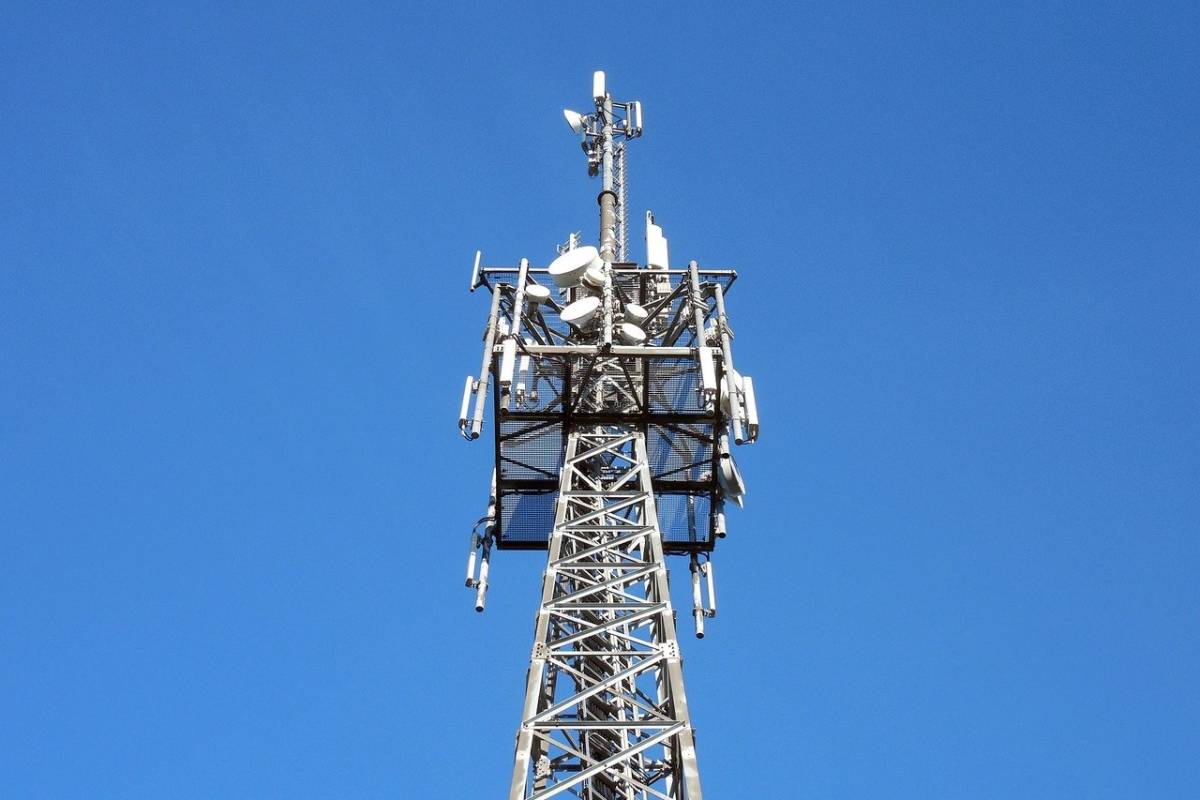
A source aware of the matter told ET Telecom that a discussion paper on granting compulsory access to telecom service providers within the building premises to facilitate in-building solutions, including optic-fibre cable, is coming out shortly. The new consultation process may rate the buildings based on their readiness for appropriate digital connectivity and inside coverage, indicating the need for changes to the Real Estate Regulatory Authority (RERA) or the Real Estate Act, 2016, and the urban development framework. Due to the quality of service (QoS) concerns, the industry restricts access to private and public properties to deploy telecom equipment. The watchdog wants to put in place a system that allows multiple telecom service providers to enter the market without discrimination, giving residents fair and reasonable access. The Department of Telecommunications (DoT) issued Right-of-Way (RoW) rules in November 2016 that required a national standard policy, a one-time administrative charge, and approval within 60 days. The Centre also changed the Indian Telegraph Right of Way rules in October 2021 to include provisions for a one-time cost and uniform procedure for deploying overhead optic-fibre cable, with a ceiling of Rs 1,000 per kilometre. Inbuilding Solutions Will Improve CoverageThe proposed paper will seek building ratings based on duct availability and sufficient space for IBS and stakeholder input on whether such a framework is needed for older buildings voluntarily. The new consultation paper is likely to bring faster implementation of 5G services and brings improved coverage through IBS, according to Tilak Raj Dua, Director General of the Digital Infrastructure Providers Association. In addition, according to Dua, there is a clear need to establish in-building solutions (IBS) for wireless services to increase in-building coverage and get better quality, high data rate services. The Digital Infrastructure Providers Association has advocated liberal and uniform regulations to boost digital connectivity infrastructure. It represents telecom infrastructure companies like ATC India, Bharti Infratel, Tower Vision, and STL. According to industry estimates, over 70% of mobile traffic is generated indoors. Multiple laws and instructions issued by several state-level authorities for telecom infrastructure installation have resulted in delayed telecom infrastructure deployments, while the lack of single-window clearances has added to infrastructure providers’ current issues. |
| Redmi Note 11 Pro+ Appears on FCC Certification Website Hinting Impending Global Launch Posted: 24 Dec 2021 07:10 AM PST
There have been several rumours in the past about the upcoming flagship Redmi Note 11 Series which was unveiled by the manufacturers earlier this year. Now, Redmi Note 11 Pro+ has been spotted FCC certification website which is hinting at the launch of the smartphone in the near future. The upcoming Redmi Note 11 Series will consist of Redmi Note 11 Pro+, Redmi Note 11 Pro, and the Redmi Note 11 handsets. It is to be noted that Redmi Note 11 has been already launched in India with the name of Redmi Note 11T 5G and globally it was rebranded as POCO M4 Pro 5G. There have been multiple appearances of Redmi Note 11 Pro+ at various certification sites and it is expected that the device might be rebranded as Xiaomi 11i Hypercharge in India scheduled to launch on January 6, 2022. Specification Details of Redmi Note 11 Pro+According to the reports, Redmi Note 11 Pro+ was spotted at Federal Communications Commission (FCC) website with the model number 20191116UG and the database has enlisted it as a 5G ready handset. The Pro+ model of the Redmi Note 11 series will be a high-end device and will come with a display featuring a 6.67-inch 120Hz AMOLED panel from Samsung and will be protected by Corning Gorilla Glass Victus on top. The handset is expected to be powered by a MediaTek Dimensity 920 processor paired with either 6GB or 8GB of RAM. For the internal storage, the device will offer two variants – one with 128GB and another with 256GB. The upcoming Redmi Note 11 Pro+ will be backed by a 4,500mAh battery and will also support a 120W fast charge technology. As far as the camera module of the device is considered, Redmi Note 11 Pro+ will feature a triple rear camera setup with a 108MP main camera sensor, an 8MP ultrawide camera, and a 2MP 50mm telephoto camera. At the front, the device will feature a 16MP lens for selfies. In addition to this, the handset will have a side-mounted fingerprint reader for biometric security. Redmi Note 11 Pro+ is expected to operate on Android 11 based MIUI 12.5. |
| Oppo’s Plan to Release ColorOS 12 Beta and Stable Version Posted: 24 Dec 2021 06:21 AM PST
Chinese smartphone manufacturer Oppo has revealed its plan for the rollout of its latest Android 12 based operating system – ColorOS 12 in China. The plan has been released for the first quarter of 2022. The company has revealed a list of smartphones that will receive beta versions of the new OS and the handsets that will now feature a stable version. It is to be noted that several devices such as the Oppo Find X3 series, the OnePlus 9 series, and Oppo Reno 6 series already feature the stable version of the latest OS. The company has even addressed the issue where OnePlus users were facing difficulties while updating the new software on older OnePlus devices. Devices to Feature ColorOS 12Oppo has revealed on its Chinese website that the beta version for the public will be released on January 17. According to the enlisting the first smartphones to feature ColorOS 12 beta version will include Oppo Reno 4 series, OnePlus 8 series, and OnePlus 8T. Oppo Reno 3, Oppo K9 Pro, Oppo K7, and Oppo A72, on the other hand, will get the same beta version from February and from March it will be available on Oppo Reno 7 series, Oppo A93s, Oppo A92s, Oppo A56 5G, and Oppo A55 handsets. On the other hand, the stable update of the latest operating software will be rolled out to devices such as Oppo Reno 5 Pro+ 5G and Oppo Reno 5 5G from January 6. Oppo Reno 5 Pro and Oppo A95 5G handsets will receive the stable update from January 17 and January 20 respectively. As mentioned above, Oppo Find X3 series, OnePlus 9 series and Oppo Reno 6 series are the only devices to have received a stable version of ColorOS 12. In the meantime, Co-founder of OnePlus Pete Lau has written to its customers providing information on why the release of ColorOS 12 is getting delayed for older OnePlus handsets which currently operate on HydrogenOS. He informed in a statement that the brand wants to ensure a seamless experience without hampering with the user data. This is the reason why developers have been taking their time to ensure quality migration and if it is noted, only three devices are scheduled to receive a stable ColorOS 12 in the first quarter of 2022. |


| You are subscribed to email updates from TelecomTalk. To stop receiving these emails, you may unsubscribe now. | Email delivery powered by Google |
| Google, 1600 Amphitheatre Parkway, Mountain View, CA 94043, United States | |


Comments
Post a Comment