${latestitem Title}
${latestitem Title} |
- Vodafone Idea: Watch Video of Live 5G Speed Test
- Redmi 10 2022 and Redmi 10 Prime 2022 Spotting at FCC Reveals New Details
- Postpaid Tariff Hikes in India Are Inevitable
- Private 5G to Enable MNOs Earn Beyond Boundaries of Spectrum Licenses
- Broadband Plans Under Rs 900 that Offer 100 Mbps Speed
- Oppo Reno7 Series First Batch Sold Out in 15 Minutes
- Best Long Term Prepaid Plans from Airtel, Jio, Vi Today
- Facebook Will Allow Users to Split Bills, Feature Already in Beta Testing
- iPhone 12 Pro Available at an Amazing Price on Amazon
- Dish TV Android Box Features, Price Detailed
- WhatsApp: How to Enable and Disable Disappearing Messages
- MIUI 12.5 Enhanced Edition Now Available for Xiaomi 11 Lite 5G NE
- Why Do Telcos Want 5G Spectrum to Become More Affordable
- iPhone 14 Could Come With 3nm A16 Processor
- DoT Secretary Says 6G Will Converge Satcom and Terrestrial Networks
- Gaming Series Redmi K50 Reportedly Slated to Launch in Q1 2022
| Vodafone Idea: Watch Video of Live 5G Speed Test Posted: 05 Dec 2021 08:00 AM PST
Vodafone Idea, the third-largest telecom operator in the country, is going all out on conducting 5G trials. It is one thing to hear about how fast 5G is, but it is completely another to see the blazing-fast download and upload speeds bringing new use-cases of network technologies to life. In Pune, Maharashtra, where Vodafone Idea is already testing 5G solutions, the telco shared a live demonstration of multiple 5G speed tests during a special event. Note that every test delivered slightly different speeds. But the peak download speed that the telco was able to achieve during the test was 4.2 Gbps on the 26 GHz band. Vodafone Idea 5G Speed Test Video
Vodafone Idea is working aggressively to find new use cases that 5G network technology can bring to life. The telco's Chief Technology Officer (CTO), Jagbir Singh, had confirmed that Vi is going with the 3GPP standard for 5G network core as it is the safest. As for 5Gi, the telco is already working with the companies to be ready for conducting trials, but the only issue is that there are no ready products for the testing. 5Gi is still a very new technology, and it would require a whole ecosystem of ready products before effective testing can be conducted. The telcos, including Vodafone Idea, have been given more time to conduct 5G trials which should see more innovative use cases of the technology coming to life. |
| Redmi 10 2022 and Redmi 10 Prime 2022 Spotting at FCC Reveals New Details Posted: 05 Dec 2021 04:36 AM PST
The recent rumours suggest that smartphone maker Xiaomi has been working on Redmi 10 2022 and Redmi 10 Prime 2022 handsets. There are various model numbers of certain devices that are being speculated to be Redmi 10 2022. Recent speculation suggests that a device with model number 22011119UY has been certified by Federal Communications Commission (FCC). It is to be noted that the model numbers 21121119SG, 22011119UY, and 21121119VL are being linked to the upcoming device. So far, smartphones with these model numbers have been spotted at various certification sites such as Europe's EEC, Singapore's IMDA, Indonesia's TKDN and SDPPI, and TUV. The Specs Details About the HandsetThe FCC certification suggests that Redmi 10 2022 may arrive with two storage variants – 4GB RAM + 64GB internal storage and 6GB RAM + 128GB internal storage. The device will also come with preinstalled MIUI 12.5 that is based on Android 11. The listing further gives the information that the device does not come with 5G support. The rumours about the camera module of the device suggest that Redmi 10 2022 might feature a 50MP camera, which could be the Samsung S5KJN1 lens or OmniVision OV50C40 sensor. The primary camera may be paired with an 8MP Sony IMX355 camera and a 2MP OmniVision OV02B1B or GC02M1B lens. There is not a lot of information available on Redmi 10 Prime 2022, but if rumours are to be believed, the device could witness a launch in Indian markets as well. Moreover, the reports suggest that the new smartphone from the Chinese smartphone manufacturer might be a rebranded version of the Redmi Note 11 4G, which was launched in China not so long ago. Redmi Note 11 4G had a display featuring 6.5-inch IPS LCD FHD+ 90Hz display. The device's camera module included a triple rear camera setup which consisted of a 50MP primary camera along with an 8MP ultra-wide-angle camera and a 2MP macro camera. The device was powered by a MediaTek Helio G88 chipset and also featured a side-facing fingerprint scanner. Redmi Note 11 4G was backed by a 5000mAh battery and supported an 18W fast charge technology. |
| Postpaid Tariff Hikes in India Are Inevitable Posted: 05 Dec 2021 02:38 AM PST
Much recently, the private telecom operators announced prepaid tariff hikes. In just a span of a week, all of the operators had implemented the new prices to their offerings. But the surprising thing was, the telcos had only moved ahead with the prepaid tariff hikes. The prices of the postpaid plans, at the time of writing this, are untouched! But that shouldn't be the case for too long. According to an FE report, Prashant Singhal, TMT leader, EY, said, the increase in postpaid tariffs is likely to follow after the increase in prepaid tariffs. Telecom Operators Clear With Their Goal of Increasing ARPUThe telecom operators have been open about the fact that they are looking to increase their average revenue per user (ARPU) figure. Vodafone Idea (Vi) especially needs it. While prepaid tariff hikes are going to help, postpaid tariff hikes will act as a cherry on top of the cake. There's a very less percentage of mobile phone users who are postpaid subscribers, but these subscribers already pay handsomely for purchasing telecom services. With an increase in postpaid tariffs, the operators would see a solid gain in ARPU. The telecom service providers (TSPs) in India need to flush lakhs of crores to build a PAN-India mobile network. It includes recurring costs for purchasing and deploying additional spectrum, research and development (R&D) for providing better services, statutory dues, and salaries to workers, and much more. Against that, they get very little out of each customer because the telecom services in India are very cheap. The ARPU of the Indian TSPs is one of the lowest in the entire world. While there's a scale to tap into when it comes to the Indian market, there's also the costs involved in doing so. For the TSPs, going with the postpaid tariff hikes will be a no-brainer and it shouldn't take long for them to announce it. |
| Private 5G to Enable MNOs Earn Beyond Boundaries of Spectrum Licenses Posted: 04 Dec 2021 10:11 PM PST
Private 5G networks are already helping enterprises in a variety of industries to cut costs, reduce energy use and analyse business-critical data in real-time, says Aniruddho Basu, SVP & GM of Emerging Business at Mavenir. Q1. How Should the Industry Build the Private Network Connectivity Platform in a 5G and 6G World?The concept of a private mobile network is not particularly new, as such networks first started using 4G LTE technology in some countries in industries such as mining, emergency services and defence. But hand-in-hand with the increasing deployment of 5G networks, the concept of a private 5G network is gaining traction in many parts of the world as regulators are increasingly offering enterprises the opportunity to purchase their own 5G spectrum and deploy their own mobile networks, and this is becoming particularly popular in places such as Japan and Germany. To build a private network connectivity platform, enterprises need to purchase spectrum from the government, mobile network operators (MNOs) or third-party spectrum providers, obtain 5G equipment (i.e., base stations, mini-towers, small cells) from network infrastructure providers and connect this equipment to edge devices (smartphones, embedded modules, routers, gateways, etc.). We believe that MNOs are also looking at the enterprise market as a significant opportunity for dedicated Private Networks. According to the recent GSMAI report on Operator revenue in the Enterprise market (Mar'21), data indicates that enterprise revenue as a share of operator revenue varies between 10% and 50%. With the majority of the revenue coming from traditional communication services and the focus being heavily dependent on selling SIM connections, airtime and data bundles. Transitioning the pricing model to a business where the KPI is in enhancing operational efficiency or productivity, and not around the raw consumption of minutes or data – is not proving to be easy or straightforward. We have also seen that although 3GPP-based cellular technology can capture economy of scale benefits, in the case of Private Networks, there is still a fair amount of overall systems integration and customisation required to integrate the network with legacy enterprise applications customised security policies and so on. MNOs need to revisit the business model and commercial constructs with enterprises. Additionally, they need to work on positioning their value in a world that will now have a lightly licensed or eventually unlicensed spectrum. So they are defining their role around use cases that demand mobility, where the device or user roams out into the macro network. Then the operator play makes sense as one can leverage the benefits of a dedicated network in combination with the interplay with a large macro cellular network. I also see MNOs pivoting towards new roles like managed services or managed network providers in time – this would be helpful for those enterprises and industries that adopt a more hands-off approach to the complexities of managing dedicated cellular connectivity platforms that interact with macro-cellular networks. Q2. What Are the Private Network Opportunities for Mobile Operators and Enterprises?Private 5G represents the intersection of several important technology trends that will impact both Mobile Network Operators (MNOs) and enterprises. MNOs will participate in Private 5G in many ways. Some private networks will be built, owned and operated by MNOs, while others will be controlled and managed by enterprise users, with operators acting as integrators and consultants. It will allow MNOs to evolve from being connectivity providers to being value-added partners for their enterprise customers. In addition, private networks will create a way for operators to earn revenue beyond the boundaries of their spectrum licenses. It is also an exciting opportunity for public and private enterprises to unlock efficiencies, leverage data in real-time, and generate new revenue. Private 5G networks are already helping enterprises in a variety of industries to cut costs, reduce energy use and analyse business-critical data in real-time. It is arriving with a lot of promise about enabling new, innovative use cases that will bring great value to enterprises across different industries such as manufacturing, mining, logistics etc. Enterprises and industries can accelerate their digital journeys by enabling secure connectivity while collecting and managing massive amounts of business-critical data. Q3. What Is Driving Investment in Private 5G Networks?Private 5G has many use cases, most of which may still be undiscovered, but the myriad drivers of investment in private 5G can be grouped into three broad categories: digitisation, distributed computing systems, and democratisation of spectrum. Digitisation: As corporate networks become the backbones of businesses, IT managers are looking to private 5G to create dynamic architectures that can respond to the demands of applications and users by re-allocating bandwidth and re-prioritising traffic. As enterprises digitise business processes, they typically see the need for more wireless connectivity. Use cases that will benefit from private 5G include mobility support for autonomous guided vehicles in a warehouse or intelligent video analytics to automate the quality inspection process on an assembly line that demands network requirements such as high throughput, high reliability, precise mobility, security, large device density and always-on operations. In the future, 5G Standalone (SA) will also deliver time-sensitive networking for high-precision devices. Distributed Computing Systems: Cloud-based applications have transformed the business landscape, and now they are moving closer to end-users with the proliferation of edge computing. Enterprises and independent developers are creating applications designed for the network edge. These are apps that cannot reside in the cloud because of their low-latency requirements and cannot be hosted on end-user devices because they are too large and use too much bandwidth. Examples include video analytics and augmented reality. The promise of private 5G coupled with edge compute is very clear to the hyper-scale cloud service providers. Private 5G is a major opportunity for the hyper-scale cloud providers such as AWS and Microsoft, as evidenced by their approach of combining the scale benefits of centralised data centres with edge extensions into the enterprise, coupled with 5G access. Democratisation of Spectrum: In most industrialized countries, regulators are looking to make more frequency assets available through a combination of licensed, lightly licensed and eventually even unlicensed spectrum. Although regulators in each country approach spectrum democratisation differently, most of them are working to facilitate at least some control of this asset into the enterprise sphere so that it can be deployed to advance business use cases. As a result, companies around the world are considering cellular as a viable option when they plan their networks. Q4. How Is Mavenir Supporting Operators in Private 5G Deployments?Mavenir's Private Network solution is purpose-built for the evolution to 5G and the increased demand for use cases and applications. Mavenir offers its full portfolio of Multi-G solutions for the Private Networks market to address the needs of Enterprises, Industries and Service Providers. This end-to-end 5G system, based on cloud-first and open architecture principles, is highly suited to address both mass scale private enterprise use cases as well as bespoke high-end use cases for advanced industries. We have a clear strategy to treat operators as our key partner and Go-To-Market channel. Alongside that, we leverage a network of major Systems Integrators (SIs) as well as regional or boutique SIs and app companies that deliver good local or vertical-specific engagement. We are also engaging with infrastructure owners on neutral host models, where the site owner delivers the network as a service to third-party customers. Finally, we go beyond a sell-through relationship to create deeper partnerships with the likes of NTT Data, for example, where we combine our connectivity technology with their BSS/OSS to create a full technology stack for a Private Network business case. In each constellation – MNO, SI, full partnership – we understand the value we bring, what our partners bring, and how that enhances the end customer's business. Q5. Mavenir's Future Plan for the Indian MarketAt Mavenir, we are enthused by the opportunities and benefits that Private Networks can bring to our partners, industry and society at large. We are motivated by the need to bring clarity to the market and deliver solutions in a way that works best for the end customers – the businesses and industries that will make use of dedicated wireless networks. We want to see partners become autonomous as soon as possible, and then we can focus on broadening and expanding the ecosystem to identify and create specific use cases. |
| Broadband Plans Under Rs 900 that Offer 100 Mbps Speed Posted: 04 Dec 2021 05:33 PM PST
The consumption of data from home connections has increased manifold in recent times. Whether users use it for streaming, work-from-home, or even small businesses, the need for reliable and seamless Wi-Fi connectivity across multiple devices has increased significantly. Although Internet Service Providers (ISPs) of the country provides a huge variety of broadband plans from affordable low-speed plans to high-end plans offering up to 1 Gbps of speed, most of the time, users want an adequate internet speed at a relatively affordable price. In this article, we are going to look at the plans provided by some of the major ISPs of the country under Rs 900 that offer 100 Mbps of internet speed. The "Standard" Pack from AirtelAirtel provides quite a few high-speed broadband plans using its advanced fibernet technology. The Fibre optic internet connection provides high download speed and less buffering. Airtel Provides a 100 Mbps broadband plan which is its "Standard" pack. This plan comes at a monthly cost of Rs 799, exclusive of taxes. The FUP data limit set on this plan is 3500GB or 3.5TB. Moreover, users also get free access to Wynk Music and the online learning app Shaw Academy. The 100 Mbps Plan from ExcitelExcitel uses its European technology to provide a high-speed and consistent internet connection for its users. It offers various plans according to the different needs of its consumers. The 100 Mbps plan from Excitel comes at different price tags and durations so as to cater to user convenience. The Fiber First from Excitel provides users with a 100 Mbps plan for a month at Rs 699. Users can also access the plan for three months, four months, six months, nine months, and 12 months for Rs 565, Rs 508, Rs 490, Rs 424, and Rs 399, respectively. However, the 9-month plan is available for only new subscribers to the service. Moreover, the plans from Excitel are truly unlimited, and no FUP data limit is levied upon. 100 Mbps Broadband Plans from BSNLIndia's public telecom company BSNL under Bharat Fibre Broadband provides exciting plans for its users who want to opt for 100 Mbps of internet speed. Customers can get two packs – Fibre SuperStar Premium and Fibre Value which are the monthly plan provided by BSNL. The one-month tariff plan costs Rs 749 and Rs 799, respectively. The FUP data limit set on the Fibre SuperStar Premium plan is 1000GB, and on Fibre Value Pack is 3300GB. Users get unlimited data download and 2 Mbps of speed after they have utilised the set limit of data. It is to be kept in mind that these packs are exclusive of GST, and GST would be charged when users purchase these packs. Moreover, the Fibre SuperStar Premium plan comes with a subscription to a few OTT platforms such as Sony LIV, ZEE5, and more. 100 Mbps Plan from JioFiberJioFiber provides a 100 Mbps internet speed data plan at the price of Rs 699 per month. The FUP limit set on this plan is 3300Gb or 3.3TB. Using the 100 Mbps plan from JioFiber, customers can get access to smooth and seamless internet across multiple devices. It is to be noted that the piece for this plan is excluding GST, and it will be charged when users opt for this plan. However, users can also get these plans quarterly, half-yearly, or annually as per their requirements. |
| Oppo Reno7 Series First Batch Sold Out in 15 Minutes Posted: 04 Dec 2021 08:26 AM PST
The upcoming flagship from Oppo – Oppo Reno7 series was launched in China recently after a long span of rumours and speculations. Oppo Reno7 series includes three devices –Reno7, Reno7 Pro, and for the first time replacing Reno7 Pro+ – Oppo Reno7 SE. Now according to the reports, the devices have brought in record-breaking sales for the company after being made available for sale yesterday. The smartphone maker has claimed that people showed a huge interest in the mid-range device and so much that the first batch sold out in just 15 minutes generating CNY 100 million in revenue. Record-Breaking Sale and Pricing of the DeviceThe majority of the sales of the Oppo Reno7 Series smartphones were done by the company through its own stores but also had help from third-party retailers. Although no specific number was provided, Chinese sources have said that number of units sold was about 150% more than the predecessor – Reno6 series' first sales. If you do the calculation, CNY 100 million could get you somewhere around 25000 devices of the high-end Oppo Reno7 Pro or around 45000 devices of the affordable Oppo Reno7 SE. This data suggests that the Chinese smartphone giant might have just sold about 2300 devices per minute. To recall the pricing of the devices that are part of the Oppo Reno7 series, the Oppo Reno7 and Reno7 SE come with 8GB and 128GB storage versions which are priced at CNY 2,699 (around Rs 31,485) for Reno7 and CNY 2199 (around Rs 25,652) for Reno7 SE. The 8GB and 256GB versions of these devices are priced at CNY 2,999 (around Rs 34,985) for Reno7 and CNY 2,399 (around Rs 27,985) for Reno7 SE. Oppo Reno7 also has a 12GB of Ram and 256GB of storage model which is priced at CNY 3,299 (around Rs 34,484). Oppo Reno7 Pro on the other hand comes in two variations – 8GB RAM with 256GB storage space priced at CNY 3,699 (around Rs 43151) and 12GB + 256GB model priced at CNY 3,999 (around Rs 46650). |
| Best Long Term Prepaid Plans from Airtel, Jio, Vi Today Posted: 04 Dec 2021 06:55 AM PST
After the tariff hikes, while the long-term plans are still available, they come for a different price than they used to. If you are thinking of recharging with a long-term prepaid plan post tariff hikes, then there are a few great options available from Bharti Airtel, Reliance Jio, and Vodafone Idea. The reason we are excluding Bharat Sanchar Nigam Limited (BSNL) from the list is that there is no PAN-India 4G coverage provided by the state-run telco. Bharti Airtel Long-Term Prepaid PlanBharti Airtel offers a Rs 2,999 long-term prepaid plan to the users. This plan comes with a service validity of 365 days and offers 2GB of daily data along with unlimited voice calling and 100 SMS/day. There are additional benefits included, such as Amazon Prime Video Mobile Edition one month trial, three months of subscription to Apollo 24|7 Circle, Shaw Academy, FASTag, Hellotunes, and Wynk Music. Post the consumption of fair-usage-policy (FUP) data, the internet speed for the users will drop to 64 Kbps. Further, after consuming 100 SMS/day, users will be charged Rs 1 for each local SMS they send. Reliance Jio Long-Term Prepaid PlanReliance Jio offers the same 2GB daily data prepaid plan that Airtel offers, but for Rs 120 lesser. Jio's long-term prepaid plan for Rs 2897 offers users unlimited voice calling, 100 SMS/day, and 2GB of daily data. The total amount of data offered with the plan is 730GB. With this plan as well, once the FUP data is consumed, the internet speed drops to 64 Kbps. Users also get a free subscription to a suite of Jio applications, including JioTV, JioCinema, JioCloud, and JioSecurity. This plan carries a validity of 365 days. Vodafone Idea Long-Term Prepaid PlanFor around the same price, Vodafone Idea offers a prepaid plan that gives users much lesser data than what Jio and Airtel provide. Vodafone Idea's Rs 2899 prepaid plan only offers 1.5GB of daily data. Users get unlimited voice calling and 100 SMS/day as well. This plan also comes with a validity of 365 days. But Vodafone Idea also offers multiple other benefits with its plans which include Binge All Night, Weekend Data Rollover, free access to Vi Movies & TV Classic, and Data Delights. With the Binge All Night offer, users get truly unlimited data between 12 AM and 6 AM every day. The Weekend Data Rollover offer allows users to consume all of the leftover FUP data from the weekdays at the weekends. The Data Delights is a recently introduced offer that offers users 2GB of backup data every month that can be redeemed through the mobile application of the telco. These are the best long-term prepaid plans available in the market today. If you want, you can also go for the long-term plans offered by these operators with a bundled OTT subscription of Disney+ Hotstar. These plans will offer the same benefits, and the only additional benefit bundled will be of Disney+ Hotstar Mobile plan, but cost a lot more than the regular plans. Thus, the regular plans are the best and most economical for the long term. |
| Facebook Will Allow Users to Split Bills, Feature Already in Beta Testing Posted: 04 Dec 2021 06:21 AM PST
How to Use the Split Bill Feature?The Split Bill feature will be quite user-friendly in its interface. To access this feature, users first of all need to click on the "Get Started" tab on the group chat. The feature will allow the users to either split the bill evenly or change it according to the amount payable by each member in the group. At last, when the request is sent it can be viewed through the group chat thread. This feature is in its beta stage and the speculations suggest that the option to use this feature will be first made available for the users in the US. Talking about this feature, Facebook stated in a blog post, that things are about to get easier if you have ever struggled with dividing up and getting paid back for group dinners, shared household expenses, or even the monthly rent. It further stated that they are going to begin the testing of the Split Bill Feature for users in the US from next week which will be a free and fast way to share the costs and expenses. Apart from the Split Bill feature, Facebook has also released sound emojis and additional group effects. Using the group effect users can get a better video calling with fun AR experiences for everyone in the group. According to reports, Facebook has also joined hands with four creators to bring custom new effects in groups for the users while using Messenger and Instagram video calls. |
| iPhone 12 Pro Available at an Amazing Price on Amazon Posted: 04 Dec 2021 05:07 AM PST
The Discounted Offers from AmazonAs seen on Amazon's website, the company is selling the 128GB of iPhone 12 Pro variant for Rs 95,900 which originally comes at a price tag of Rs 1,19,000. In addition to this interested customers can get the 256GB variant at Rs 99,900 and the 512GB variant of the device at Rs 1,07,900. If you want more than the discount being offered, Amazon is also offering an additional price cut of Rs 14,900 for the exchange of any old devices. It is needless to say that iPhone 12 is one of the most high-end smartphones in the market as of now. Additional offer includes the option to buy AirPods Pro with iPhone 12 which will only cost Rs 1,15,395 to the users on Amazon as compared to its usual cost that is Rs 1,44,800. This means that if interested buyers purchase the devices right now, they can get a total discount of Rs 28,910. Specifications of the DeviceThe Cupertino-based giant launched the iPhone 12 Pro which comes with a display featuring a 6.1-inch Super Retina XDR display and comes with a ceramic shield coating. The device uses an A14 Bionic Chip as a processor. Talking about the camera module, iPhone 12 Pro comes with a Pro camera system with 12MP Ultra-Wide, Wide, and Telephoto cameras, 4x optical zoom range. The device also has a 12MP selfie camera on the front. The device also is water-resistant and has an IP68 rating. |
| Dish TV Android Box Features, Price Detailed Posted: 04 Dec 2021 04:09 AM PST
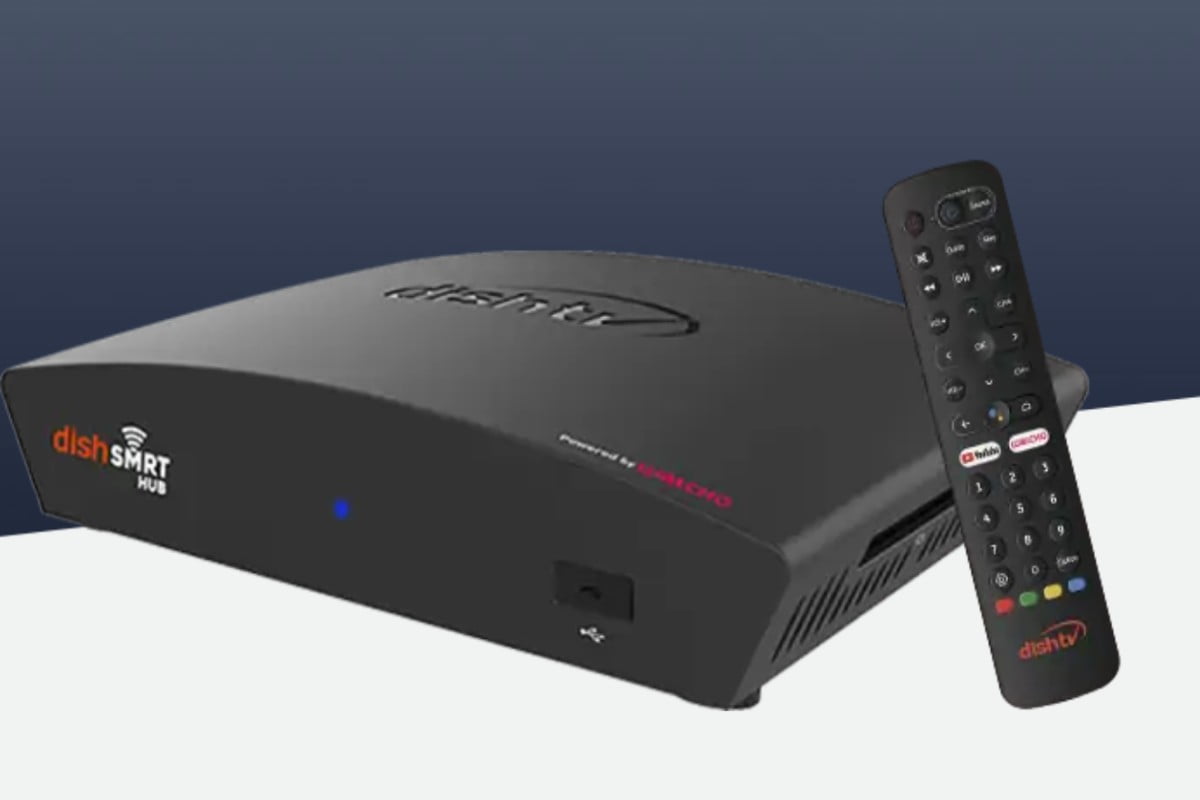
Dish TV, the second largest Direct-to-Home (DTH) service provider in India, offers an Android Box for the users. This Android Box is called 'DishSMRT HUB', and it is available for a very competitive price as compared to what Tata Sky and Airtel Digital TV offer their Android Boxes for. There are a multitude of features that the DishSMRT HUB brings to the table for the consumers. Let's check out the complete features and specifications of this Android TV box from Dish TV. Dish TV Android Box FeaturesThe DishSMRT HUB is an Android TV box that allows consumers access to multiple Android applications directly on their TV. Even if the consumer doesn't have a Smart TV, this Android box can help him/her access Android applications. Users can access over-the-top (OTT) applications such as ZEE5, SonyLIV, Amazon Prime Video, Voot, ALT Balaji, YouTube, Disney+ Hotstar, and many more directly from Google Play Store. The Android Box comes with an in-built Chromecast which will allow users to access games, music, photos, videos, and more on the TV directly from their smartphones, tablets, or laptops. Because of the support for Google Assistant, voice search enables easy content discovery and a seamless TV experience. Users can even record and set reminders for their favourite TV shows or movies. There is an option to create multiple profiles just the way Netflix allows users to do so that users can have a personalised content watching experience. There are regular Android updates from Google provided to the Set-Top Box (STB) to keep it loaded with the latest features. The remote of this Android Box comes with hotkeys for OTT platforms such as YouTube and Watcho. DishSMRT HUB Price in IndiaThe DishSMRT HUB is available for a price of Rs 2,499 in India. It comes bundled with a Rs 2,000 voucher from CouponDunia, which can be redeemed after the successful purchase and registration of the Android Box from Dish TV. |
| WhatsApp: How to Enable and Disable Disappearing Messages Posted: 04 Dec 2021 02:47 AM PST
If you didn't already know, WhatsApp has brought in a feature using which the users can make their messages disappear after a certain period of time. WhatsApp provides this WhatsApp Disappearing Messages as an optional feature for its users so as to provide enhanced privacy options. The messaging platform giant has provided the information that users can make their messages disappear for a period of 24 hours, seven days, or 90 days if they have enabled the WhatsApp Disappearing Messages feature. However, it is to be remembered that the feature is applicable only to the new messages that users send and doesn't affect the older sent messages. How to Use the Disappearing Messages Feature?The Disappearing Message Feature is available for both Android and iOS users. To enable the feature on their devices, users need to first open the WhatsApp chat and then tap on the contact's name. Thereon users need to tap on the Disappearing Message tab, and if a prompt comes up, they need to select continue. Lastly, they have to select the time period, whether 24 hours, seven days or 90 days, To disable the Disappearing Message Feature, users need to first open the WhatsApp chat and then tap on the contact's name. Thereon users need to tap on the Disappearing Message tab, and if a prompt comes up, they need to select continue and for the final step, select the “off” option. In a group chat, on the other hand, the group participants will have access to turn on or off the Disappearing Messages feature. However, the admin of the group can change the group settings and can give access to only admins to turn on or off the Disappearing Messages option. To enable or disable the feature in group chat, the process is quite identical. All users need to do is open the WhatsApp group chat and then select the Disappearing Message option. It is to be noted that if a certain user doesn't open WhatsApp for the selected time being, whether it is 24 hours, seven days, or 90 days, the message will disappear from the chat. The preview of the message might still be available in the notification bar until users reopen WhatsApp. |
| MIUI 12.5 Enhanced Edition Now Available for Xiaomi 11 Lite 5G NE Posted: 04 Dec 2021 01:59 AM PST
In a recent development, Xiaomi 11 Lite 5G NE is apparently receiving its MIUI 12.5 Enhanced Edition update in India. A number of users have taken to their Twitter feeds to post the said update. In addition to this, reports are also coming in that along with Indian users, the device users in Turkey are also receiving MIUI 12.5 Enhanced Edition update. The Enhanced Edition of MIUI 12.5 is based on Android 11. According to the reports, Users in India are receiving V12.5.4.0.RKOINXM version whereas users in Turkey are receiving the V12.5.4.0.RKOTRXM version of the said modified Android ROM created by Xiaomi for its smartphone users. The New Features in the UpdateAs mentioned above a lot of Xiaomi users have been posting the latest update of MIUI 12.5 Enhanced Edition on their Xiaomi 11 Lite 5G NE smartphones using their Twitter handle. The size of the update is mentioned to be 479MB and according to a report, the update is going to introduce a swift performance for more life between charges. Moreover, to ensure a smooth user experience the update is also bringing in a new focused algorithm that dynamically allocates system resources based on specific scenes. Along with a new liquid storage mechanism that maintains the responsiveness of the device for a long period, the Enhanced Edition of MIUI 12.5 also comes with atomized memory for a better memory management mechanism. The Chinese smartphone maker has also warned the users of Xiaomi 11 Lite 5G NE that they should wait for the update to arrive via the on-the-air (OTA) method and should not go for any third-party links as it could be dangerous for the device. Furthermore, users can also check the availability of the update manually by going to the stings option on the handset. It is also advisable that the update should be downloaded with seamless Wi-Fi connectivity and when the device is fully charged. Xiaomi 11 Lite 5G NE SpecificationsXiaomi 11 Lite 5G NE was launched in India in the month of September and came at a price of Rs 26,999. The handset comes with a 6.55-inch full-HD+ (1,080×2,400 pixels) 10-bit flat Polymer OLED true-colour display and support for 90Hz refresh rate. The processor used in the smartphone is Qualcomm's Snapdragon 778G and is complemented with 8GB of RAM and 256GB of internal storage. For the camera module, the device has a triple rear camera setup consisting of a 64MP primary sensor, along with an 8MP ultra-wide shooter and a 5MP macro shooter. The handset also has a 20MP selfie shooter at the front. The device is backed by a 4250mAh battery and supports a 33W fast charge technology. |
| Why Do Telcos Want 5G Spectrum to Become More Affordable Posted: 04 Dec 2021 01:11 AM PST
After all that the government has done for the telcos in the recent months (announcement of relief measures, returning bank guarantees), the operators are looking for the Department of Telecommunications (DoT) to reduce the price of the 5G spectrum as well. The reserve price of multiple spectrum bands is expected to come down significantly. The reason why telcos want the 5G spectrum to be more affordable is because they are very expensive when compared to the pricing in the global markets, and further, they don't want to spend a lot of cash in the auctions to buy tiny amounts of spectrum. Already Airtel and Vodafone Idea (Vi) have a ton of debt, and even though its effect has been reduced with the government offering a moratorium on dues payments, the telcos won't like more big dues on their shoulders. Affordable Rollout of Networks Might Mean Affordable Services for CustomersWhile this is something that can't be confirmed, it is likely that if the telcos can roll out the networks at a feasible cost, they will be motivated to offer services at reasonable prices to the customers. But again, it all depends on the company providing the services and its strategies. One of the biggest reasons why the telcos want the network rollout costs to reduce is the low average revenue per user (ARPU). Low APRU doesn't allow the telcos to recover costs and break even fast because their investments are very huge. But the ARPU figures for the telcos should improve soon as all the private operators have moved ahead with prepaid tariff hikes. Most of the popular prepaid plans in the market are now expensive. The 5G spectrum pricing will be recommended by the Telecom Regulatory Authority of India (TRAI). Post that, the spectrum auctions are likely to take place in April-June 2022 period. Hopefully, the telcos can get the spectrum at the right price so that the consumers don't have to overpay at the end of the day. |
| iPhone 14 Could Come With 3nm A16 Processor Posted: 04 Dec 2021 12:16 AM PST
Apple Inc's chip supplier Taiwan Semiconductor Manufacturing Co. Ltd (TSMC) has begun to test its 3nm chipset, which could be an indication of it getting introduced in next year's Apple iPhone 14. The supplier may be on track to mass-produce the 3nm chipsets, DigiTimes reported. The report, citing industry sources, said that the trial production of the 3nm chipsets is underway, solving all teething problems in kickstarting the production. However, there is no confirmation from TSMC on the reports. The supplier, however, revealed in its quarterly earnings call last April that the tapeouts of the 3nm chips might arrive in Q4 2021. Considering that the suppliers usually take at least a year between the low-yield risk production and mass production or the shipping of chips to smartphone makers, the 3nm chipset is not likely to be ready for assembly before Q2 2022. Some reports speculated early that the 3nm chipsets would arrive on one flagship Apple product – iPhone, iPad or Mac – in 2023. Apple introduced the 5nm chipset in iPhone 12, while the iPhone 13 uses the same process. In case if the mass production is not completed as reported, Apple may have to proceed with the 5nm on its next A16 chipset that will power the iPhone 14. TSMC is now a globally valued chip manufacturer, especially for US-based chip giants like Nvidia Corporation and Intel Corporation. It supplies to almost all fabless semiconductor companies such as Apple, Qualcomm, Advanced Micro Devices, and Broadcom Inc. Apple is TSMC's largest client. According to Digitimes, with its chip orders for iPhone, iPad and Apple Watch, Apple accounts for more than 20% of the foundry's total wafer revenue. TSMC focuses on producing power-efficient, sleek chips to power new-age technologies such as the Internet of Things (IoT), Artificial Intelligence (AI) and other 5G. Secondary slider screen in iPhone 14 designIf to remember a trailer design unveiled by ConceptsiPhone at the end of November, Apple iPhone 14 and iPhone 14 Pro devices are likely to feature a secondary slider screen and an air charge technology. The design showed a slider from the top, enabling the user to hold the device horizontally and use the lower screen as a keyboard or in-game controls. Additionally, the provision will provide better space to keep two active applications open simultaneously. Air charge technology will help power the phone without cables and charging stands. However, all these features remain as speculations until the tech giant reveals them on its official handles. |
| DoT Secretary Says 6G Will Converge Satcom and Terrestrial Networks Posted: 03 Dec 2021 11:30 PM PST
K Rajaraman, Secretary, Department of Telecommunications (DoT), said that 6G would enable the convergence of satellite communications (satcom) and terrestrial networks. According to the secretary, this would change the way machines and people interact in the future. As per an ET Telecom report, Rajaraman said that 6G would unlock greater opportunities for the country and also help with bridging the digital divide that prevails in India. At the same time, Rajaraman cautioned all the stakeholders in the industry to proceed with caution as people who are already left out of the digital world should not be pushed away farther as the new technologies come in. 6G to Serve as a Convergence Platform for Satcom and Terrestrial NetworksAccording to Rajaraman, the convergence of satcom and terrestrial networks is going to play a huge role in shifting the paradigm in machine-human interactions. It would propel and enable nationwide mobile and broadband connectivity. But the new technologies are also a challenge at the same time. There's a large part of India that hasn't adapted to the digital lifestyle. Thus, it would be important for all the stakeholders in the tech and communications industry to ensure that everyone has access to digital connectivity in the same manner. Rajaraman noted that in the immediate term, 5G is going to play a crucial role in evolving the tech industry. 5G would pave the way for bringing new use-cases to life that can lead to the proliferation of fintech solutions in the Indian as well as global markets. 5G can also drive up local production of systems and products. The 5G spectrum auctions in India are likely to take place in the quarter ending June 2022. Rajaram further said that the satcom industry could bring in multiple opportunities for India as the space sector can deliver affordable and accessible financial products to people living in remote parts of the country or who belong to low-income groups. |
| Gaming Series Redmi K50 Reportedly Slated to Launch in Q1 2022 Posted: 03 Dec 2021 10:19 PM PST
Xiaomi's Redmi K40 series may get a successor soon, recent leaks reveal. According to the tipster @DigitalChatStation, the Xiaomi Redmi K50 series will debut next year. The series may first see the light in China by the end of February. The series could feature around four handsets with different processors — Qualcomm Snapdragon 8 Gen 1, Snapdragon 870, MediaTek Dimensity 7000, and Dimensity 9000. Expected features of Xiaomi Redmi K50 PhonesThere were already leaks that said the Xiaomi Redmi K50 series would boot MIUI 13 straight out of the box. The MIUI 13 is all set to debut this month, and hence, the chances of Xiaomi Redmi K50 is more likely. The phones may get Android 12-based MIUI, or Android 11-based MIUI is yet to be seen. Two phones in the Redmi K50 series may carry the codenames – Matisse and Rubens. With Matisse powering Dimensity 9000 SoC, the much-rumoured gaming model. This gaming smartphone will come with either 120Hz or 144Hz refresh rate screen. The phone may further feature an OLED screen that will double up as an in-display fingerprint scanner for added security. The expected optics is a 64MP quad-camera system, and it may have some cooling mechanism considering that it is a gaming phone. The chances are that the gaming phone could be named as Redmi K50 Gaming Pro model. Xiaomi may launch a standard gaming model phone other than Matisse, which is Rubens. Powered by Dimensity 7000 chipset, the smartphone may feature a 64MP triple camera setup and cooling mechanism similar to Matisse's Gaming Pro model. The tipster has not revealed any details regarding the Snapdragon 870 and Snapdragon 8 Gen 1 powered K50 models. The Redmi K40, which has already launched, runs on the Qualcomm Snapdragon 870 SoC coupled with up to 6GB of RAM and runs on Android 11 out of the box. It has a 4520mAh battery inside and a triple-camera setup at the rear, where the primary sensor is a 48MP lens paired with an 8MP sensor and a 5MP sensor. |











| You are subscribed to email updates from TelecomTalk. To stop receiving these emails, you may unsubscribe now. | Email delivery powered by Google |
| Google, 1600 Amphitheatre Parkway, Mountain View, CA 94043, United States | |


Comments
Post a Comment