${latestitem Title}
${latestitem Title} |
- 5G in India – Are we ready?
- DoT Looks to Accelerate the Process of Installing Mobile Towers at Airports
- Bharti Airtel Prepaid Plans With OTT Benefits Under Rs 1000
| Posted: 15 Jan 2022 04:10 AM PST
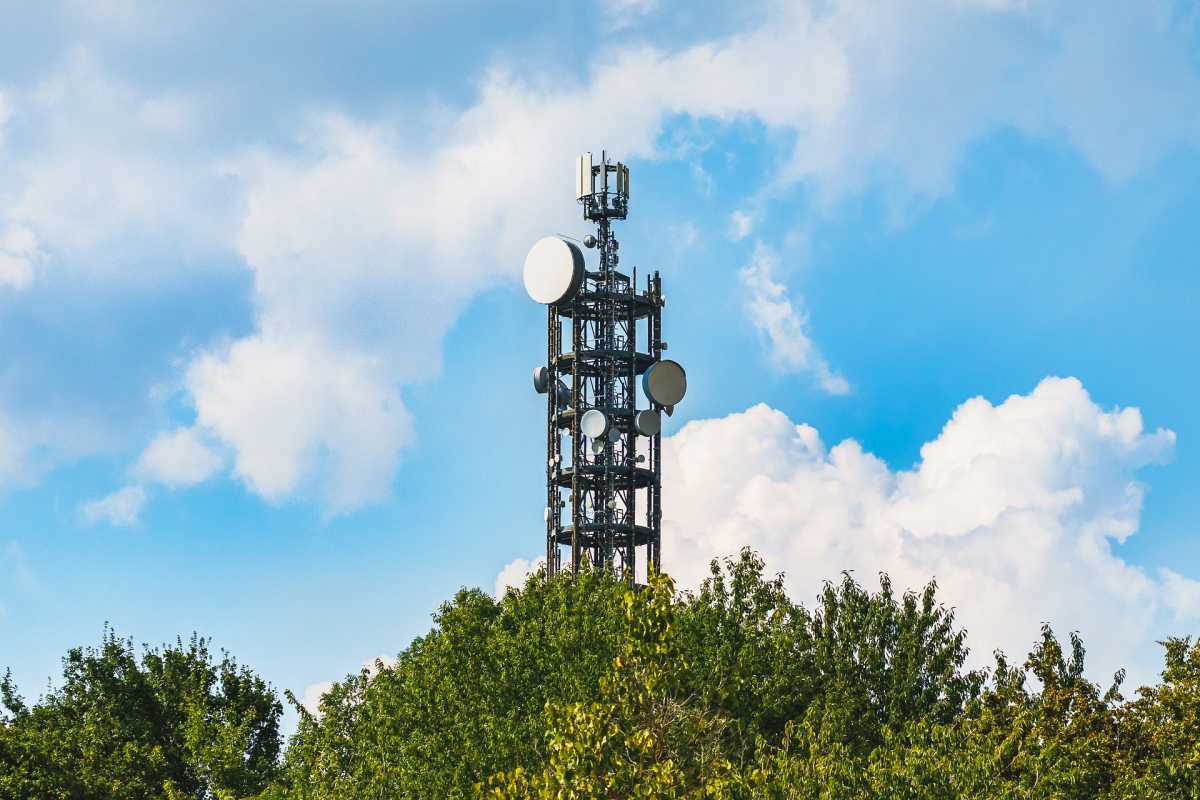
By – Mr Verghese and Mr Warrier, Partners at JSA, Advocates & Solicitors India's 5G journey has witnessed it all – from conspiracy theories that COVID-19 is a cover-up for the deployment of 5G to a bizarre instance of High Court proceedings being interrupted by an enthusiastic Bollywood fan. While more than 30% of the world's nations have already implemented 5G commercially (South Korea being the first nation to do so), India is still grappling with issues at every level — be it in relation to market readiness, financial viability, or regulatory structure. Serious concerns are also being raised on the adverse impact that 5G technology has on health and the environment. India is currently at a critical stage where telcos are conducting trials for 5G implementation. Whereas this might suggest that deployment of the technology is round the corner, the fundamental question is whether India is 5G ready or not. Where Is India vis-a-vis 5G?5G trials in India are already underway, using foreign and indigenous technologies. Though this phase was expected to conclude by November 2021, telcos have been granted additional time till May 2022, particularly to conduct trials in rural India. The expectation is that various use cases across industries and sectors will be tested in local conditions to assess feasibility. Also, an increased focus on rural connectivity appears to be a given as the majority customer base would probably be in the rural areas. Further, the outreach of network coverage indicates a huge potential. Spectrum allocation, which is a major hurdle yet to be crossed, is clouded in considerable uncertainty, as is the issue of pricing. The auction is expected to take place sometime in 2022, but if telcos continue to be in the trial phase, then this timeline may get further extended. Telecom operators are designing their plan of action to launch 5G in terms of developing scalable infrastructure, boosting network capability for higher consumption, focusing on increased efficiency and quality of service, etc. Studies show that a significant percentage of the Indian subscriber base is expected to move to 5G within a few years of deployment, suggesting readiness on the consumers' part to spend money for 5G services when made available. However, the pricing of these services may eventually be the deciding factor. It goes without saying that the pandemic has adversely affected every aspect of our lives, including the functioning of the government machinery. Given the present situation, government bodies and regulators may take more time, further delaying any policy and legislative decisions and implementation. Are We Ready?Amidst all these developments, it is relevant to assess whether a satisfactory 5G ecosystem has been/is being developed in India for the deployment of 5G technology in an effective and efficient manner. It is important for the industry to address matters such as overcoming physical barriers for wider reach, fibre, and financial viability both for service providers and customers before taking the plunge. It is also likely that several issues relating to network security may arise once 5G is rolled out, given the technology's superior features. The poor financial health of Indian telcos is another key concern that will certainly impact their 5G strategy. Also, a pan-India roll-out of infrastructure would require significant capital investment from the telcos. Spectrum availability and pricing are key aspects that will require focus and effort. The Telecom Regulatory Authority of India (TRAI) is yet to provide its recommendations on the available spectrum as ISRO and the defence are yet to vacate several bands. Further, the Department of Telecommunications (DoT) has sought TRAI's recommendations on spectrum base price, given that the current base price recommended for 5G spectrum airwaves is considerably high. Partnering with trusted telecom Original Equipment Manufacturers (OEMs) as required by recent Indian regulations would pose a challenge, as most telcos currently rely on foreign counterparts who may be restricted under the new mandate and because local hardware manufacturing will need to move forward at an impressive pace to match India's 5G targets. From a regulatory standpoint, India does not currently have a robust telecom framework to address any legal issues that may arise because of the 5G implementation. Procedural complexity and delays that the sector generally faces, as also the lack of a comprehensive policy, are among the drawbacks requiring attention. How Does the Industry Get Ready for 5G?What should we look for in the next few years, and how can the industry prepare better to adapt to the new technology? Some of the key aspects would be the following:
Several sectors, particularly the manufacturing sector, financial services, and electronics industry, would benefit hugely from the deployment of 5G. Also, with the entire world moving at a fast pace towards such innovative and sophisticated technologies, India should not be left behind. Therefore, it is imperative for the market to become mature enough to absorb these new changes and implement them and to be ready to address any challenges that may arise. |
| DoT Looks to Accelerate the Process of Installing Mobile Towers at Airports Posted: 15 Jan 2022 03:11 AM PST
In the latest developments, the government of India has issued guidelines to immediately resolve the issues pertaining to the installation of mobile phone towers at and nearby airports. Senior Deputy Wireless advisor at Department of Telecommunications (DoT), LD Meghwal has apparently written a letter to the general manager of Airport Authority of India and JCES director stating that if the applications seeking approvals from Airport Authority of India (AAI) and Joint Communications and Electronic Staff (JCES) are not taken care of within 30 days of filing, will be regarded as cleared off. Current Scenario of Getting ApprovalsAccording to a report from ET Telecom, the above-mentioned letter was also forwarded to the chief secretaries of states and union territories which currently have similar pending approvals. A copy of the letter was also sent to the secretary at the Ministry of Civil Aviation. A condition for clearance was also mentioned in the letter. It was stated that the physical construction of mobile towers should not be initiated before the sixteenth day of the issue of the clearance. It is to be noted that telecom operators without any exception require permission on the height and location of any tower its devices to install anywhere from Standing Advisory Committee on Radio Frequency Allocations (SACFA). Also, AAI and JCES are a part of SACFA and a majority of the permissions are granted via AAI. However, the government had issued policies and guidelines to simplify the process of getting approvals from SACFA. The government took measures to streamline the process of getting approval for the installation of towers, including self-declaration based, automated time-bound approvals. LD Meghwal also mentioned that the AAI had added a total of 121 non-licensed state-government controlled airports in 2015 to the protection list which has now been reduced to 97 airports. However, the authority hasn't been able to efficiently manage the pending cases with these airports. It is to be known that the airports on the protection list are spread across 23 states and UTs in India. The deputy wireless advisor also informed that the failure of getting approvals is causing a lot of hindrance in the expansion of telecom services in the country as well as sternly affecting the proliferation of broadband particularly in rural and underserved areas. |
| Bharti Airtel Prepaid Plans With OTT Benefits Under Rs 1000 Posted: 15 Jan 2022 02:10 AM PST
Bharti Airtel offers multiple prepaid plans with over-the-top (OTT) benefits to users. There are three prepaid plans offered by the telco that come with major OTT benefits and are priced under Rs 1000. These plans cost Rs 599, Rs 699, and Rs 838. Two of these plans offer Disney+ Hotstar subscriptions, while one plan offers an Amazon Prime membership. Let's take a detailed look at these plans. Bharti Airtel Rs 599 Prepaid PlanBharti Airtel offers its Rs 599 prepaid plan with a bundled Disney+ Hotstar Mobile subscription for one year. The service validity of the Rs 599 plan is 28 days. While the validity is short, users get 3GB of daily data along with 100 SMS/day and unlimited voice calling with the plan. Users also get Airtel Thanks benefits. Bharti Airtel Rs 699 Prepaid PlanThe Rs 699 prepaid plan from Bharti Airtel is the single plan that offers Amazon Prime membership in the entire industry. The service validity of the Rs 699 plan is 56 days, and the Prime Membership will also be offered for 56 days only. This plan further bundles unlimited voice calling, 100 SMS/day, and other Airtel Thanks benefits. Bharti Airtel Rs 838 Prepaid PlanThe Rs 838 plan from Bharti Airtel also comes with service validity of 56 days. With this plan, users get a free Disney+ Hotstar Mobile subscription along with 2GB of daily data, 100 SMS/day, and unlimited voice calling. There are Airtel Thanks benefits included with this plan as well. For the unaware, Airtel Thanks benefits include a free subscription to the Amazon Prime Video Mobile Edition (except for the Rs 699 plan) along with a free Wynk Music subscription, Airtel Xstream Premium access, Shaw Academy classes for 1-year, Rs 100 cashback on FASTag transaction, and Apollo 24|7 Circle. These are three prepaid plans from Bharti Airtel under Rs 1000 that come with access to major OTT benefits in India. You can also find plans from Vodafone Idea and Jio under Rs 1000 with OTT benefits. |


| You are subscribed to email updates from TelecomTalk. To stop receiving these emails, you may unsubscribe now. | Email delivery powered by Google |
| Google, 1600 Amphitheatre Parkway, Mountain View, CA 94043, United States | |


Comments
Post a Comment