${latestitem Title}
${latestitem Title} |
- Prepaid ARPU Increased 5.5% QoQ in Q3 FY22 While Wireless Users Declined: TRAI
- BSNL 4G Launch in Pune Likely to Come by End of 2022
- India and France Agree to Work for Building More Secure 5G and 6G Telecom Systems
- WhatsApp Former Chief Business Officer Unhappy they Sold to Facebook: Story
- CUTS International Partners With ARPI, IIITB for Developing Ethical Framework for 6G
- NTT Announces New Data Center in Mumbai
- Poco M4 5G Available in India Now, Check Offers
- E-Band Spectrum Should Not be Exclusively Given to Telcos: Report
- Wi-Fi 7 With 33 Gbps Speed Support to Come With Routers in 2023
- Airtel Launches Two new Disney+ Hotstar Plans With Three Months Validity
- Jio, Airtel and Vi Offer These Reasonably Priced 2GB Daily Data Prepaid Plans
- Moto G82 New Specification and Renders Surface Ahead of the Launch
- Intel Possibly Outsourcing its Next-Gen Meteor Lake Processors from TSMC
- OnePlus 10 Ultra Apparently in Works, Likely to Feature Snapdragon 8 Gen1 Plus Chipset
- Jio Launches New Prepaid Plans With 3 Months Disney+ Hotstar
- Excitel Raises $11.5 Million to Expand Broadband Business to 100 Cities in India
- Vivo T1 Pro 5G and Vivo T1 44W Launched in India, Check Price and Specs
- Voice Over 5G Users to Grow to 2.5 Billion by 2026: Juniper Research
- Nothing Phone (1) Might Feature this Qualcomm Chipset and Camera
- 5G Phones to Benefit from Samsung’s UFS 4.0 Flash Storage
| Prepaid ARPU Increased 5.5% QoQ in Q3 FY22 While Wireless Users Declined: TRAI Posted: 05 May 2022 05:13 AM PDT
It looks like the tariff hike helped the telcos in increasing the industry prepaid average revenue per user (ARPU) from wireless services in Q3 FY22. However, at the same time, the drive from Jio to remove inactive subscribers from its portfolio caused a major decline in wireless subscribers from the industry during the quarter. According to the data shared by the Telecom Regulatory Authority of India (TRAI), there was a net decrease of 11.40 million subscribers during the quarter. The total wireless subscriber base decreased from 1,166.02 million at the end of September 2021 to 1,154.62 million at the end of December 2021. However, on a YoY basis, wireless subscribers increased at the rate of 0.07%. At the same time, there was an increase in wireline customers. This would be due to more people opting for fiber broadband plans. From 23.13 million at the end of September 2021, the wireline customers increased to 24.79 million users. On a YoY basis, this is a growth of 18.63%. Prepaid ARPU Grew 5.5% QoQFrom the TRAI data, it can be seen that the prepaid ARPU from the wireless services grew 5.5% QoQ to Rs 114.16 in the December 2021 quarter from Rs 108.16 in September 2021 quarter. It is worth noting that the monthly ARPU from prepaid services increased from Rs 102.16 at the end of September 2021 to Rs 107.98 at the end of December 2021. But, during the same period, the postpaid ARPU fell from Rs 212.28 (September end) to Rs 210.33 (December end). It was interesting to note that the overall minutes of usage (MOU) per subscriber per month for wireless services increased by 3.33% QoQ from 827 during the September quarter to 854 in the December quarter. This happened despite more and more people resorting to third-party voice applications for voice calling, such as WhatsApp, Telegram, and more. The license fee (LF) increased from Rs 4271 crore during the September quarter to Rs 4,541 crore at the end of the December quarter. |
| BSNL 4G Launch in Pune Likely to Come by End of 2022 Posted: 05 May 2022 04:36 AM PDT
Bharat Sanchar Nigam Limited (BSNL) is going to come out with 4G networks very soon. The state-run telco has said that in Pune, the 4G networks are likely going to be launched by the end of the year 2022. This was shared by the official handle of BSNL India (@BSNLCorporate) when a certain user asked about the status of BSNL's 4G networks coming to Pune, Maharashtra. It is the same time frame when BSNL is expected to launch 4G networks in the South Indian state of Kerala. The state-run telco will conduct 4G network tests from August in four districts of Kerala and then aim for a state-wide launch by December 2022. Will Every City/State Get BSNL 4G by Year-End?BSNL is currently waiting for the vendor to fulfil the order for 40W radios to be deployed in 6000 sites across the country. The longer this will take, the more it will lead to a delay in the launch of BSNL's 4G networks. It is most likely that BSNL will only be able to launch 4G in different states and cities of the country by the year-end. By then, maybe some of the private telcos would have launched 5G networks. But the good thing is that BSNL has also worked on 5G NSA (non-standalone) with the C-DoT (Centre for Development of Telematics). So there's a possibility that BSNL can fast upgrade the 4G sites to 5G NSA. For the unaware, 5G NSA doesn't require a 5G core. It can be deployed over the 4G core and is less expensive than 5G SA. With 5G NSA, the aim is mostly to deliver enhanced mobile broadband (eMBB). For now, since Pune and Kerala are expected to get the live 4G networks of BSNL later in the year, it might be the same case for other cities and states as well. It is worth noting that BSNL already offers 4G VoLTE services in some parts of the country, but not everywhere. |
| India and France Agree to Work for Building More Secure 5G and 6G Telecom Systems Posted: 05 May 2022 02:56 AM PDT
France and India, two major nations in the global economy have agreed to work together for building more secure 5G and 6G telecom systems. India's Prime Minister Narendra Modi met with French President Emmanuel Macron on Wednesday, May 4, 2022, and talked about preparations for the future to deepen cooperation between both countries. The Ministry of External Affairs (MEA) said that India and France have reiterated their willingness to deepen their cooperation on exascale technology to build upon the implementation of the Indo-French roadmap on cyber security and digital technology. The cooperation between both the countries also includes making supercomputers in India. Further, both the MEA said that India and France have also agreed to "work together for more secure and sovereign 5G/6G telecom systems." 6G is something that is pretty far from here but many countries including India have already started working on it. Much recently, CUTS International announced that it has bagged a grant under the second round of the Australia-India Cyber and Critical Technology Partnership (AICCTP) programme. France Commits to Objective of 20,000 Indian Students by 2025To promote business activities between both countries, France has committed to the objective of 20,000 Indian students by 2025. This will offer more startup opportunities and innovation between both countries. India seems to be making fast moves towards 6G by collaborating with Australia and France. Both India and France have also launched multiple initiatives to connect their startup ecosystems and welcome recent public-private engagement to work together. Further, MEA said that both the countries have agreed to find creative ways for France's deeper involvement in the “Atmanirbhar Bharat" (Self-reliant India) efforts in advanced defence technology, manufacturing and exports, including through encouraging increased industry to industry partnerships. Prime Minister Narendra Modi has also invited President Macron to visit India at his earliest convenience for holding detailed discussions in the areas of cooperation. |
| WhatsApp Former Chief Business Officer Unhappy they Sold to Facebook: Story Posted: 05 May 2022 02:07 AM PDT
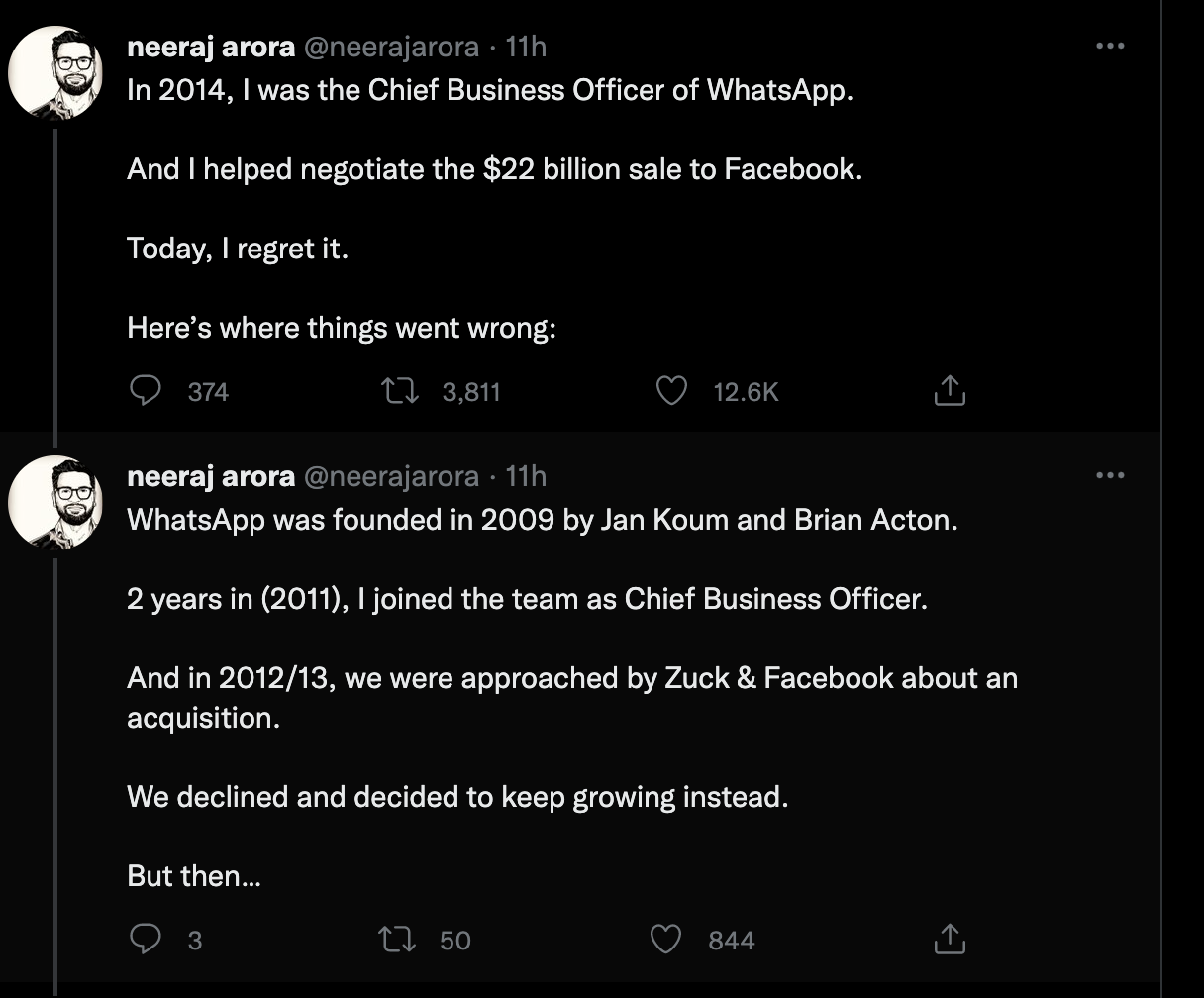
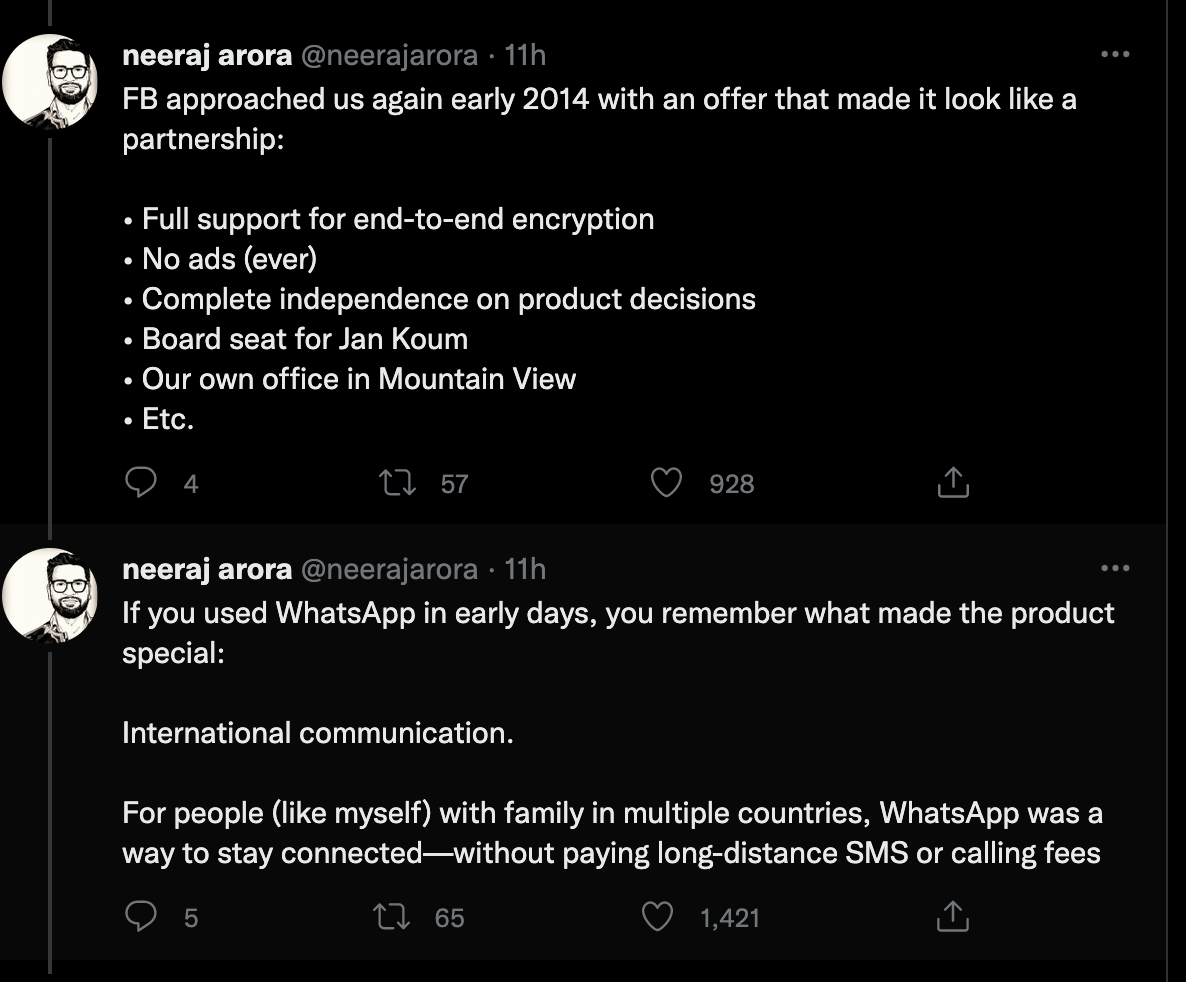
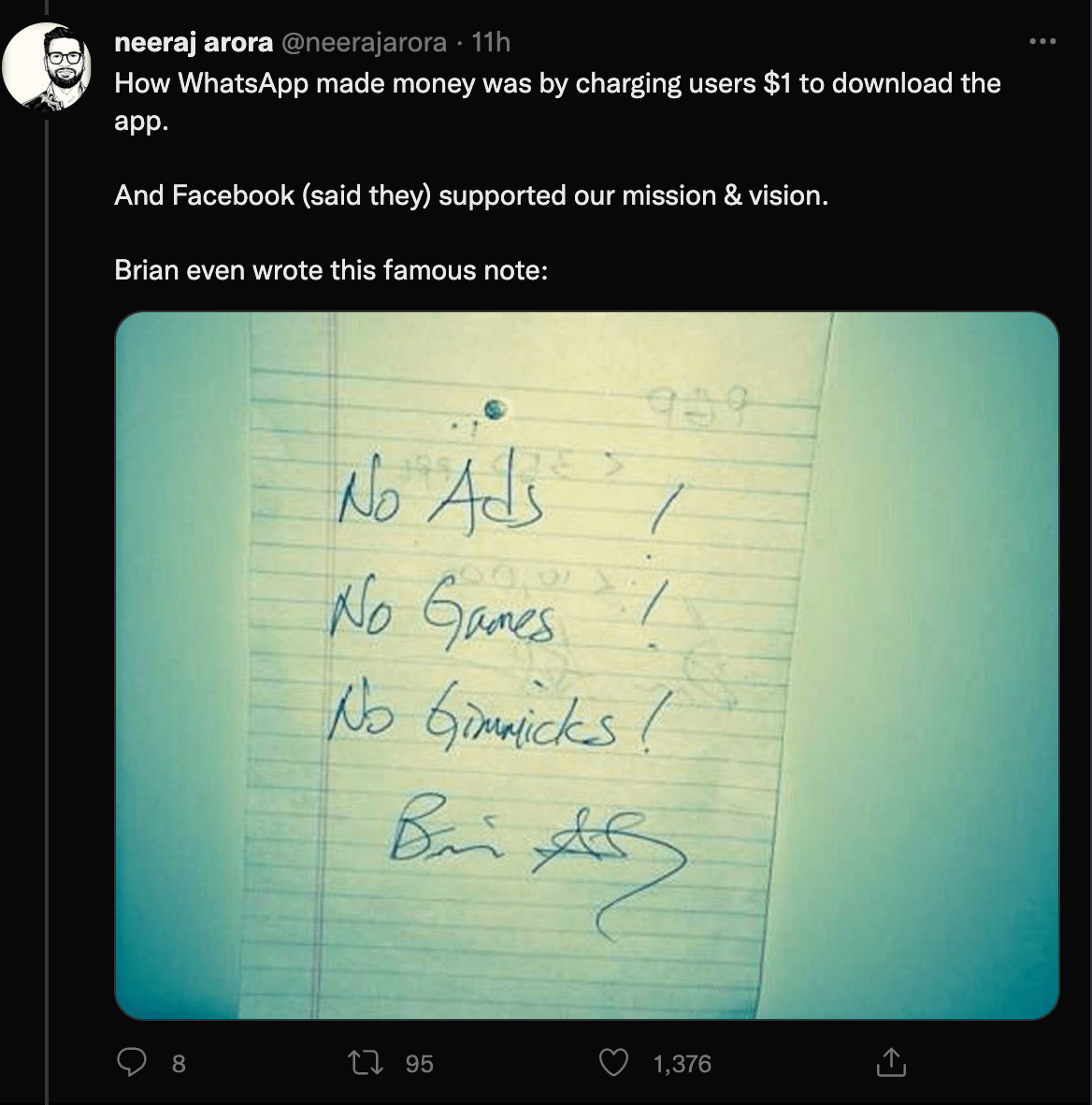
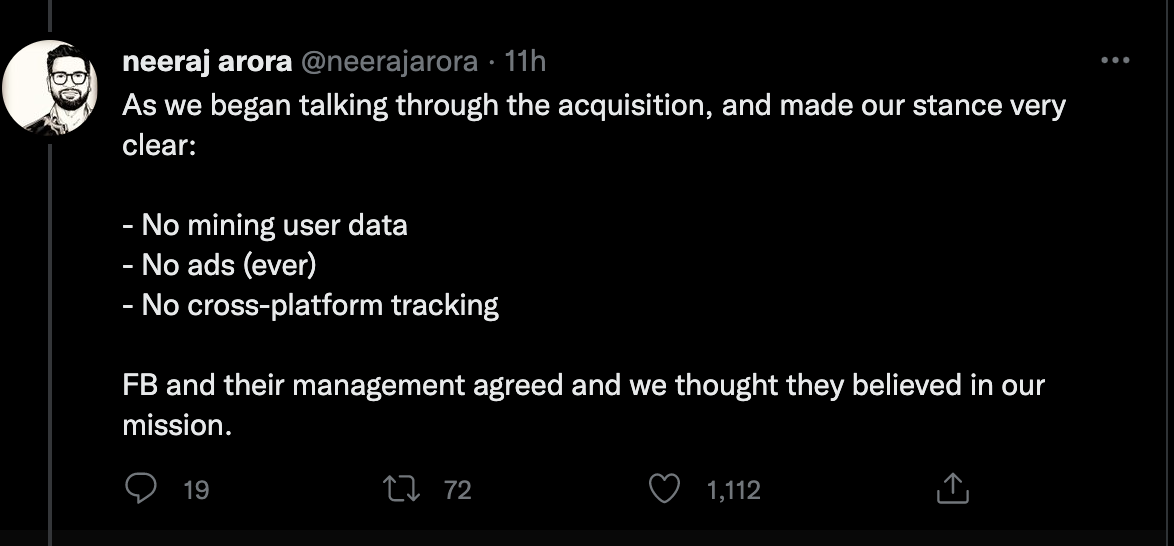
Facebook acquiring WhatsApp for a staggering $22 billion was one of the biggest app acquisitions made in the tech world until recently, when Elon Musk tried to purchase Twitter for $44 billion (still in the process, the deal is not done yet). Regardless, Neeraj Arora, former Chief Business Officer of WhatsApp, expressed his disappointment over the deal. Arora said he "regrets" the deal he help facilitated between WhatsApp and Facebook. (Note – Stick to the end of the story to see actual screenshots of Tweets from Neeraj Arora). Looks Like Facebook Didn't Keep Its End of PromisesArora explained that when Mark Zuckerberg and Facebook approached WhatsApp in 2012/13, WhatsApp had refused the buyout to keep growing further. However, in early 2014, Facebook again reached out to WhatsApp with an offer that Arora says looked more like a "partnership" than a buyout. WhatsApp was very clear about its stance on no mining of user data, no ads (ever), and no cross-platform tracking. However, Arora said, that didn't happen. By 2017 and 2018, things started looking completely different. In 2018, details revolving around one of the biggest scandals between the Cambridge Analytica and Facebook came out (if you don't know about this, there's a documentary on Netflix that's a must-see). Brian Acton, co-founder of WhatsApp, on March 21, 2018, tweeted, "It is time. #deletefacebook". Arora said that today, WhatsApp is the second-largest platform of Facebook, even bigger than Instagram or FB Messenger. Before ending his series of tweets, Arora called Facebook a "Frankenstein monster that devoured user data and spat out dirty money." Facebook (now Meta) has not yet introduced ads on WhatsApp. However, there were reports in early 2020 which said that Facebook was planning on bringing ads to WhatsApp, and they would be visible on the 'Status' area just like the ads we see on Instagram. Since nothing has happened yet, it doesn't mean it can't happen in the future. Further, WhatsApp says that user chats are end-to-end encrypted and can't be read by the company or anyone else.
|
| CUTS International Partners With ARPI, IIITB for Developing Ethical Framework for 6G Posted: 05 May 2022 01:29 AM PDT
CUTS International has managed to bag a grant under the second round of the Australia-India Cyber and Critical Technology Partnership (AICCTP) programme coordinated by the Australian Department of Foreign Affairs and Trade for its project – 'Ethical 6G – Identifying Elements of an Ethical Framework for 6G and Creating Opportunities for India and Australia'. For this, CUTS has partnered with the International Institute of Information Technology, Bangalore (IIITB) and the Australian Risk Policy Institute (ARPI). The objective of AICCTP is to strengthen and encourage practical collaboration and cooperation between the two countries to shape a global technology environment which reflects a shared vision of a free, open, and rules-based Indo-Pacific. 6G Needs to be Carefully Deployed With Appropriate Ethical ControlsThe program promotes the companies and the organisations (Indian and Australian) which are working towards the global development of ethical standards around emerging and critical technologies such as the Internet of Things (IoT), next-generation connectivity standards, artificial intelligence (AI), blockchain, big data, and more. With this project, the goal is to build an actual practical cooperative environment for collaboration between India and Australia for developing critical telecommunication technologies, including 6G, so that an understanding of the ethical framework around 6G deployment and the 6G standard making can be explored. Many countries are still stuck with 5G deployment and research, while countries such as India and Australia have already started exploring the 6G standard of connectivity. India and Australia could very well get some early mover advantage with 6G. Professor V Sridhar of the International Institute of Information Technology, Bangalore (IITB), said that 6G needs to be carefully deployed with appropriate ethical controls or appropriate deployment. That said, it isn't just India and Australia, but countries in Europe, then China, Korea, and more have also started their research around 6G. Telecom vendors such as Huawei and Samsung are already making moves in the direction of 6G. |
| NTT Announces New Data Center in Mumbai Posted: 05 May 2022 12:36 AM PDT
NTT has announced a new hyperscale data center campus in Navi Mumbai. The first data center on the campus is NAV1A. The new data namely NVA1A has a capacity to host 5000 racks and support over 30 MW of IT load. According to an ET report, the NAV1 campus in the Navi Mumbai has been designed in a manner so that it has a capacity of hosting up to 4 data centers. This will allow the campus for reaching up to 150 MW of load facility. For the unaware, NTT already has three data centers in the Mumbai region. NTT Has 12 Data Centres Spread Across IndiaCurrently, NTT has over 12 data centers spread across the country in places including Bengaluru, Mumbai, Delhi NCR, and Chennai. The total power capacity of these data centers is close to 220 MW. It is worth noting that NTT, a $11 billion tech services company is amongst one of the largest data center operators in the country. The company is eyeing to further expand the capacity of its data centers in India. NTT will be bringing new data centers to all the locations it already has set up data centers. The company plans to develop eight more data centers and reach a total facility load capacity of 509 MW by March 2024. NTT is already building/developing a 6-acre data center campus in Chennai and the whole building is expected to go live by November 2023. The company has similar plans for Noida too where it is again building a 6-acre facility. The Noida campus is expected to go live by February 2023. All of these data centers are part of the $2 billion investment that NTT had earmarked in 2020 for scaling its infrastructure capacity. NTT is globally one of the biggest data center companies and is present in multiple regions globally. With 5G, the need for data centers would go up dramatically as more data gets stored in the cloud and thus these expansions will be very helpful for NTT in the future. |
| Poco M4 5G Available in India Now, Check Offers Posted: 04 May 2022 11:50 PM PDT
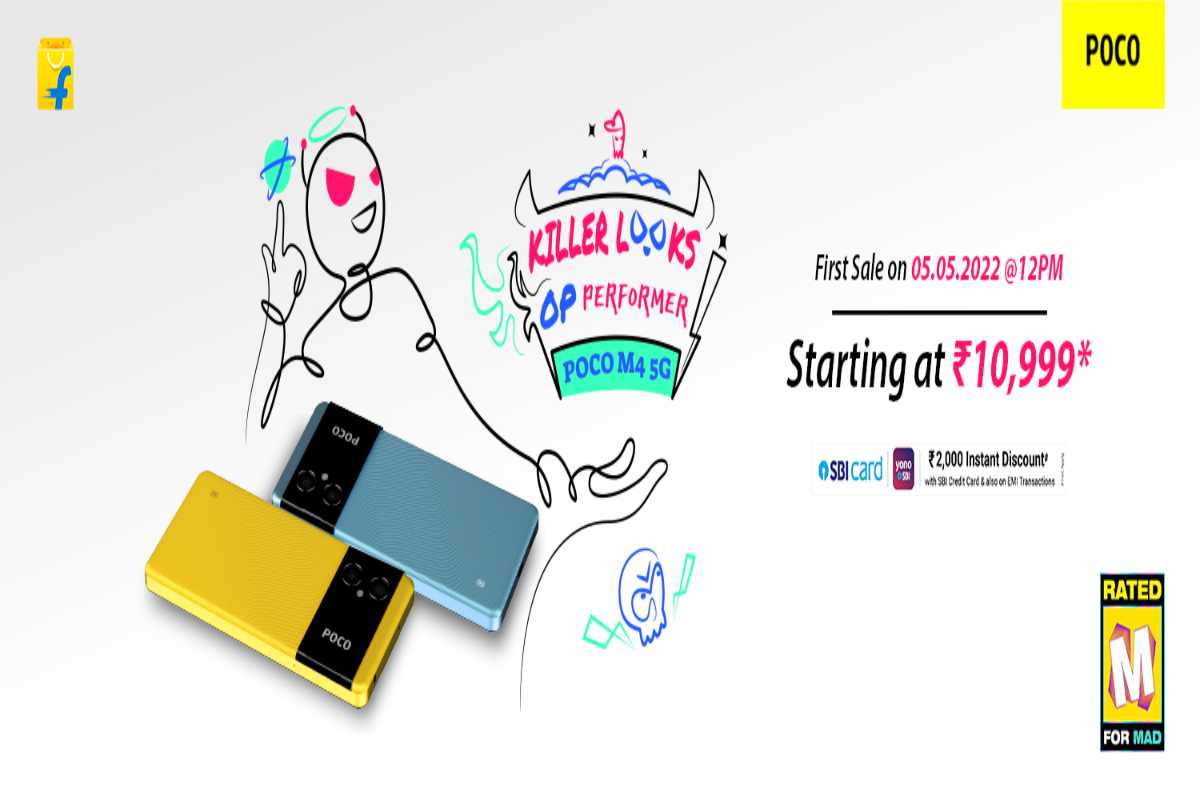
Poco M4 5G is now available in India. The device went into first sale today at 12 PM via Flipkart. It is available in two memory variants with the base variant coming with 4GB+64GB for Rs 12,999 and the superior variant coming with 6GB+128GB for Rs 14,999. Users who make the purchase using an SBI card will get an instant discount of Rs 2,000 on either of the variants. Thus, the price of the base and the superior variants will come down to Rs 10,999 and Rs 12,999. It will be available in three colours — Poco Yellow, Power Black, and Cool Blue. If you are not aware of the specifications of the smartphone, read below. Poco M4 5G Specifications in IndiaThe Poco M4 5G has a big 6.58-inch FHD+ display and comes with support for 90Hz refresh rate and 240Hz touch-sampling rate. The company is using the adaptive refresh rate technology on the display of the device meaning the display will intelligently adjust between 30Hz, 60Hz, and 90Hz refresh rate depending on the kind of content on the screen. This will help the device in preserving the battery for a longer period. Further, there's Gorilla Glass 3 on top for giving protection to the screen. The device is powered by the MediaTek Dimensity 700 SoC coupled with up to 6GB of RAM and 128GB of internal storage. In the camera department, there's a dual-camera setup at the rear with a 50MP-AI primary sensor and a 2MP depth sensor. At the front, there's an 8MP sensor for selfies and video calling. The device packs a 5000mAh battery with support for 18W fast charging. The company will bundle the charger inside the box of the smartphone. The Poco M4 5G comes with a fingerprint sensor mounted on the side along with a 3.5mm headphone jack for wired earphone lovers. As mentioned above, the device is available on Flipkart now. |
| E-Band Spectrum Should Not be Exclusively Given to Telcos: Report Posted: 04 May 2022 09:37 PM PDT
The Digital Communications Commission (DCC) had last week backed the TRAI's (Telecom Regulatory Authority of India) recommendations for the base reserve price of the airwaves for the 5G spectrum auctions. Along with that, the body had said that the premium 'E-Band' spectrum should be given exclusively to the telcos via an administrative allocation route. However, this has seriously disappointed the tech companies and Wi-Fi/Broadband players across the country. ET Telecom reports that these companies will shortly write to the government that the DCC's decisions are in direct conflict with what the sector regulator had suggested. Basically, the tech companies and the broadband companies want the E-band spectrum to be opened up for everyone and not just be reserved exclusively for the telecom operators. E-Band Spectrum Necessary for BackhaulDCC had suggested that the telecom operators should be given the E-band spectrum in an administrative allocation manner, but for this, the telcos would have to pay in the future based on an auction-based pricing mechanism that the regulator will determine. Even the telcos might not be too happy with this recommendation. The telecom operators wanted the E-Band spectrum via a direct allocation method because it is ideal for providing mobile broadband services. Especially with 5G coming into the picture soon, the telcos will need all the backhaul support they can get from the premium E-band airwaves. For the unaware, in places where the telcos can't deploy fiber for backhaul services, they can use the E-band spectrum. But this is something that the tech companies are saying that they will need too. DCC had said that the spectrum should not be directly allocated to the enterprises for private 5G networks. This, too, was contrary to what the sector regulator had suggested. This is something that the telecom operators would have been happy to hear. |
| Wi-Fi 7 With 33 Gbps Speed Support to Come With Routers in 2023 Posted: 04 May 2022 09:19 PM PDT
Wi-Fi 7 is the next generation Wi-Fi protocol, and it will be a notch above what Wi-Fi 6 can deliver. With Wi-Fi 7, delivering speeds of up to 33 Gbps will be possible. It is worth noting that with the current generation Wi-Fi 6 and Wi-Fi 6E, the top speeds can roughly be at 10 Gbps. But Wi-Fi 7 will take that up to 33 Gbps, reports AndroidAuthority. This means that Wi-Fi 7 is going to be at least three times faster than Wi-Fi 6. Note that the final draft of the Wi-Fi 7 protocol won't be available until 2024. However, Qualcomm will go for routers that can support Wi-Fi 7 in 2023 itself. As per the publication, Qualcomm is already providing hardware customers with early access to the new generation chipsets, for which the commercial availability will be around 2023. Wi-Fi 7 Would Allow Up to 500 Users to Connect With a Single Channel of NetworkQualcomm has claimed that Wi-Fi 7 protocol will allow up to 500 users to connect with a single channel of the network. These are far more users than what Wi-Fi 6 routers can support. Further, Wi-Fi 7 should also be able to deliver reduced latency networks making it ideal for video conferencing as well as online gaming. AR and VR applications will also become easier to access with Wi-Fi 7 supported networks. Again these routers can come as early as 2023. But there's no solid confirmation whether this will happen. One thing is sure, these Wi-Fi 7 supportive routers would enable a new stream of digital connectivity, and small businesses would certainly love to leverage them for running their daily operations. But, it will also be important for Qualcomm to keep the costs in check as Wi-Fi 7 routers can't be too expensive if they want to succeed in a developing nation such as India. It is worth noting that even today, most people are using Wi-Fi 5 supported devices and routers. |
| Airtel Launches Two new Disney+ Hotstar Plans With Three Months Validity Posted: 04 May 2022 08:25 PM PDT
Bharti Airtel, India's second-largest telecom operator, has launched two new prepaid plans for the users. With these two new plans, the company will be offering three months of Disney+ Hotstar Mobile subscription. There are more plans offered by the telco which bundle a free Disney+ Hotstar Mobile subscription, but these plans offer the over-the-top (OTT) benefit for one complete year. However, as mentioned above, these two new plans offer the Disney+ Hotstar Mobile subscription with only three months of validity. The two newly launched plans will cost users Rs 399 and Rs 839 and were first spotted by a TelecomTalk community member who goes by the name Vaibhav. Let's see their benefits. Bharti Airtel Rs 399 Prepaid PlanBharti Airtel offers its Rs 399 prepaid plan with 2.5GB of daily data along with 100 SMS/day and unlimited voice calling. Users also get access to three months of Disney+ Hotstar Mobile subscription. This plan carries a validity of 28 days only and brings a ton of Airtel Thanks benefits, including a free one month trial of the Amazon Prime Video Mobile Edition, Apollo 24|7 Circle and more. Bharti Airtel Rs 839 Prepaid PlanBharti Airtel offers its Rs 839 prepaid plan with a longer validity of 84 days. With this plan as well users get a Disney+ Hotstar Mobile subscription for three months. The data offered with this plan is 2GB daily along with unlimited voice calling and 100 SMS/day. The company bundles Airtel Thanks benefits with this plan as well, which includes Airtel Xstream Mobile Pack too, amongst other things. These are the two newly launched plans by Airtel. It is worth noting that on Wednesday, Reliance Jio also launched four new prepaid plans with three months of Disney+ Hotstar Mobile subscription. It also included a data-only plan which Bharti Airtel hasn't launched. These plans are mostly there to help with boosting the average revenue per user (ARPU) because there was hardly any need for a Disney+ Hotstar Mobile subscription for three months. Users can get it for one year by simply paying Rs 499. |
| Jio, Airtel and Vi Offer These Reasonably Priced 2GB Daily Data Prepaid Plans Posted: 04 May 2022 06:33 PM PDT
Telecom operators in India provide a variety of prepaid plans for their subscribers to choose from. The most popular prepaid plan, however, remains the daily data packs offered by the telcos. The daily data packs have a wide range from high data expensive plans to low data-offering affordable plans. With a majority of the user base in India being budget-centric, the cheaper prepaid plans are always high in demand. Mentioned below are the most reasonably priced 2GB/Day daily data plans offered by Jio, Airtel and Vi along with the plan details. Jio's Affordable OptionsThe cheapest 2GB/Day plan from Jio comes at a price tag of Rs 249. For Rs 249, Jio offers a prepaid plan that provides 2GB data per day for a validity period of 23 days. The plan comes with unlimited voice calls and 100 SMS per day. The next plan on the list from Jio costs Rs 299 and offers 2GB data per day for a validity period of 28 days along with unlimited voice calls and 100 SMS per day. Lastly, for just under Rs 500, Jio offers one of its most popular prepaid plans. Jio offers a Rs 499 plan that comes with a validity period of 28 days and offers 2GB data per day until the validity period. The plan also offers unlimited voice calls and 100 SMS per day. Moreover, new users also get a subscription to Jio Prime Membership with the purchase of these plans. In addition to these benefits, the Rs 499 prepaid plan also comes with access to the Disney+ Hotstar OTT platform as well as a few Jio applications. Two Plans from AirtelAirtel provides multiple 2GB daily data plans, however, only a few of those are super affordable. In fact, Rs 499 plan from the telco is similar to that of Jio. Airtel offers a 2GB/day plan at a price tag of Rs 499 that comes with a validity period of 28 days along with unlimited voice calls and 100 SMS/day. The plan also gives access to Disney+ Hotstar mobile along with a free trial of the Amazon Prime Video mobile edition. In addition to this, Airtel offers another prepaid plan that comes at a price tag of Rs 359 and provides 2GB data per day for a validity period of 28 days along with unlimited voice calls and 100 SMS per day. This plan as well offers a free trial of the Amazon Prime Video mobile edition. In addition to this, Airtel has also recently added a Rs 319 pack that offers 2GB data per day for 1-month validity with the same additional benefits as Rs 359 pack. Vi's Cheapest 2GB/Day PlanVodafone Idea or Vi has several 2GB daily data plans in its portfolio, although only two plans fit the list. Both of these plans are actually identical to that of Airtel. Vi offers a prepaid plan that comes at a price tag of Rs 359 and provides 2GB data per day for a validity period of 28 days along with unlimited voice calls and 100 SMS per day. Moreover, Vi offers a 2GB/day plan at a price tag of Rs 499 that comes with a validity period of 28 days along with unlimited voice calls and 100 SMS/day. The plan also gives access to Disney+ Hotstar mobile. Vi also offers some added benefits with these plans such as the "Binge All Night" benefit with which users can binge through the internet with no limits during the time period of 12 midnight to 6 am. Additionally, Vi offers a "Weekend Roll Over" feature using which users can carry forward the unused daily data from Monday-Friday to Saturday and Sunday. Apart from this, Vi also offers up to 2GB of additional backup data every month along with access to Vi Movies and TV. |
| Moto G82 New Specification and Renders Surface Ahead of the Launch Posted: 04 May 2022 09:26 AM PDT
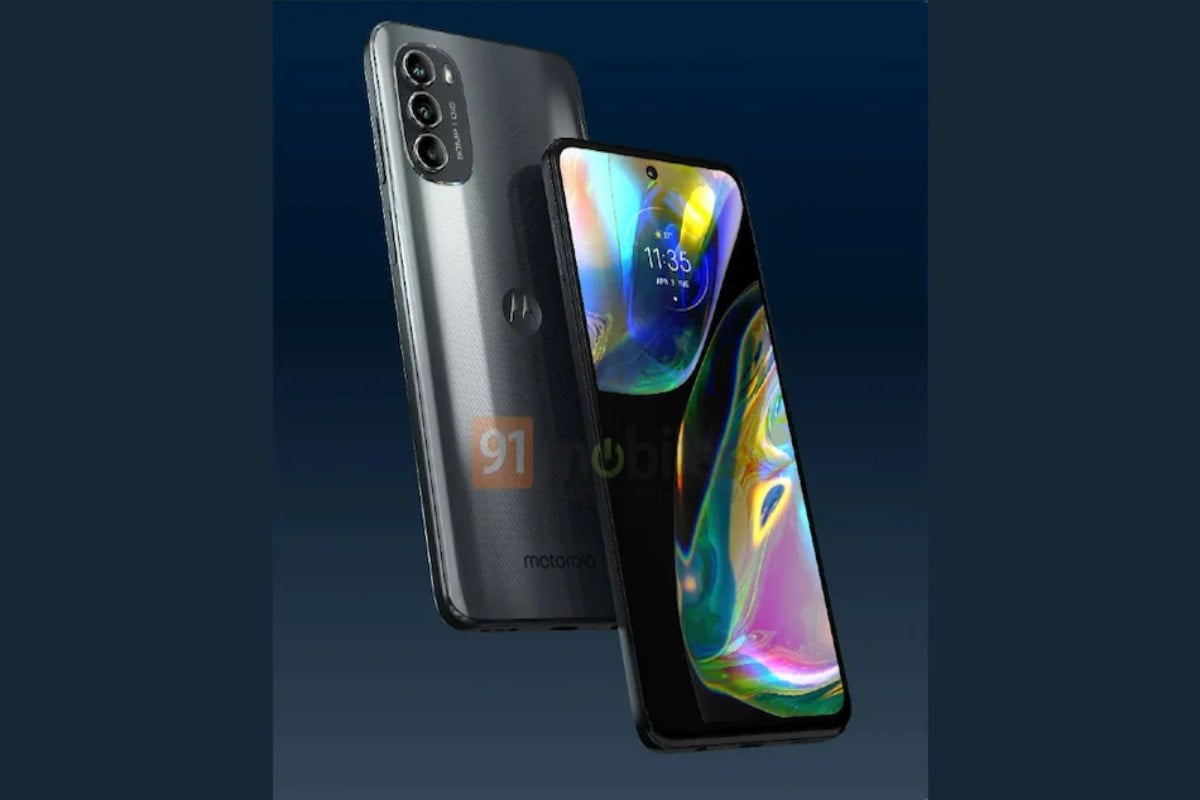
The Lenovo backed smartphone maker Motorola is looking to expand its G-series portfolio even further by introducing the Moto G82 device. The rumours regarding the device have been emerging for some time now and the smartphone has apparently been spotted at TENAA, China Compulsory Certification (3C), Wi-Fi Alliance, EEC, BIS, and TDRA certification sites. It is likely that Moto G82 has the codename Rhodes 5G+ and could be the first smartphone to have a G8 name. The smartphone could be a mid-premium smartphone powered by a Qualcomm chipset. Specifications and Design DetailsAccording to a new report from 91mobiles, known tipster Evan Blass has shared some specification details along with renders of the Moto G82 smartphone. The renders suggest that the device could feature an oval-shaped camera module at the back whereas on the front there is a centrally placed punch-hole cutout housing the selfie camera. The device could also come with volume rockers on the right side with a fingerprint sensor. As far as the display of the smartphone is considered, Moto G82 could arrive with a 6.55-inch OLED display with a Full-HD+ resolution, 120Hz refresh rate, 440ppi density, and a screen-to-body ratio of 88%. The device could be powered by an octa-core Qualcomm Snapdragon 695 chipset paired with up to 8GB of RAM and 128GB of internal storage. This smartphone is said to pack a 5,000mAh battery with support for 33W fast charging. The device is also IP52 rated for dust and water resistance. The previous listing at the TENAA certification site also reveals that the Moto G82 handset will be launched in a number of colour options such as black, white, grey, silver, gold, blue, cyan, red, and green. The listing had also confirmed that Moto G82 will operate on Android 12 OS. |
| Intel Possibly Outsourcing its Next-Gen Meteor Lake Processors from TSMC Posted: 04 May 2022 08:16 AM PDT
The American technology company Intel last week gave information on its upcoming 14th generation Meteor Lake processors. The next-gen processor from the company is going to be launched next year but apparently, there have been some major changes to the company's original plans. The company had previously informed that it will be using the 7nm process to fabricate the processors itself but according to a new report, Intel might actually outsource the fabrication process to TSMC. What's the Story?For those unaware, TSMC is the company that works on M1 chips from Apple which makes use of the 5nm process and Intel could now actually benefit from that as well. To recall, Apple used to go for processors from Intel but was not happy with compromising the launch dates for its Mac devices based on the timeline of the launch of Intel's processors. In fact, the performance problems related to Intel's Skylake in 2015 actually led to Apple starting to manufacture on its own. According to a report from 9to5Mac, Intel always neglected the expectations of the Apple Silicon and evidently had it coming for a long time. As a matter of fact, the first-gen chips featured in Apple Mac devices completely outperformed the processor from Intel and the latter actually had no reply. After this, Intel has been continuously taking digs at its rival calling Apple a lifestyle brand and even mocking the company in several ad campaigns. Intel also talked about producing ARM chips that would take over Apple Silicon. However, even though Intel has been talking about the potential of the ARM chips it has also been pondering for quite some time over outsourcing some of its production and multiple reports suggest that it has actually been happening for a while now. Cut to last year, when Intel announced its 14th generation Meteor Lake chips which are said would be based on the 7nm process making it sound fancier than the 5nm process from TSMC. But last week, the company announced that it is ready with the first prototype of this chip and described it as the first disaggregated product which is just another way of describing a similar system-on-a-chip design to that used in Apple's M1 chips. However, a Digitimes report today claims that Intel is now considering plans to outsource chip fabrication to TSMC so that it can take advantage of the Taiwanese company's 5nm process. |
| OnePlus 10 Ultra Apparently in Works, Likely to Feature Snapdragon 8 Gen1 Plus Chipset Posted: 04 May 2022 07:28 AM PDT
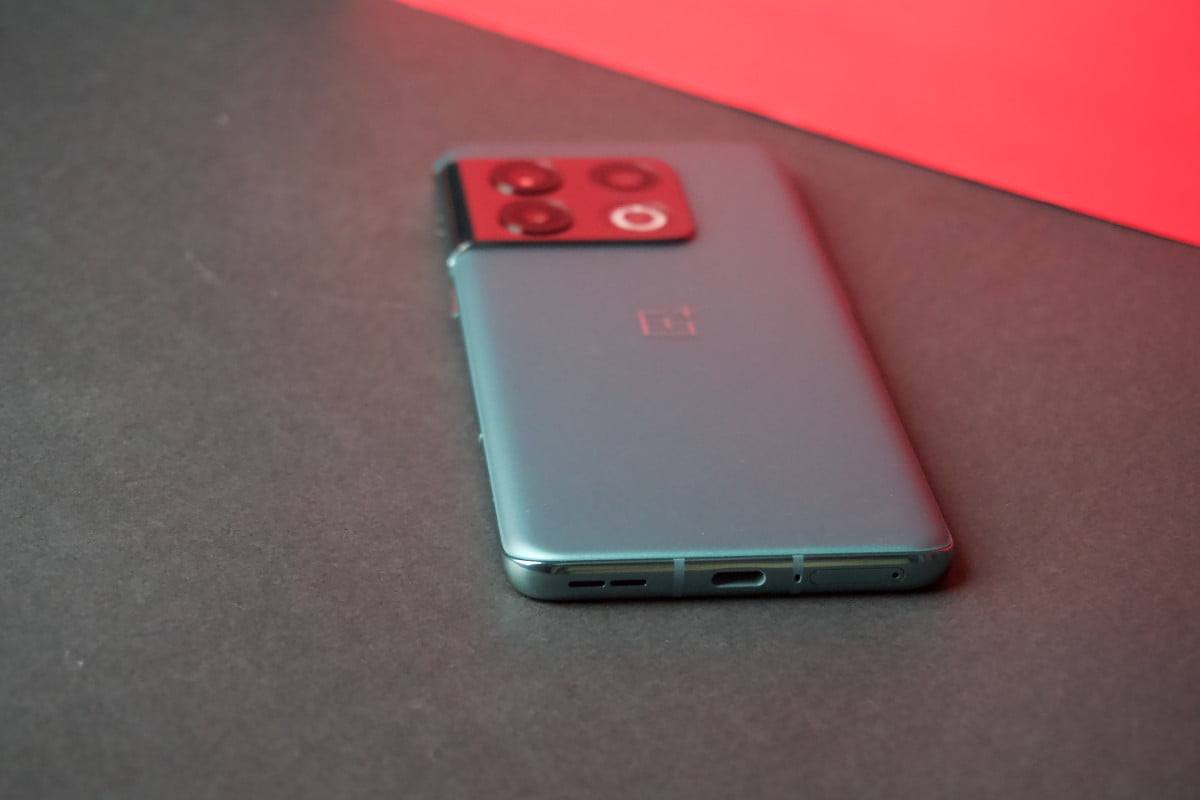
The popular smartphone manufacturer OnePlus recently launched its OnePlus Pro device which was thought to be the most premium smartphone from the brand. However, it all seems to be changing as the company is reportedly working on a OnePlus 10 Ultra handset which will be joining the OnePlus 10 series. The Ultra model is expected to be powered by the next-gen chipset from Qualcomm which is going to be Snapdragon 8 Gen1 Plus chipset and will also be making enhancements to the cameras. The recently launched OnePlus 10 Pro even after being a flagship smartphone featured cameras that were not impressive at all. The ultra-wide-angle lens on the device was in particular a big let-down. It is also expected that the company will be improving the cameras on the OnePlus 10 Pro. In addition to this, the brand is also reportedly working on other products such as the conventional OnePlus 10 which is yet to be released and another smartphone with Snapdragon 7 Gen1. New Devices Coming This YearThe popular tipster Yogesh Brar suggests that the upcoming OnePlus 10 Ultra could be launched somewhere in August or September. He added that the smartphone is going through multiple testing which focuses on improving the camera and performance. The tipster further informed that the company is still planning to introduce the base OnePlus 10 model which could be launched featuring a MediaTek Dimensity 9000 or Snapdragon 8 Gen1 chipset. OnePlus 10 is anticipated to arrive with a 6.7-inch Full HD+ AMOLED display with a 120Hz refresh rate. The chipsets could also differ depending upon the region of the launch of the device just as in the case of Samsung which used to launch certain smartphones in India with Exynos chipsets and with Snapdragon chipsets. Apart from these, OnePlus is also expected to introduce Nord series smartphones other than what it has already launched. These devices could be launched with MediaTek Dimensity 8000 SoC or a Snapdragon 888 SoC. The brand is also said to be working on a Snapdragon 7 Gen 1 powered smartphone. |
| Jio Launches New Prepaid Plans With 3 Months Disney+ Hotstar Posted: 04 May 2022 07:02 AM PDT
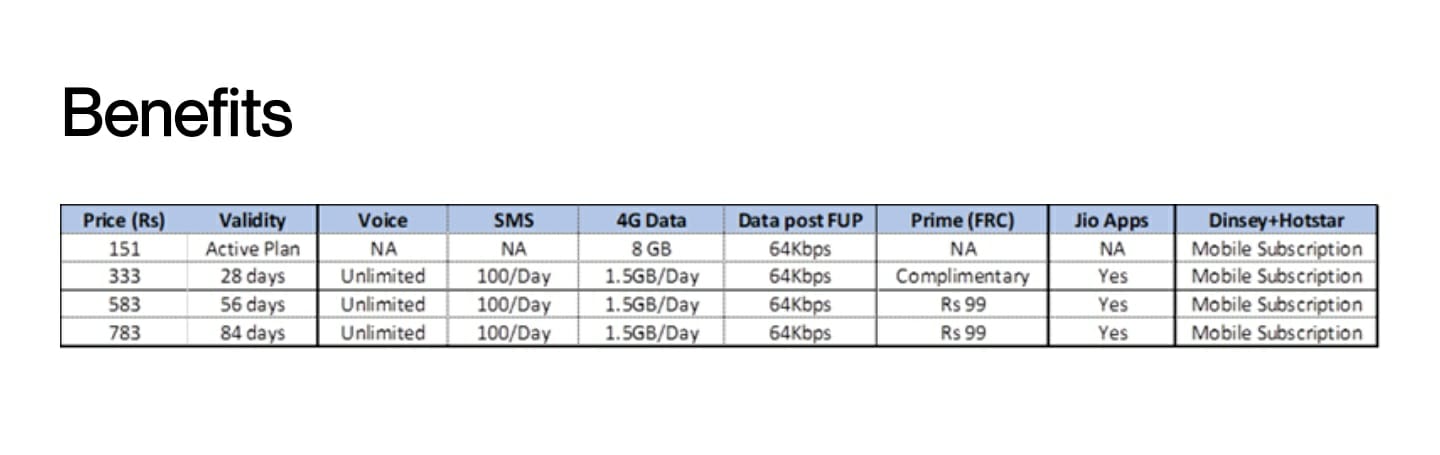
Reliance Jio has launched multiple new prepaid plans, which will now come with a Disney+ Hotstar Mobile subscription for three months. Until now, all the existing prepaid plans which offer Disney+ Hotstar Mobile benefit come with a one-year subscription and are slightly more expensive than what users would have liked. But now, the company has launched four new plans which will offer three months of Disney+ Hotstar subscription. The four new prepaid plans launched by Reliance Jio are Rs 151, Rs 333, Rs 583, and Rs 783 plans. Let's see what they offer to the consumers.
Reliance Jio Rs 151 Prepaid PlanThe Rs 151 plan is a data-only plan offering 8GB of data to the users. To take advantage of this plan, users also need an active base plan. This plan will bundle a three months subscription of Disney+ Hotstar Mobile subscription for the users. Reliance Jio Rs 333 Prepaid PlanWith the Rs 333 prepaid plan from Reliance Jio, users will get 1.5GB of daily data along with unlimited voice calling and 100 SMS/day for 28 days. There will be Jio apps bundled along with a three months subscription to Disney+ Hotstar Mobile. The Prime subscription will be offered to the new customers for free with this plan. Reliance Jio Rs 583 and Rs 783 PlansThe benefits of the Rs 583 plan and the Rs 783 prepaid plans from Jio are the same as the Rs 333 plan except for their validity. With the Rs 583 plan, users get 56 days of validity, while with the Rs 783 plan, users get 84 days of validity. Note that the prime subscription is not offered for free with these two plans, and the new users will be charged Rs 100 for the prime membership. None of the other prepaid plans in the industry currently offer three months of Disney+ Hotstar Mobile plan to the users. |
| Excitel Raises $11.5 Million to Expand Broadband Business to 100 Cities in India Posted: 04 May 2022 05:01 AM PDT
Excitel, an internet service provider (ISP) which aims to offer low-cost high-speed broadband internet services in India has raised $11.5 million from the existing as well as new tech investors based out of Europe. The company has ambitions to reach at least 100 cities in India by the end of 2022. To do this, there's a dire need for capital and Excitel has managed to raise that. Along with reaching new cities, Excitel plans to enhance its technology stack and customer experience to ensure better services for users. Excitel Aiming at 10 Million CustomersExcitel currently has 0.7 million customers under its name. The ISP is further aiming to hit the 10 million customer mark. By the end of 2022, Excitel wants to reach a total of 100 Indian cities. The company focuses a lot on the Tier-2 and Tier-3 cities to offer affordable broadband internet services. Much recently, Excitel also announced services in one of the most popular cities in the country – Mumbai. In Mumbai, Excitel is arguably one of the most affordable options for users looking for a broadband Internet connection. In Mumbai, users can get the 400 Mbps plan for a mere cost of Rs 499 per month if they are going for the 12-month option. In an exclusive conversation with TelecomTalk, Vivek Raina, CEO and Co-Founder of Excitel had said that the aim of the company is to offer broadband services in Tier-2 and Tier-3 cities of the country where the private ISPs are not too excited to jump on because of slow return on investment compared to the big cities. Excitel also offers over-the-top (OTT) subscriptions with its broadband plans and is one of the most affordable options for broadband internet service if users want stable internet. The company also provide truly unlimited data to the customers without any FUP (fair usage policy) limits. |
| Vivo T1 Pro 5G and Vivo T1 44W Launched in India, Check Price and Specs Posted: 04 May 2022 04:23 AM PDT
Vivo has just launched the Vivo T1 Pro 5G and the Vivo T1 44W in India. Most of the specs of these two smartphones were out already. But today, after the official launch of the devices, we know everything about the price and specifications/features. The Vivo T1 Pro 5G is the better option here if you want a more powerful experience from your device. Here's everything you should know. Vivo T1 Pro 5G Specifications in IndiaThe Vivo T1 Pro 5G has launched in India with a 6.44-inch FHD+ AMOLED display with a peak brightness of 1300nits, HDR10+ Certification, and a waterdrop notch for housing the selfie sensor. The device is powered by the Qualcomm Snapdragon 778G SoC coupled with up to 8GB of RAM and 128GB of internal storage. Users can expand the RAM further by up to 4GB in the 6GB RAM variant and 2GB in the 8GB RAM variant. The device will run on Android 12 based FuntouchOS 12 out of the box and pack a 4700mAh battery with support for 66W fast-charging. There's a triple-camera setup on the rear of the Vivo T1 Pro 5G with a 64MP primary sensor, 8MP ultra-wide-angle sensor, and a 2MP macro sensor. For selfies and video calling, there's a 16MP sensor at the front. Vivo T1 44W Specifications in IndiaThe Vivo T1 44W has mostly the same specifications as the Vivo T1 Pro 5G. What's different is that the device is powered by the Qualcomm Snapdragon 680 SoC, and it is a 4G device with a display that can support maximum brightness of 600nits. There's a triple camera setup at the rear with a 50MP primary sensor, a 2MP macro sensor, and a 2MP depth sensor. For selfies, there's a 16MP sensor at the front. There's a 5000mAh battery inside the device with support for 44W fast-charging. Vivo T1 Pro 5G and Vivo T1 44W Price in IndiaThe Vivo T1 Pro 5G and the Vivo T1 44W have both been launched in India. The Vivo T1 Pro 5G will be available in two variants — a) 6GB+128GB for Rs 23,999 and b) 8GB+128GB for Rs 24,999. The device will be available in two colours – Blue and Black. Its first sale will start on May 7. The Vivo T1 44W will be available in three variants — a) 4GB+128GB for Rs 14,499, b) 6GB+128GB for RS 15,999, and c) 8GB+128GB for Rs 17,999. The device will go on first from May 8, 12 PM. The Vivo T1 Pro will be available at an instant discount of Rs 2,500, and the Vivo T1 44W will be available at an instant discount of Rs 1,500 if the users make the purchase via an SBI, ICICI, or IDFC First bank card. |
| Voice Over 5G Users to Grow to 2.5 Billion by 2026: Juniper Research Posted: 04 May 2022 03:11 AM PDT
5G networks are going to be a common part of people around the world this decade. In 2022, globally, 5G is still a very new technology for most. Countries such as India haven't even seen commercial 5G networks launch yet. Currently, there are over 290 million voice over 5G users in the world. According to a Juniper Research report, this number will go up to 2.5 billion by 2026. At the same time, the firm has assessed that the revenue from voice services would go down by 16% over the next four years. 5G Rollout to Take Place Aggressively Over the Next Few YearsWhile 4G will be a focus for the operators in India and many countries around the globe, 5G will also be rolled out aggressively. As per Juniper Research, the number of 5G voice users will grow by 780%, driven by the 5G rollout across the world. To get the best return on investment as quickly as possible, Juniper Research has recommended that operators should focus on prioritising interactive calling, intelligent call routing, and the integration of AI-based IVR (interactive voice services). Providing interactive calling with 5G would allow the operators to compete with the OTT voice apps. As per Juniper, the operators weren't able to leverage interactive voice calling over 4G networks because of the lower speed limits. But these limits won't exist with 5G networks, and thus telcos must leverage it to make returns on investment quickly. What's worth noting here is that despite the exponential growth in the number of voice over 5G users, the revenue generated by the service would decline by 16% over the next four years. This is because P2P voice traffic is largely expected to shift to third-party voice apps. Juniper, in its report, has urged the operators to work on developing new business-oriented voice services such as interactive calling to be able to earn more from enterprises. |
| Nothing Phone (1) Might Feature this Qualcomm Chipset and Camera Posted: 04 May 2022 02:09 AM PDT
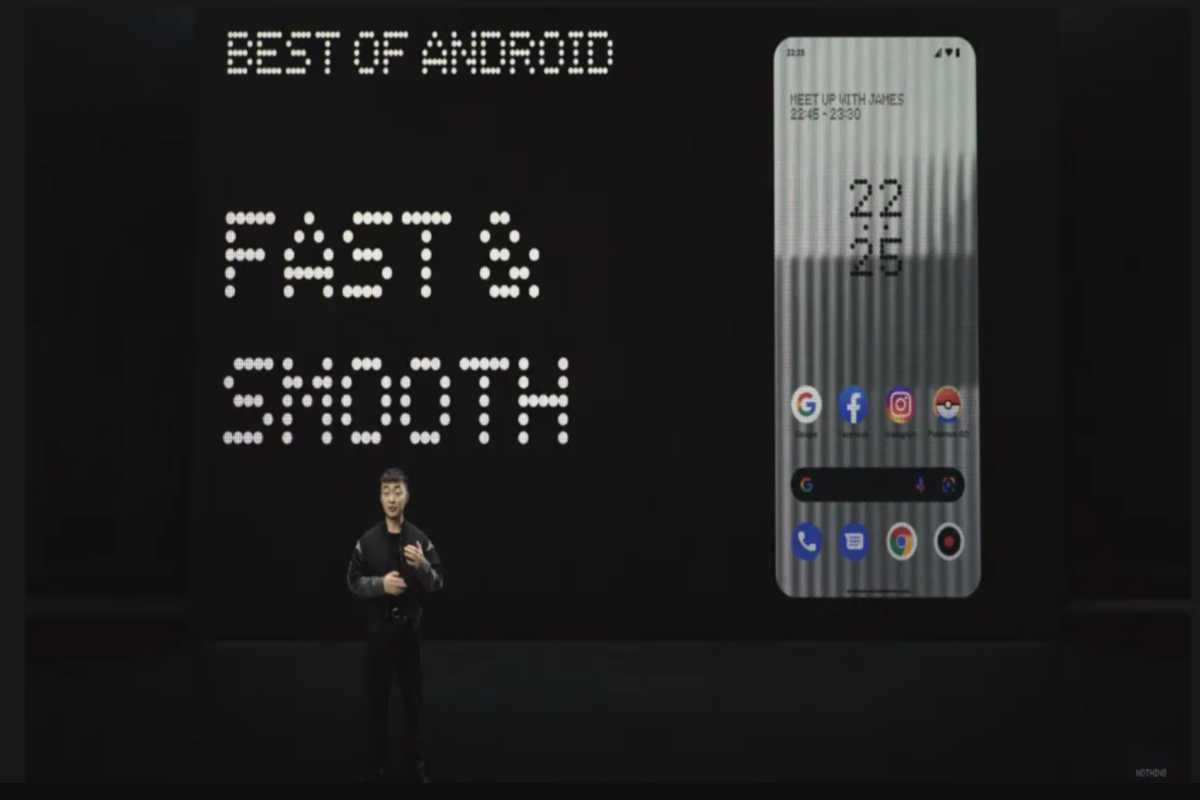
Nothing Phone (1) is in the works and is expected to launch soon. The company has already revealed the beta of how its launcher would look and it was pretty stock Androidish in nature. Since the device is expected to launch soon, leaks around its specifications are also making rounds online. Carl Pie, the Founder of Nothing has already confirmed that the device will be named Nothing Phone (1) and it will launch in the Summer. Now, let's take a look at the leaked specifications of the smartphone. Nothing Phone (1) Leaked SpecificationsNothing Phone (1) specifications have been leaked by the tipster Raghvendra Singh Jadon. The device is expected to feature a 6.43-inch FHD+ AMOLED display with support for 90Hz refresh rate and HDR10+ certification. It might be powered by the Qualcomm Snapdragon 778G SoC. It is a 5G SoC and one that is mostly meant for mid-rangers or affordable devices. The device could feature a triple-camera setup at the rear with a 50MP primary sensor, 8MP ultra-wide-angle sensor, and a 2MP additional sensor. For selfies, the Nothing Phone (1) might come with a 32MP sensor at the front. The device could pack a 4500mAh battery with support for wireless charging. The wired charging speed hasn't been revealed by the tipster. Further, there could be up to 8GB of RAM and 128GB of internal storage in the Nothing Phone (1). It is expected to run on NothingOS based on Android 12 out of the box. Note that none of these specifications or details has been confirmed by the company. Everything mentioned here is based on the information that the tipster has provided via his Twitter account. So upon the final launch of the device, many things could be different. The Nothing Phone (1) is promised to bring a unique look and design to the consumers. It will be worth the wait to see what that looks like. |
| 5G Phones to Benefit from Samsung’s UFS 4.0 Flash Storage Posted: 04 May 2022 01:30 AM PDT
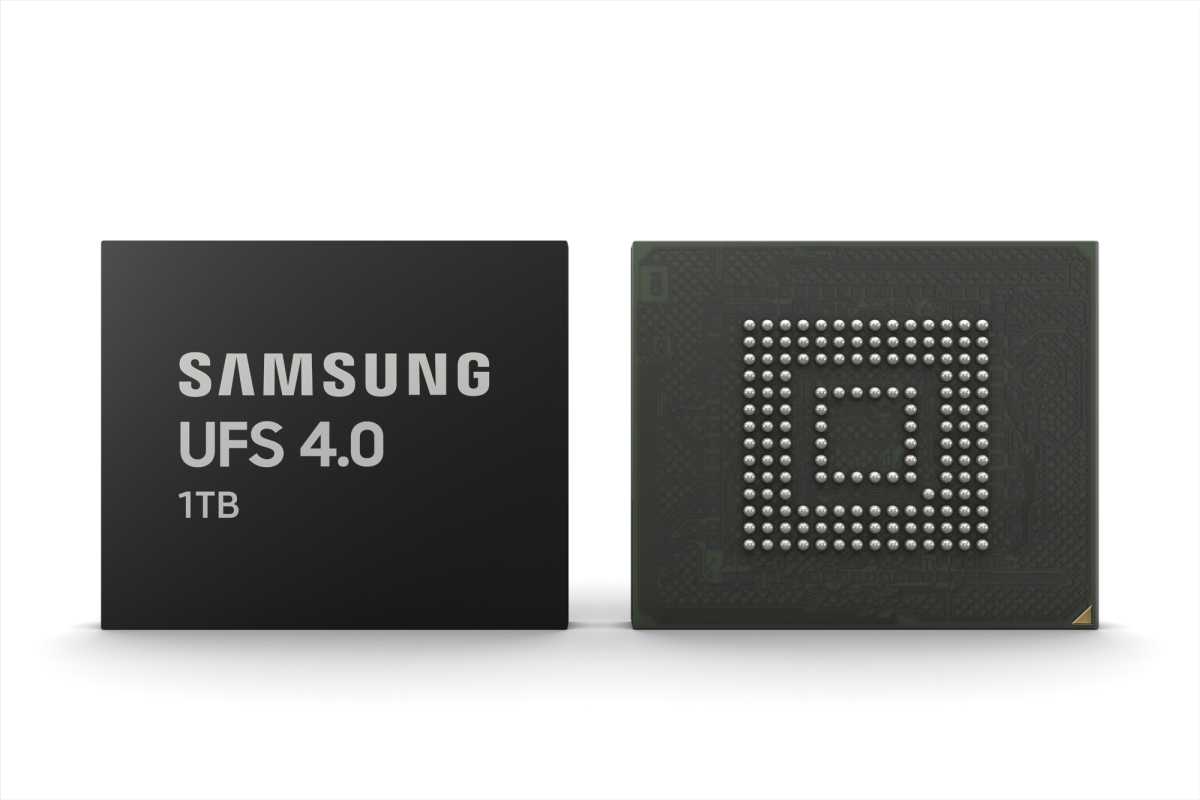
Samsung recently unveiled the latest version of the UFS flash storage – 4.0. The new version promises a significant upgrade over the older 3.1 version. Currently, all the flagships support UFS 3.1 storage, and while it is a solid performer, there's always room for faster performance. Apart from making some of the most popular smartphones, Samsung is also known for being one of the biggest manufacturers of memory in the entire industry. UFS 4.0 flash storage promises twice the performance of UFS 3.1. What is the Maximum Speed Supported by UFS 4.0 Flash Storage?Samsung explained through a series of tweets that the maximum speed supported by UFS 4.0 flash storage is 23.2 Gbps per lane. This is double what UFS 3.1 can deliver. The company said that the throughput of UFS 4.0 makes it ideal for new 5G flagships. So in the near future, you can expect your 5G flagships to become faster than ever. With the new architecture for the memory, the power efficiency has also been improved. The sequential read speeds came in at 6MB/s per milliampere (mA). Samsung said that this is 46% more efficient than UFS 3.1. This means that the smartphones will not only get faster with UFS 4.0 but will also be able to conserve battery in a much better manner. What's better about this is that Samsung has managed to pack all of this into an even small package. To give you an insight, the 512GB UFS 3.1 module measures 11.5 x 13 x 1.0mm, while the 1TB UFS 4.0 will max out measure 11 x 13 x 1mm. Samsung has said that it will begin mass production in Q3 2022. This means that by early 2023, we might see new flagships that come packed with UFS 4.0 Flash Storage. The Samsung Galaxy S23 series could be one of the first to feature the new generation of technology. The Galaxy S22 series already hosts one of the fastest smartphones in the world – The Galaxy S22 Ultra. |












| You are subscribed to email updates from TelecomTalk. To stop receiving these emails, you may unsubscribe now. | Email delivery powered by Google |
| Google, 1600 Amphitheatre Parkway, Mountain View, CA 94043, United States | |


Comments
Post a Comment