${latestitem Title}
${latestitem Title} |
- How to Protect Your Smartphone from Hackers
- Top Tech Picks for Noon: OnePlus 10 Launch, Poco F4 5G Chip, Android 13 and More
- BIF Rubbishes Jio, Airtel, Vi Views on Private 5G, the Battle is On
- Ericsson India Does a Very Crucial thing for the Country
- Jio, Airtel, Vi Are Seriously Unhappy, COAI Writes Letter to Ashwini Vaishnaw
- BSNL Prepaid Plan With 3GB of Daily Data for a Month
- Xiaomi to Soon Launch a Flagship for Competing With iPhone 13, Vivo X80
- Vi, Airtel and Jio Must Focus on Higher QoS
- JioPhone Rs 749 Plan Removed, Now Go for Rs 899 Plan If You Want a Long-Term Option
| How to Protect Your Smartphone from Hackers Posted: 09 Jun 2022 04:25 AM PDT
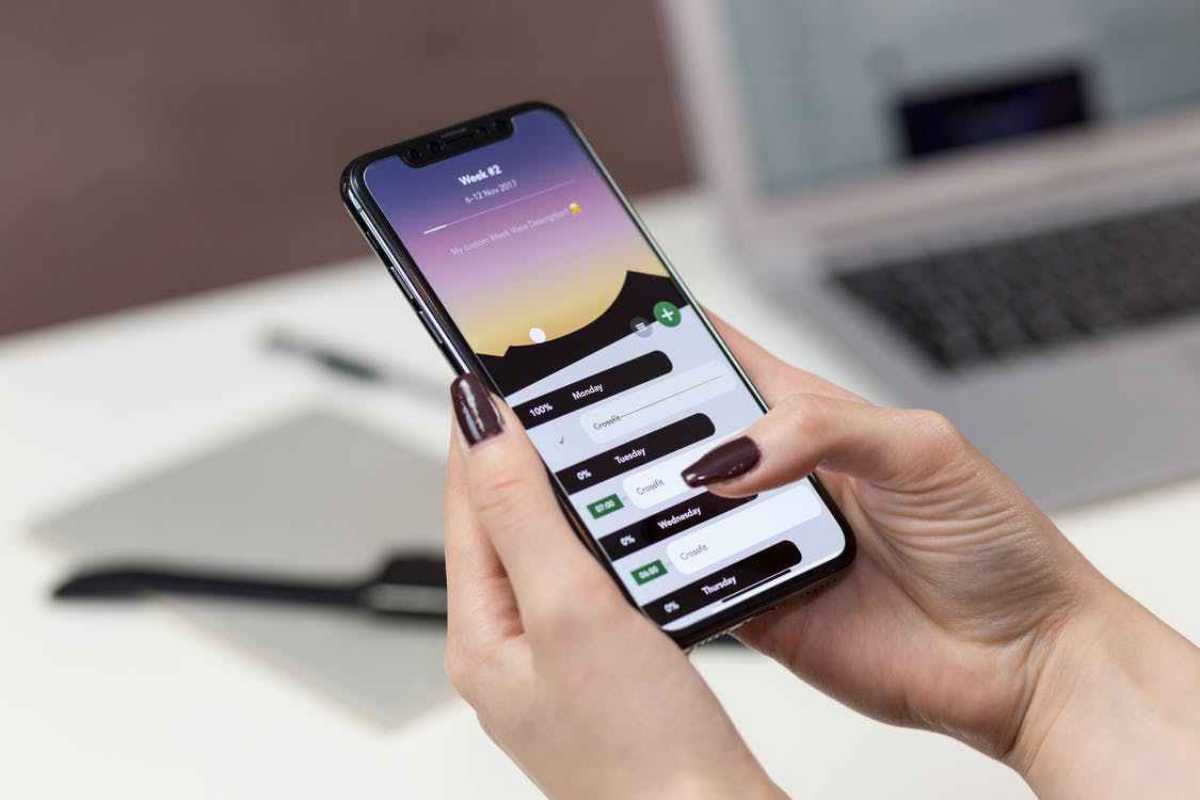
In May 2022, several cyber criminals in Dehradun managed to hack Instagram users and convince their followers to invest in cryptocurrency. The Times of India reported that multiple Dehradun residents were pulled into a fake cryptocurrency investment plan when their friends posted Instagram stories detailing how they'd made a fortune by investing in cryptocurrency. Wanting to do the same, victims like Shubham Nagliya lost Rs 53,000 after transferring the money to a bank account provided by a cybercriminal who was pretending to be his friend. Investigations on the matter are currently ongoing. Cybercrime Activity on the Rise in IndiaSuch phishing schemes are not new. According to Verizon's Data Breach Investigation Report in 2021, ransomware breaches increased by 13 percent worldwide. The report analyzed over 87 organizations worldwide and found over 23,000 security and data issues. With millions of people working from home as the pandemic rages on worldwide, cybercriminals have chosen to target organizations and everyday humans. It seems that cybercriminals are getting increasingly more persistent with their attacks. More than 40 percent of the cases highlighted in the Verizon report were caused by stolen credentials, while close to 20 percent of the cases were due to phishing activities. As Anshuman Sharma, Senior Manager and Head Investigative Response, APJ at Verizon, told the Indian Express, it's relatively easy to deploy malware or ransomware. "You can go to the darknet, check what you want, pay for it, and you get it." If you think that only companies and organizations are prime targets for cybercriminals, think again. A few weeks ago, the Indian Computer Emergency Response Team (CERT-In) shared reports on severe vulnerabilities affecting several popular Apple products, including the Apple Watch, Macs, iPhones, and iPads. CERT-in revealed that arbitrary code could exploit these vulnerabilities, allowing remote attackers to bypass security restrictions and potentially cause denials of service attacks. Apple is currently aware of the issues and has released security patches to fix them. In the first quarter of 2022, India faced over 18 million cyber attacks and threats alone. Sixty thousand of these attacks were phishing attempts, while over 30,000 were tech support scams. As travel restrictions ease and more countries open up, these scams will likely continue to flourish as the year progresses. Protecting Your Smartphone from Hackersa) Create stronger passwords To protect themselves against hackers looking to exploit these vulnerabilities, consumers are advised to secure their devices with strong passwords and avoid using some of the most common passwords worldwide. Passwords are the first line of defence against hackers and other nefarious activities, so it's critical to create strong and complex passwords that are difficult to crack. Always choose passwords that are more than 12 characters long and have a mix of symbols, numbers, and upper and lower case letters. Password management systems like LastPass, Okta, and 1Password are also recommended because they offer robust security and take the hassle out of memorizing multiple passwords. b) Use multi-factor authentication When setting up passwords, make it a point to enable two or multi-factor authentication (2FA or MFA). Both types of authentication methods require users to input a password and another identifier like a fingerprint or face scan to verify a login. Alternatively, authentication apps like Authy and Google Authenticator can be linked to smartphones and are available to verify logins with codes. c) Keep all apps and software updated Cybersecurity experts often advise consumers to keep their apps and software updated to prevent hackers from exploiting vulnerabilities in older versions of software. New software or apps are generally accompanied by release notes that tell consumers what issues and vulnerabilities were discovered and fixed. Dedicated hackers are likely to keep up with news on these vulnerabilities and will find ways to exploit them. d) Delete rarely used apps The 2019 Personal Data Protection Bill, which looks to provide legal protection for the personal data of Indian citizens, has still not been passed in India. Currently, this means that tech companies worldwide could potentially track, store and share a user's personal data without their knowledge. To prevent this, it's best to limit the amount of data and permissions apps on smartphones. Users should always try to delete apps that they're no longer using or revoke access to certain things like photos and credit card details. Alternatively, consumers can afford to be more discerning about the types of apps they're downloading and the data they're sharing with these apps. If allowed, avoid sharing unnecessary data like contact and calendar information. e) Get an antivirus app One of the best ways smartphone users can protect themselves is by downloading an antivirus app that can detect potential malware and threats from malicious third parties. Several major antivirus software brands also make smartphone apps that could help users stay protected. As the world becomes more connected, it's important for consumers to secure their devices and place cybersecurity at the forefront of their minds. |
| Top Tech Picks for Noon: OnePlus 10 Launch, Poco F4 5G Chip, Android 13 and More Posted: 09 Jun 2022 02:43 AM PDT
OnePlus fans in India are definitely waiting for the flagship that is more affordable than the OnePlus 10 Pro but more powerful than the OnePlus 10R. Like every year, OnePlus fans are waiting for the vanilla flagship smartphone in the latest series (for this year, the OnePlus 10). Well, looking at the developments, it might happen soon. Here are the top tech picks for this noon. OnePlus 10 Launch Expected SoonOnePlus has launched multiple new smartphones this year. The company is further expected to launch many new devices. Amongst these stands the OnePlus 10, which the company has neither denied nor confirmed. Tipster Yogesh Brar said that OnePlus is working on the OnePlus 10 (Project Ovaltine) and will release the device with Qualcomm Snapdragon 8 Gen1 SoC. OnePlus is also expected to launch a OnePlus 10T smartphone later this year with the Qualcomm Snapdragon 8+ Gen1 chipset. It will likely be the last flagship for this year from OnePlus. Poco F4 5G Chipset ConfirmedPoco has confirmed that it will launch the Poco F4 5G with the Qualcomm Snapdragon 870 SoC. It is a flagship chipset launched by the company as a successor to the Snapdragon 865. It was meant for flagship devices. Poco has decided to go with the Poco F4 5G because the company calls it the most optimised chipset for smartphones. More details about the device will be out soon. Android 13 Beta 3 Released for Select Pixel SmartphonesGoogle has started rolling out the Android 13 Beta 3 for the developers and the testers. This rollout is meant for only select Pixel smartphones along with some devices from other manufacturers. Android 13 will focus on bringing more privacy and security to the users. The final rollout of the next version of Android OS is a little far from here, but the Beta 3 can give you a good idea about what it would look like. |
| BIF Rubbishes Jio, Airtel, Vi Views on Private 5G, the Battle is On Posted: 09 Jun 2022 02:21 AM PDT
The Broadband India Forum (BIF) has asked the government to allocate the spectrum directly to the enterprises for captive private networks. For the unaware, BIF represents tech companies such as Microsoft, Google, Meta, Cisco, and more. As per BIF, the government must consider the recommendations given by the Telecom Regulatory Authority of India (TRAI) on private 5G networks. COAI (Cellular Operators Association of India), which represents the Indian telcos including Vi, Airtel and Jio, said that the 5G business case would not be viable if the government allocated the airwaves directly to the enterprises. The battle between the telcos and the enterprises for private 5G is on. BIF has rubbished the claims of the telcos and said that direct allocation of airwaves to the enterprises for private 5G will still help the government in boosting its revenues and pose no security concerns. Enterprises Best Qualified to Set Up Private 5G NetworksAccording to an ET Telecom report, BIF said that enterprises are the best qualified for setting up private 5G networks in the country and thus should be allocated airwaves directly. But the COAI said that currently, private networks are set up by the telcos only, and there's no reason why the telcos can't do it in the future as well. Telcos fear a loss of a major chunk of revenues if they are deprived of setting up private 5G networks for the enterprises. This makes sense as well because the telcos are primarily counting on incremental revenues by providing enterprise services with 5G networks rather than providing network services to consumers directly. The use-cases demonstrated so far also suggest that 5G is better suited for the enterprises initially as consumer-focused use cases are hardly present. The major point that BIF is making is that telcos will still get to earn more out of private 5G even if they are not the ones setting it up. Further, the body said that govt revenues would also go up only with enterprises getting 5G airwaves directly. BIF claims that there's an untapped revenue that will play a major role in boosting revenues for all. Further, BIF said that telcos are going to optimise their networks for masses and certain specific industry verticals, but not for all, and thus the private 5G networks should be set up by enterprises only. |
| Ericsson India Does a Very Crucial thing for the Country Posted: 09 Jun 2022 01:00 AM PDT
Ericsson India, one of the major telecom gear vendors which has partnered with the telcos for helping them develop 5G use cases has shown support to 'Save the Children' organisation and has partnered with the Institute of Child Health (ICH) in Kolkata for intensifying the pediatric care requirements of the hospital. Ericsson India has provided the ICH Kolkata, CMC Jijamata Maternity Hospital (Pune), PC Seithy Hospital (Indore), Niloufer Hospital (Hyderabad), and Pandit Deen Dayal Upadhyaya Hospital (Gangori, Jaipur) with life-saving equipment like oxygen concentrators, ventilators, pulse oximeters, bi-pap machines, and other critical medical supplies. Ericsson India Equipment Supply to Hospitals Will be Life-Saving For Thousands of ChildrenThe equipment that Ericsson India has supplied to the hospitals will be life-saving for more than 50,000 children in respiratory distress or who are critically ill in the city and from nearby areas. The equipment would also cater to the COVID cases reported in children. The pediatric care unit in Kolkata was inaugurated on Wednesday, June 8, 2022. These health facilities are geared toward providing high-quality healthcare to children in need. Amitabh Ray, MD, Ericsson India Global Services said the pediatric wards in these hospitals will cater to more than 50,000 children in the first year itself. The facilities have been made keeping in mind that it doesn't feel like a hardcore hospital visit to the young children which can be slightly disturbing for the young ones. The walls of these facilities have paintings and there are toys as well to keep the children engaged. This would reduce the anxiety that children face when they have to visit hospitals. |
| Jio, Airtel, Vi Are Seriously Unhappy, COAI Writes Letter to Ashwini Vaishnaw Posted: 09 Jun 2022 12:25 AM PDT
The private telcos in India, including Reliance Jio, Bharti Airtel, and Vodafone Idea (Vi), have been working on 5G for a long-time now. But now, there's something that threatens all the money spent by the telcos on the R&D (Research and Development) of new products and use-cases relevant to 5G. The government might be considering allocating spectrum to the enterprises in an administrative manner so that they can set up their own captive private networks with the power of 5G. But the telcos are not happy with this development at all. COAI Writes to Ashwini Vaishnaw Regarding the SameOn Wednesday, COAI (Cellular Operators Association of India) shared its hard stance on how the spectrum should only be offered through auctions to licensed access service providers. On the same day, the industry body which represents the private telcos had also written a letter to Ashwini Vaishnaw, Minister for Communications, on the issue of private captive networks. COAI said that there would be "no business case for roll out of 5G networks" if enterprises were given spectrum directly. In simple words, COAI means that if the captive private networks are rolled out by enterprises themselves, the telcos won't have the incentive to invest thousands of crores into spectrum and infrastructure to rollout 5G services as their RoI (return on investment) will not be worth it. 5G use cases demonstrated so far suggest that they are more relevant for the enterprises than the consumers directly. Thus, the telcos are not happy that they won't have any major benefit from rolling out 5G in the country when their services won't even be required by the enterprises. COAI noted that worldwide it had been noticed wherever 5G has been rolled out, the incremental revenues have hardly come from the retail segment. Instead, the incremental revenues have only come from the enterprise segment. Because the telcos are already able to provide sufficient and satisfactory services to consumers with 4G networks, they won't upgrade to 5G just for the consumers as the RoI won't make sense. Only when the telcos see there's a need and demand for 5G in the enterprise segment would they roll out 5G networks. COAI told Vaishnaw that if the spectrum is directly given to the enterprises for private 5G, it would mean no viable business case left for the telcos in India, and thus there will not be any need for 5G rollout in the country. |
| BSNL Prepaid Plan With 3GB of Daily Data for a Month Posted: 08 Jun 2022 10:19 PM PDT
Bharat Sanchar Nigam Limited (BSNL) is offering users a prepaid plan with 3GB of daily data for an entire month. This would be a solid option for a user who wants to consume a lot of data every day without being worried about running out of high-speed data. It can also help with working from home (WFH). The only drawback is the missing 4G network, which shouldn't be the case in a matter of a few months (if things go right). BSNL offers a pretty decent plan for heavy data users for one month with 3GB daily data; let's take a look at the complete details of the plan. BSNL Prepaid Plan for One Month With 3GB of Daily DataThe BSNL prepaid plan that we are talking about comes for Rs 299. This plan comes with a validity of complete 30 days, which is what many users are looking for in a short-term prepaid plan. Further, users get 3GB of daily data, meaning 90GB of high-speed data in total for the entire validity. After the fair usage policy (FUP) data is consumed, the internet speed for the users drops to 80 Kbps, which is decent. Along with the data benefit, users also get unlimited voice calling and 100 SMS/day for the entire validity, which is 30 days. This is an excellent prepaid plan compared to what the private telcos are offering for the same price. What do Bharti Airtel and Vodafone Idea Offer for the Same Price?Vodafone Idea (Vi) and Bharti Airtel offer their Rs 299 prepaid plans with 1.5GB of daily data, which is half of what BSNL offers to the users. Moreover, the Rs 299 plan from the mentioned private telcos only comes with a validity of 28 days. While there are other additional benefits which BSNL doesn't offer, it still keeps BSNL's Rs 299 prepaid plan ahead of what the private telcos are offering. |
| Xiaomi to Soon Launch a Flagship for Competing With iPhone 13, Vivo X80 Posted: 08 Jun 2022 09:14 PM PDT
Xiaomi 12 Pro is currently available in India as a top-of-the-line flagship smartphone from the company. Its price goes beyond Rs 60,000, making it a super expensive device for most people. But Xiaomi isn't done yet. The company is planning to launch yet another flagship smartphone, and this one is going to be the most expensive device from Xiaomi this year. It is none other than the Xiaomi 12 Ultra. This smartphone will be the successor of the Xiaomi Mi 11 Ultra, which was in a league of its own. The same will be the case for Xiaomi 12 Ultra. Xiaomi 12 Ultra will first be launched for the China market. The device has already received certification from China's 3C authority. From the certification, multiple specifications of the device have been confirmed. Xiaomi 12 Ultra to Don Qualcomm's Latest Flagship ChipXiaomi 12 Ultra is going to come with Qualcomm's latest flagship chipset – Qualcomm Snapdragon 8+ Gen1. The smartphone is going to support 67W fast charging, which was also the same for Xiaomi Mi 11 Ultra. Note that none of these details has been confirmed by Xiaomi yet. But the 3C listing with the model number 2203121C is believed to be none other than the Xiaomi 12 Ultra. The device would definitely boast a big and powerful display. The camera system would also be geared towards competing with the other flagships and delivering something unique to the users. Xiaomi had sold a very limited number of Xiaomi Mi 11 Ultra devices in India as well as the global market before discontinuing it. The company might change that with the Xiaomi 12 Ultra, as the demand for Xiaomi's Ultra smartphones should be quite high given their power. But there's also the fact that it would be priced in the zone where devices such as the iPhone 13, Vivo X80 and the Samsung Galaxy S22 become an alternative for the users. Apple and Samsung easily have a higher brand recall when it comes to selling premium segment devices. |
| Vi, Airtel and Jio Must Focus on Higher QoS Posted: 08 Jun 2022 08:12 PM PDT
The telecom operators are indeed trying to do their best with what they have got. The Indian telecom industry wasn't at a very sweet spot over the last few years (since the time Jio came to the market.) Not making Jio the villain as it is just business at the end of the day. But it has been a long time since the arrival of Jio, and the telcos which survived have adjusted in their own way. Right now, there are only two profitable telecom operators in the country – Jio and Airtel. The third private telco, which is the merged entity of Vodafone India and Idea (now Vodafone Idea Limited), has been struggling to make ends meet since 2018. Post the announcement of relief measures, the government accepting that it will take up equity in Vi (Vodafone Idea) and multiple tariff hikes since 2019, the telcos are now in a much better state than they were five years back. The 4G speeds have improved significantly, but the overall QoS (Quality of Service) is still an issue with many customers. Of course, telcos have limited money, and they can't invest all of it into network expansion. There are a lot more things that they have to spend money on (including statutory dues). But with another round of tariff hikes in the coming months, we can't ignore the fact that customers are getting frustrated with bad service. Indian users have definitely been getting access to 4G data at a very affordable rate compared to global standards, but the quality of networks has also been very inconsistent. Hike Tariffs, But Justify by Delivering Excellent ServiceThe Indian telecom operators have often been at the receiving end of the stick as they have failed to deliver a world-class 4G experience. While it is a tough job to do that in a country with such big and diverse geography as India, it is not impossible. The telcos are generating billions of dollars or thousands of crores every quarter with the millions of customers they have, and thus they have to justify the tariff hikes by delivering improved and excellent services. Hopefully, Vi, Jio and Airtel are focusing on retaining users by delivering a better 4G experience in the near future. Especially for a telco such as Vi, which wants to be at the forefront of hiking tariffs but not lead in the department of 4G coverage and availability. |
| JioPhone Rs 749 Plan Removed, Now Go for Rs 899 Plan If You Want a Long-Term Option Posted: 08 Jun 2022 06:30 PM PDT
Reliance Jio offers a long-term prepaid plan to the JioPhone users that offers the same benefit as the Rs 749 plan, but for a pricier deal. The telco has indirectly increased the price of one of its prepaid plans by Rs 150. The plan that we are talking about comes for Rs 899. It is a JioPhone prepaid plan made for users who want a long-term option from the company. Let's check out the current benefits of the plan. Reliance Jio Rs 749 Plan Now Comes for Rs 899, Did Benefits Change?Reliance Jio is usually the last telecom operator which comes to mind when we think about tariff hikes. The company is known for offering the most affordable tariffs in the country. But in a very indirect manner, Jio has increased the price of the Rs 749 plan to Rs 899, which is a massive price increase of Rs 150 for the users. Note that the benefits have remained the same, only the price has increased. Jio was actually offering two plans with the same benefit (Rs 749 and Rs 899), but now the telco has removed one plan which was the Rs 749 option. So it is an indirect tariff hike in a way. The price update is already visible on the website of Jio. The total amount of data that this plan offers to the JioPhone users is 24GB. Users get 2GB of high-speed data every 28 days post which the speed drops to 64 Kbps. The total validity of this prepaid plan from Reliance Jio is 336 days, and users get the data in 12 cycles (2GB x 12 cycles of 28 days each). In the same 12 cycles of 28 days each, JioPhone users also get 50 SMS. But the voice calling has no restrictions. In addition to this, Jio also offers users a free subscription to JioCinema, JioSecurity, JioCloud, and JioTV with this plan. JioPhone users who want to recharge with the Rs 749 plan will now have to pay Rs 899 for it. There are no other benefits offered with the plan. Jio hasn't changed the price of any of its other prepaid plans for now. |




| You are subscribed to email updates from TelecomTalk. To stop receiving these emails, you may unsubscribe now. | Email delivery powered by Google |
| Google, 1600 Amphitheatre Parkway, Mountain View, CA 94043, United States | |


Comments
Post a Comment